 GET THE BOOK
 GET THE BOOK




Podcast
EP. 326
Bitcoin vs. Infinite Banking: Why I Still Choose Gold & Silver (Ep. 326)
Oct 31, 2025 ·
22 min
0:00 / 22:29
EPISODE OVERVIEW
ABOUT THIS EPISODE
Bitcoin fans say it’s the future. I say: show me how it actually solves real-world money problems. In this episode, I walk through the biggest unanswered questions I still have about Bitcoin: volatility, inheritance keys, “who’s in charge,” government visibility, and why I still prefer AND assets like dividend-paying whole life over OR assets like BTC.
Prompted by a listener (thanks, Todd!), I listened to a Bitcoin proponent debate and wrote down the sticking points I can’t get past. If Bitcoin is limited, why do explanations sound inflationary?
If it’s infinitely divisible, how is that different from a devalued currency? If most people don’t even understand the dollar, how do we get mass adoption of a new money system?
How do I plan a purchase in 5 years with that level of volatility? What about lost keys and inheritance? And if the government can track blockchain activity and tax capital gains, how does this “stop tyranny”?
I compare Bitcoin to gold/silver and outline why I prefer cash-flowing, contractually guaranteed strategies—especially Infinite Banking.
Key Takeaways
- Value = belief. If 97% don’t understand money now, mass BTC adoption is a stretch.
- Volatility breaks planning. It’s hard to budget for real purchases with wide swings.
- Bitcoin behaves like an OR asset; I prefer AND assets that can grow while being used.
- Inheritance risk is real: lose the key, lose the asset.
- Government visibility & taxes exist—so “off grid” claims don’t really hold.
- Cross-border payments are a useful perk—but fees and frictions can creep in over time.
- Insurance companies and banks avoid BTC due to volatility and lack of cash flow.
(Timestamps are from the video version. Audio-only edits are always shorter since they have had more fluff removed, so the timestamps are not accurate to this version.)
- Want a strategy you can plan around? Start your Infinite Banking journey today.
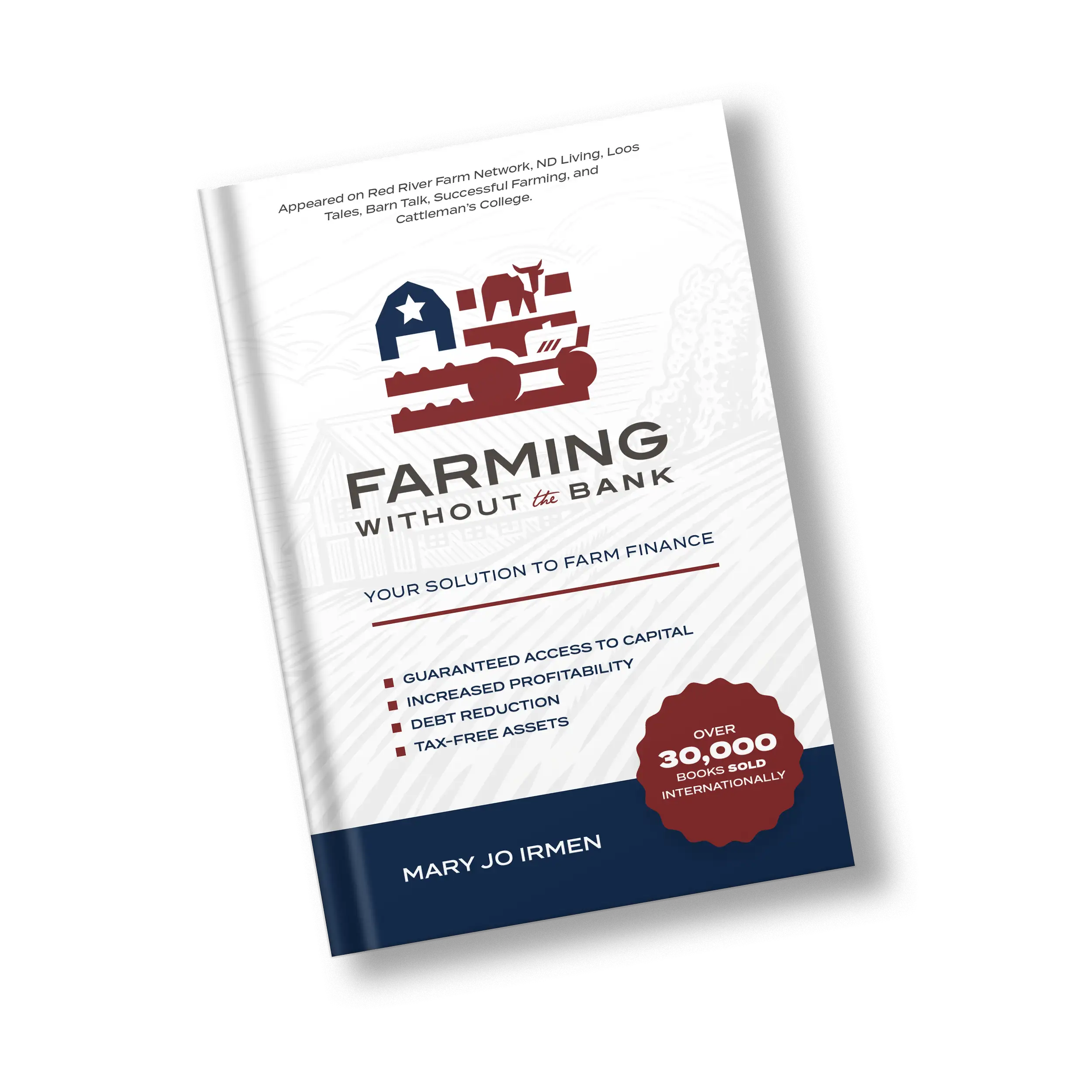
- Grab the Farming Without the Bank book and schedule your appointment to get set up.
- Comment with your best Bitcoin arguments—especially on planning, inheritance, and governance.
- Farming Without the Bank book & consult: farmingwithoutthebank.com/book
- Podcast home page: farmingwithoutthebank.com/podcasts
CHAPTER TIMESTAMPS
- 00:00Cold open: "Who's running Bitcoin?" creator, mining & control
- 01:01Shoutout to Todd & why this episode exists
- 02:58Can BTC be a supplementary medium of exchange?
- 03:27Ground rules: why I'm open—but unconvinced
- 04:39"Limited" yet "inflationary"? Divisibility vs. value
- 05:31Nelson Nash lens: "If dollars are worthless, why trade BTC for them?"
- 07:16Value = belief; most people don't understand money
- 10:06Volatility vs. planning for real purchases
- 12:57Invest in what you know; AND asset vs. OR asset
- 14:00Lost keys & inheritance problems
- 14:58Will BTC stop tyranny? IBC, voting & policy matter more
- 16:06Govt tracking, capital gains & "digital money" already here
- 17:21Why insurers/banks avoid BTC (volatility, no cash flow)
- 18:50Who's in charge? Mining, outages & resilience
- 20:10The one valid perk: cross-border transfers (for now)
- 20:59Trust, fees & centralization concerns
- 21:27Dollar strength, crash talk & practical money use
- 23:04Crypto dilution: too many coins, weaker adoption
- 24:19"Explain it like I'm five"—if it's too complex, that's a risk
- 25:12CTA: Want guarantees and an AND asset? Start with IBC
YOUTUBE EPISODE
TRANSCRIPTION
"The gentleman behind Bitcoin, he basically created it and left. Where'd he go? Who's in charge? Who's running it? Are these machines just running themselves? We set up all this mining stuff. Is it just happening on its own? What happens when the electricity goes out? Who brings it back up? At least with the Federal Reserve, we know the characters in the play. Here, we don't even know the characters in the play because they left. Let me build you a bank and then I'm going to leave. You guys can just come into the bank and do whatever. And I'm just going to put some rules on the front of the bank and that's how it's going to run. I don't know. That just seems odd to me. Now, when I'm sitting here broke and y'all have a lot of Bitcoin, all you Bitcoin people out there and you have a lot of Bitcoin, remember, I still love you. Just, I would personally rather have gold and silver than have Bitcoin because there are so many unanswered questions."
Hello, hello, hello, and welcome back to the podcast. Thank you very much for being here. Today. Oh, thank you, Todd. If you're listening, and I know Todd's listening because he listens to every single one of them. Today's podcast is brought to you by Todd. Todd talking to me about Bitcoin and how much I don't love Bitcoin. And so we're going to talk about it because I actually listened to a podcast from a gentleman that Todd suggested. And I've listened to his arguments on Bitcoin and I don't like Bitcoin. I know that you guys know this. And I have some unanswered questions about Bitcoin that people cannot answer for me. Things that they cannot solidify.
And I was just listening to a podcast of a proponent of Bitcoin. And he was arguing with somebody like myself who doesn't agree with Bitcoin. And he still could not give the answers to why Bitcoin is going to be the next best thing. He couldn't answer the hard, the kind of the hard questions of what sets it apart from the U.S. dollar. And I'm not a huge, like I understand our dollar is devaluing. I 100% understand that. Believe me. I get that we have inflation. I talk about the Federal Reserve and the fractional reserve banking and all of the problems we have around the dollar. And so I've made a list of all the things that I think are issues with Bitcoin or just issues in general of why it's not going to take over.
Can it be a supplementary means of exchange? Absolutely. Is it any different than, hey, I want some gold from you. And so give me your gold in exchange for services. Great. Fantastic. People do that all the time. I have friends in this industry who you guys all know most likely. And he will accept gold in exchange for Becoming Your Own Banker book. And I think, great. Fantastic. It's a means of exchange. Is it going to take over what we have going on? Yeah, probably not.
And so let me, just let me go over my reasons why I don't like it. And then some of this is like convincing people to believe in infinite banking. And if they don't want to believe it, they're not going to believe it. Now, I try to stay very open-minded about things. I try to understand and see people's viewpoints. And it's not like I'm saying, hey, this isn't ever going to work. And I don't believe in it. So I really want, if somebody out there ever has a good reasoning for me, that would be fantastic. But you got to have a good reason. Like, don't be using the same stuff that we've always used as an example or as a means to get me to believe something. Okay. Do you have something to say? The wiener likes this room. And so she likes to join me on these podcasts. And now she needs love. So excuse me. Sorry, I don't mean to interrupt. Okay.
So number one, one of the big things that I found out in this podcast that this guy had is Bitcoin is inflationary. And as it rises and the value of it rises, there's more to buy. I don't quite understand that. I actually did do some research on this because I wanted to sound more intelligent. I don't quite understand that because it's limited. If it's limited, why are we selling more of it? If we're selling more of it, then it's not limited. If we're selling the inflationary value of it, then is it really limited? That is not making sense to me. The other thing that I find interesting about Bitcoin is that it can be divided an infinite number of times. And so if it's divided, let's just say it's not inflationary and it's not going up in value, but it keeps being divided, then everybody's value goes down. How is that any different than a devaluing dollar? Except we know that that's happening with the dollar, right? That doesn't make sense.
Nelson said this years ago. This is number two. Nelson said this years ago when he said, if gold is so good, why are you taking my worthless dollar in exchange for your amazing gold? Hmm. Think about that. Now, I like gold and silver. I have no problems with having some gold and silver. I think it's a smart move to have some gold and silver. But what do you want me to do? Shave off some gold because I want to buy Farming Without the Bank book? It is very similar in the aspect of if my dollar is so worthless, why do you want my dollar in exchange for your Bitcoin? Is it just a ploy to get more dollars? Because you have to have something in exchange for Bitcoin. Like maybe I can get some Bitcoin if I said, hey, I'm going to sell you some beef, or I'm going to give you a Farming Without the Bank book for $20, and then you give me Bitcoin for that, right? But then I can go exchange it for a dollar. And then if I want to buy back in, or if I want to buy in, I need a dollar to do that. Why do you want my dollar in exchange for your Bitcoin? If it's so worthless and you don't like it, why do you want it? Just wondering. Maybe I'm not understanding how it works. I don't know.
The other thing is the value of anything is based on what we perceive it to be. So this is kind of my biggest hangup. I should have probably rated these like 10, 9, 8, 7, 6, whatever. But this is sort of my biggest hangup. The value of a $3,000 heifer is because I saw that value. The value of the US dollar is because people believe and have faith that that dollar is going to be there. The value of Bitcoin is based off of the small percentage of people that believe in Bitcoin. The value of something is because somebody believes in it.
Now, take the population. I've done a couple podcasts about this already. Talked about it in a couple podcasts. 97% of the population does not even understand money. They don't understand fractional reserve banking. They don't understand the Federal Reserve. They don't understand how interest rates work. They don't know money. I would venture to say 97% of the population does not understand how money works. That is why your top 3% are always your top 3%. And so if we have 97% of the population that doesn't even understand how the US dollar works, they don't understand how credit cards work, less than that, probably let's just throw out a number that says 50% of the population doesn't even know how to do a budget. If that is the case, then how do we think that we are going to get enough people to back a new currency and pay attention to a new currency that it has enough value to be a currency that takes over the US dollar? That's a pipe dream, okay?
The dream of having infinite banking reduce the Federal Reserve and the inflation rate is going to be better and easier to get us to the 10% tipping point of infinite banking than I believe people using Bitcoin as the main currency. Because there has to be value. There has to be a belief that there's value. And people are not paying attention. If people were paying attention, we wouldn't have so many unfortunate people in this country. We wouldn't have so many people in middle class. I would not be eaten alive and spit out on social media to the point that I am when I start talking about utilizing money correctly, hiring people correctly, understanding your books, that you're running a business. None of that would happen if people truly understood money. But yet we think all these people are going to go and change their currency to Bitcoin. I think it's a pipe dream. I think it's a massive pipe dream. Are there going to be some people to do it? Yeah, absolutely.
It's too volatile. It's absolutely too volatile. There is nobody that can tell me how it differs from the stock market. How is this different from the stock market? This gentleman that I was listening to is saying, hey, you should buy Bitcoin instead of buying farm ground because it's going to have more value. Or you should buy Bitcoin because it's going to rise so much in value that then you can go buy your farm ground. You can buy your vehicles. You can buy whatever, right? With basically a discounted dollar is what he's saying, I believe. And so if that's the case, then please show me on a guaranteed scale where that's going to happen. Because if I need to plan for retirement, if I need to plan for a big purchase, if I'm going to start farming and I know I need to have X amount of dollars to operate next year, please show me where that is guaranteed in this whole Bitcoin scenario. It's not guaranteed. It's up and down. How am I supposed to do anything with the volatility?
And years ago, I spoke at an event and they were promoting Bitcoin and I thought, this is awesome. This is great. I'm going to get to talk to people that understand Bitcoin to the point where they can answer my questions. This was one of the big questions I had for them and they could not answer it. Like, if I'm going to buy a car and I know I'm going to need a car in five years, how do I know that I will have enough Bitcoin to purchase that car? The car is inflating, right? I know what's happening with the dollar. I can put it in savings. I know what's there. Even though the dollar is devaluing, I know that the car price is this and I know that my dollar is worth this dollar. Maybe the purchase price decreased, but you're not feeling it like, oh, I had a million dollars in Bitcoin and now tomorrow I have $500,000 in Bitcoin. How am I supposed to buy things and plan around volatility? Why wouldn't I just put my money in the stock market?
The only reason to go to Bitcoin is maybe I understand Bitcoin more than I understand the S&P. Maybe I understand it more than I understand Apple. Whatever that might be, it's a matter of putting our money where we understand it. And I say that all the time. Warren Buffett has said, don't invest your money where you don't understand it. Robert Kiyosaki is saying the exact same thing. He's in real estate. He's in gold and silver. He's buying oil companies. Why? Because he understands those things. So that's where you're putting your money. If I'm going to farm or ranch, why would I put my money in Bitcoin?
And then the next thing I have is it's an OR asset. So it's Bitcoin or it's cattle. It's Bitcoin or it's land. But I want to be able to use it to buy cattle. And I want it continuing to earn me interest. It's not an AND asset like dividend paying whole life insurance. I can't borrow against it like that.
How do we pass it on? What happens if I die and nobody knows where my key is to this money? That actually is something that I have heard happen. And so I have a friend who bought Bitcoin like he was one of the very first purchasers of Bitcoin. He can't find his key. He's got could be hundreds of thousands, a million dollars sitting out there now. Great investment. He bought it right away. People bought in. Fantastic. Good for him. But he can't find his key. So he basically has nothing. Nothing. That's like saying I'm going to invest money in the market and then I'm not going to be able to take it out ever. I don't know where it's at. I don't know what it is. But you know. So if we don't have the key to get it and access it, then how are we passing it on?
The other thing is, is that his big thing is Bitcoin will stop tyranny because it will give those people and power the power. You know how else to take power away from those people? Is if we just did some infinite banking and said, hey, we're not going to put money through the banking system. They're not going to be able to do fractional reserve banking. The other thing is, how about we just vote right? How about we just pay attention to what's going on in our local and federal government? And how about we just have politicians that don't stay in forever, that don't get to be all slimy themselves? Because we're electing these people and they go in. I 100% believe this. They go in with great intentions and eventually those intentions sway because they get swayed. And so how about we just elect good people or maybe it's a term limit or I don't completely have the answer, okay? But I do not believe that the answer is Bitcoin.
If the government wants access to it, which is a whole nother point I have down here. If the government wants access to it, the government's going to get access to it. I remember when Bitcoin started and everybody's like, oh, the government has no idea what's going on. Oh, this is the best thing ever. Guess what? If you sell Bitcoin, you have to pay capital gains. And I looked right before I did this, I looked and it said that the government can track what is going on in the blockchain. So they know if you're buying or selling things. Well, if that's the case, then how is this keeping the government out of our pocketbooks, right? We're all talking about how, oh, currency is going to go digital. This is going to be a digital thing. Oh, if we all go to Bitcoin, it's digital. Currency is already digital, my friends. They can already shut your bank account down. Yes, there's paper money out there. There's coins, but it's not like it used to be. Most everything is just a ledger on a piece of paper. It's already digital. So to think that we're going to have this huge difference is not the case.
A lot of people will say to me, well, Mary Jo, why don't the insurance companies invest in Bitcoin? And this is asked of the insurance companies a lot. And the insurance companies are not investing in Bitcoin because it is too volatile. It does not produce cash flow and it is not a good asset long-term. And so if the insurance companies and the banks are not saying, hey, Bitcoin is the next best thing. We should jump on this bandwagon. There's value there. Is there? We have to look at kind of what insurance companies and banks are doing and what they're thinking of things because they're the ones that sort of drive it. They're the ones that handle the money in this country, right? So we have to look at what they're doing and go, oh, okay, long-term, not a good move. Short-term, if we want to use it so that we can buy some beef with it or we can send money to a different country without a transaction fee, okay, great, fantastic, wonderful. But if it were me, if I wanted to receive money in Bitcoin, I'd cash that stuff out as fast as I could. Because what happens if it drops in value? Because one little thing changed no different than the stock market. It's not the end-all be-all that people think it is. How am I supposed to plan if I don't have it?
The other big thing for me, kind of, is the gentleman behind Bitcoin. Apparently, we know his name. The podcast I was listening to said he basically created it and left. Where'd he go? Who's in charge? Who's running it? Are these machines just running themselves? So we set up all this mining stuff. Is it just happening on its own? What happens when the electricity goes out? Who brings it back up? What happens? Right? At least with the Federal Reserve, we know the characters in the play. Here, we don't even know the characters in the play. Because they left? Let me build you a bank and then I'm going to leave. You guys can just come into the bank and do whatever and I'm just going to put some rules on the front of the bank and that's how it's going to run? I don't know. That just seems odd to me. Now, when I'm sitting here broke and y'all have a lot of Bitcoin, all you Bitcoin people out there and you have a lot of Bitcoin, remember, I still love you. I would personally rather have gold and silver than have Bitcoin because there are so many unanswered questions.
The only valid point that I have heard thus far on Bitcoin is that we can exchange it without having to pay a bunch of fees. We can exchange Bitcoin. In exchange for US dollars and Canadian and, you know, if we want to send money to somebody in Mexico, we can do that through Bitcoin without any fees currently. And I'm going to say currently because it's not going to stay that way. The government wasn't supposed to be involved. Now they're involved. As more people start to use it and it gets to be more of an expense to be doing the changing, things get more expensive for the people mining the Bitcoin. They're going to probably put some fees and charges on something. How are we to trust them any more than we can trust the people running the Federal Reserve, the central banking systems? I don't just have blind faith like that. Maybe I'm just a pessimist. I don't know. I know who's running the life insurance company, right? I know the people behind the central banking system. Do I like them? No. Is this stupid? Yes. Fractional reserve banking is horrible. Taxes are theft. The government does that. We have the power to change that by who we elect. We cannot even get people to pay attention to that. And we think that we're going to get this massive movement on the Bitcoin side. I'm not seeing it.
So anyway, it was a good podcast to listen to because the gentleman that he interviewed had all the same arguments that I have. And it's not that we're not accepting the answer. It's not that we're not seeing the answer. It's that the answer is not making sense to us. And this very much is like people that say, I don't understand infinite banking and you drank all the Kool-Aid and you believe that that's going to work. I get that. That's probably how Bitcoin people are viewing this. I really am trying to understand why this would be such an amazing, great thing. And just there's too much volatility. There's too much risk compared to a U.S. dollar that everybody says is worthless, but yet it is the strongest dollar in the world. And so we still have the strongest dollar. And again, that's depending on who you listen to, right? Some people say it's not. We still have the strongest dollar. There's still value there because people believe in it. And we've been talking about how this dollar is going to crash since we came off the gold standard. And no, it's not getting better, but it still hasn't crashed.
So where do we put our money and what do we do with it and how do we use it as means of exchange? Do we go back to gold and silver? Do we continue to use the U.S. dollar? Now we have Bitcoin, you have Ethereum, you have all these other different kinds of currencies, even if you wanted some kind of cryptocurrency. We've watered the cryptocurrencies down to the point where there's so many of them. How is one of those supposed to take over a U.S. dollar that is united? Because there's so many. They're watered down over here. Another question that I have that I have gotten answered actually in a different podcast that I listened to a while ago that they said they're not. The problem is, is because they are watered down, we're not going to have the success rate of cryptocurrency that they once thought that they were going to have.
So anyway, my two cents on, I should say this podcast has been going for about 25 minutes, my 25 cents on cryptocurrency. If you have better arguments that I've not heard, I am open to hearing them. But I have never heard anything that's justifiable. Even the stuff that I was just listening to, like, you can't even explain to me how it works. Like, this guy just said, explain to me how it works. Like, I'm five. He couldn't even explain how it works to clarify it. If it's that complicated, I'm going to be a hair concerned. Even money is not that complicated, and we're not paying attention to that. So now we want somebody to pay attention to Bitcoin and they can't even pay attention to a simple dollar. They don't even know how a simple dollar works with inflation.
Anywho, let me know if you have comments. I would love to hear them. In the meantime, you may still continue to try to get me to, like, Bitcoin. But, if you want something guaranteed, if you want an AND asset, go get your Farming Without the Bank book and schedule your appointment so that we can help you and we can help you get started. All right, you guys, you have a fantastic rest of your day.
Thanks for listening to the Farming Without the Bank podcast. We hope today's episode has inspired you to take control of your finances in new ways. Don't forget to check out our website, farmingwithoutthebank.com, and engage with us on our Facebook page, Farming Without the Bank. Join us next week as we smash more financial myths and empower you to accomplish your financial goals.
View MoreHello, hello, hello, and welcome back to the podcast. Thank you very much for being here. Today. Oh, thank you, Todd. If you're listening, and I know Todd's listening because he listens to every single one of them. Today's podcast is brought to you by Todd. Todd talking to me about Bitcoin and how much I don't love Bitcoin. And so we're going to talk about it because I actually listened to a podcast from a gentleman that Todd suggested. And I've listened to his arguments on Bitcoin and I don't like Bitcoin. I know that you guys know this. And I have some unanswered questions about Bitcoin that people cannot answer for me. Things that they cannot solidify.
And I was just listening to a podcast of a proponent of Bitcoin. And he was arguing with somebody like myself who doesn't agree with Bitcoin. And he still could not give the answers to why Bitcoin is going to be the next best thing. He couldn't answer the hard, the kind of the hard questions of what sets it apart from the U.S. dollar. And I'm not a huge, like I understand our dollar is devaluing. I 100% understand that. Believe me. I get that we have inflation. I talk about the Federal Reserve and the fractional reserve banking and all of the problems we have around the dollar. And so I've made a list of all the things that I think are issues with Bitcoin or just issues in general of why it's not going to take over.
Can it be a supplementary means of exchange? Absolutely. Is it any different than, hey, I want some gold from you. And so give me your gold in exchange for services. Great. Fantastic. People do that all the time. I have friends in this industry who you guys all know most likely. And he will accept gold in exchange for Becoming Your Own Banker book. And I think, great. Fantastic. It's a means of exchange. Is it going to take over what we have going on? Yeah, probably not.
And so let me, just let me go over my reasons why I don't like it. And then some of this is like convincing people to believe in infinite banking. And if they don't want to believe it, they're not going to believe it. Now, I try to stay very open-minded about things. I try to understand and see people's viewpoints. And it's not like I'm saying, hey, this isn't ever going to work. And I don't believe in it. So I really want, if somebody out there ever has a good reasoning for me, that would be fantastic. But you got to have a good reason. Like, don't be using the same stuff that we've always used as an example or as a means to get me to believe something. Okay. Do you have something to say? The wiener likes this room. And so she likes to join me on these podcasts. And now she needs love. So excuse me. Sorry, I don't mean to interrupt. Okay.
So number one, one of the big things that I found out in this podcast that this guy had is Bitcoin is inflationary. And as it rises and the value of it rises, there's more to buy. I don't quite understand that. I actually did do some research on this because I wanted to sound more intelligent. I don't quite understand that because it's limited. If it's limited, why are we selling more of it? If we're selling more of it, then it's not limited. If we're selling the inflationary value of it, then is it really limited? That is not making sense to me. The other thing that I find interesting about Bitcoin is that it can be divided an infinite number of times. And so if it's divided, let's just say it's not inflationary and it's not going up in value, but it keeps being divided, then everybody's value goes down. How is that any different than a devaluing dollar? Except we know that that's happening with the dollar, right? That doesn't make sense.
Nelson said this years ago. This is number two. Nelson said this years ago when he said, if gold is so good, why are you taking my worthless dollar in exchange for your amazing gold? Hmm. Think about that. Now, I like gold and silver. I have no problems with having some gold and silver. I think it's a smart move to have some gold and silver. But what do you want me to do? Shave off some gold because I want to buy Farming Without the Bank book? It is very similar in the aspect of if my dollar is so worthless, why do you want my dollar in exchange for your Bitcoin? Is it just a ploy to get more dollars? Because you have to have something in exchange for Bitcoin. Like maybe I can get some Bitcoin if I said, hey, I'm going to sell you some beef, or I'm going to give you a Farming Without the Bank book for $20, and then you give me Bitcoin for that, right? But then I can go exchange it for a dollar. And then if I want to buy back in, or if I want to buy in, I need a dollar to do that. Why do you want my dollar in exchange for your Bitcoin? If it's so worthless and you don't like it, why do you want it? Just wondering. Maybe I'm not understanding how it works. I don't know.
The other thing is the value of anything is based on what we perceive it to be. So this is kind of my biggest hangup. I should have probably rated these like 10, 9, 8, 7, 6, whatever. But this is sort of my biggest hangup. The value of a $3,000 heifer is because I saw that value. The value of the US dollar is because people believe and have faith that that dollar is going to be there. The value of Bitcoin is based off of the small percentage of people that believe in Bitcoin. The value of something is because somebody believes in it.
Now, take the population. I've done a couple podcasts about this already. Talked about it in a couple podcasts. 97% of the population does not even understand money. They don't understand fractional reserve banking. They don't understand the Federal Reserve. They don't understand how interest rates work. They don't know money. I would venture to say 97% of the population does not understand how money works. That is why your top 3% are always your top 3%. And so if we have 97% of the population that doesn't even understand how the US dollar works, they don't understand how credit cards work, less than that, probably let's just throw out a number that says 50% of the population doesn't even know how to do a budget. If that is the case, then how do we think that we are going to get enough people to back a new currency and pay attention to a new currency that it has enough value to be a currency that takes over the US dollar? That's a pipe dream, okay?
The dream of having infinite banking reduce the Federal Reserve and the inflation rate is going to be better and easier to get us to the 10% tipping point of infinite banking than I believe people using Bitcoin as the main currency. Because there has to be value. There has to be a belief that there's value. And people are not paying attention. If people were paying attention, we wouldn't have so many unfortunate people in this country. We wouldn't have so many people in middle class. I would not be eaten alive and spit out on social media to the point that I am when I start talking about utilizing money correctly, hiring people correctly, understanding your books, that you're running a business. None of that would happen if people truly understood money. But yet we think all these people are going to go and change their currency to Bitcoin. I think it's a pipe dream. I think it's a massive pipe dream. Are there going to be some people to do it? Yeah, absolutely.
It's too volatile. It's absolutely too volatile. There is nobody that can tell me how it differs from the stock market. How is this different from the stock market? This gentleman that I was listening to is saying, hey, you should buy Bitcoin instead of buying farm ground because it's going to have more value. Or you should buy Bitcoin because it's going to rise so much in value that then you can go buy your farm ground. You can buy your vehicles. You can buy whatever, right? With basically a discounted dollar is what he's saying, I believe. And so if that's the case, then please show me on a guaranteed scale where that's going to happen. Because if I need to plan for retirement, if I need to plan for a big purchase, if I'm going to start farming and I know I need to have X amount of dollars to operate next year, please show me where that is guaranteed in this whole Bitcoin scenario. It's not guaranteed. It's up and down. How am I supposed to do anything with the volatility?
And years ago, I spoke at an event and they were promoting Bitcoin and I thought, this is awesome. This is great. I'm going to get to talk to people that understand Bitcoin to the point where they can answer my questions. This was one of the big questions I had for them and they could not answer it. Like, if I'm going to buy a car and I know I'm going to need a car in five years, how do I know that I will have enough Bitcoin to purchase that car? The car is inflating, right? I know what's happening with the dollar. I can put it in savings. I know what's there. Even though the dollar is devaluing, I know that the car price is this and I know that my dollar is worth this dollar. Maybe the purchase price decreased, but you're not feeling it like, oh, I had a million dollars in Bitcoin and now tomorrow I have $500,000 in Bitcoin. How am I supposed to buy things and plan around volatility? Why wouldn't I just put my money in the stock market?
The only reason to go to Bitcoin is maybe I understand Bitcoin more than I understand the S&P. Maybe I understand it more than I understand Apple. Whatever that might be, it's a matter of putting our money where we understand it. And I say that all the time. Warren Buffett has said, don't invest your money where you don't understand it. Robert Kiyosaki is saying the exact same thing. He's in real estate. He's in gold and silver. He's buying oil companies. Why? Because he understands those things. So that's where you're putting your money. If I'm going to farm or ranch, why would I put my money in Bitcoin?
And then the next thing I have is it's an OR asset. So it's Bitcoin or it's cattle. It's Bitcoin or it's land. But I want to be able to use it to buy cattle. And I want it continuing to earn me interest. It's not an AND asset like dividend paying whole life insurance. I can't borrow against it like that.
How do we pass it on? What happens if I die and nobody knows where my key is to this money? That actually is something that I have heard happen. And so I have a friend who bought Bitcoin like he was one of the very first purchasers of Bitcoin. He can't find his key. He's got could be hundreds of thousands, a million dollars sitting out there now. Great investment. He bought it right away. People bought in. Fantastic. Good for him. But he can't find his key. So he basically has nothing. Nothing. That's like saying I'm going to invest money in the market and then I'm not going to be able to take it out ever. I don't know where it's at. I don't know what it is. But you know. So if we don't have the key to get it and access it, then how are we passing it on?
The other thing is, is that his big thing is Bitcoin will stop tyranny because it will give those people and power the power. You know how else to take power away from those people? Is if we just did some infinite banking and said, hey, we're not going to put money through the banking system. They're not going to be able to do fractional reserve banking. The other thing is, how about we just vote right? How about we just pay attention to what's going on in our local and federal government? And how about we just have politicians that don't stay in forever, that don't get to be all slimy themselves? Because we're electing these people and they go in. I 100% believe this. They go in with great intentions and eventually those intentions sway because they get swayed. And so how about we just elect good people or maybe it's a term limit or I don't completely have the answer, okay? But I do not believe that the answer is Bitcoin.
If the government wants access to it, which is a whole nother point I have down here. If the government wants access to it, the government's going to get access to it. I remember when Bitcoin started and everybody's like, oh, the government has no idea what's going on. Oh, this is the best thing ever. Guess what? If you sell Bitcoin, you have to pay capital gains. And I looked right before I did this, I looked and it said that the government can track what is going on in the blockchain. So they know if you're buying or selling things. Well, if that's the case, then how is this keeping the government out of our pocketbooks, right? We're all talking about how, oh, currency is going to go digital. This is going to be a digital thing. Oh, if we all go to Bitcoin, it's digital. Currency is already digital, my friends. They can already shut your bank account down. Yes, there's paper money out there. There's coins, but it's not like it used to be. Most everything is just a ledger on a piece of paper. It's already digital. So to think that we're going to have this huge difference is not the case.
A lot of people will say to me, well, Mary Jo, why don't the insurance companies invest in Bitcoin? And this is asked of the insurance companies a lot. And the insurance companies are not investing in Bitcoin because it is too volatile. It does not produce cash flow and it is not a good asset long-term. And so if the insurance companies and the banks are not saying, hey, Bitcoin is the next best thing. We should jump on this bandwagon. There's value there. Is there? We have to look at kind of what insurance companies and banks are doing and what they're thinking of things because they're the ones that sort of drive it. They're the ones that handle the money in this country, right? So we have to look at what they're doing and go, oh, okay, long-term, not a good move. Short-term, if we want to use it so that we can buy some beef with it or we can send money to a different country without a transaction fee, okay, great, fantastic, wonderful. But if it were me, if I wanted to receive money in Bitcoin, I'd cash that stuff out as fast as I could. Because what happens if it drops in value? Because one little thing changed no different than the stock market. It's not the end-all be-all that people think it is. How am I supposed to plan if I don't have it?
The other big thing for me, kind of, is the gentleman behind Bitcoin. Apparently, we know his name. The podcast I was listening to said he basically created it and left. Where'd he go? Who's in charge? Who's running it? Are these machines just running themselves? So we set up all this mining stuff. Is it just happening on its own? What happens when the electricity goes out? Who brings it back up? What happens? Right? At least with the Federal Reserve, we know the characters in the play. Here, we don't even know the characters in the play. Because they left? Let me build you a bank and then I'm going to leave. You guys can just come into the bank and do whatever and I'm just going to put some rules on the front of the bank and that's how it's going to run? I don't know. That just seems odd to me. Now, when I'm sitting here broke and y'all have a lot of Bitcoin, all you Bitcoin people out there and you have a lot of Bitcoin, remember, I still love you. I would personally rather have gold and silver than have Bitcoin because there are so many unanswered questions.
The only valid point that I have heard thus far on Bitcoin is that we can exchange it without having to pay a bunch of fees. We can exchange Bitcoin. In exchange for US dollars and Canadian and, you know, if we want to send money to somebody in Mexico, we can do that through Bitcoin without any fees currently. And I'm going to say currently because it's not going to stay that way. The government wasn't supposed to be involved. Now they're involved. As more people start to use it and it gets to be more of an expense to be doing the changing, things get more expensive for the people mining the Bitcoin. They're going to probably put some fees and charges on something. How are we to trust them any more than we can trust the people running the Federal Reserve, the central banking systems? I don't just have blind faith like that. Maybe I'm just a pessimist. I don't know. I know who's running the life insurance company, right? I know the people behind the central banking system. Do I like them? No. Is this stupid? Yes. Fractional reserve banking is horrible. Taxes are theft. The government does that. We have the power to change that by who we elect. We cannot even get people to pay attention to that. And we think that we're going to get this massive movement on the Bitcoin side. I'm not seeing it.
So anyway, it was a good podcast to listen to because the gentleman that he interviewed had all the same arguments that I have. And it's not that we're not accepting the answer. It's not that we're not seeing the answer. It's that the answer is not making sense to us. And this very much is like people that say, I don't understand infinite banking and you drank all the Kool-Aid and you believe that that's going to work. I get that. That's probably how Bitcoin people are viewing this. I really am trying to understand why this would be such an amazing, great thing. And just there's too much volatility. There's too much risk compared to a U.S. dollar that everybody says is worthless, but yet it is the strongest dollar in the world. And so we still have the strongest dollar. And again, that's depending on who you listen to, right? Some people say it's not. We still have the strongest dollar. There's still value there because people believe in it. And we've been talking about how this dollar is going to crash since we came off the gold standard. And no, it's not getting better, but it still hasn't crashed.
So where do we put our money and what do we do with it and how do we use it as means of exchange? Do we go back to gold and silver? Do we continue to use the U.S. dollar? Now we have Bitcoin, you have Ethereum, you have all these other different kinds of currencies, even if you wanted some kind of cryptocurrency. We've watered the cryptocurrencies down to the point where there's so many of them. How is one of those supposed to take over a U.S. dollar that is united? Because there's so many. They're watered down over here. Another question that I have that I have gotten answered actually in a different podcast that I listened to a while ago that they said they're not. The problem is, is because they are watered down, we're not going to have the success rate of cryptocurrency that they once thought that they were going to have.
So anyway, my two cents on, I should say this podcast has been going for about 25 minutes, my 25 cents on cryptocurrency. If you have better arguments that I've not heard, I am open to hearing them. But I have never heard anything that's justifiable. Even the stuff that I was just listening to, like, you can't even explain to me how it works. Like, this guy just said, explain to me how it works. Like, I'm five. He couldn't even explain how it works to clarify it. If it's that complicated, I'm going to be a hair concerned. Even money is not that complicated, and we're not paying attention to that. So now we want somebody to pay attention to Bitcoin and they can't even pay attention to a simple dollar. They don't even know how a simple dollar works with inflation.
Anywho, let me know if you have comments. I would love to hear them. In the meantime, you may still continue to try to get me to, like, Bitcoin. But, if you want something guaranteed, if you want an AND asset, go get your Farming Without the Bank book and schedule your appointment so that we can help you and we can help you get started. All right, you guys, you have a fantastic rest of your day.
Thanks for listening to the Farming Without the Bank podcast. We hope today's episode has inspired you to take control of your finances in new ways. Don't forget to check out our website, farmingwithoutthebank.com, and engage with us on our Facebook page, Farming Without the Bank. Join us next week as we smash more financial myths and empower you to accomplish your financial goals.
ready to start?
Your farm’s financial independence starts with one book.
30,000 farmers and ranchers have already made the shift. The only question is how long you’ll keep paying interest you could be keeping yourself.