 GET THE BOOK
 GET THE BOOK




Podcast
EP. 377
5 Things Successful Farmers Do Differently (And 1 Bonus) (Ep. 377)
Oct 23, 2026 ·
25 min
0:00 / 25:09
EPISODE OVERVIEW
ABOUT THIS EPISODE
They weren't given the farm. They just think differently.
In Episode 377 of the Farming Without the Bank podcast, Mary Jo Irmen breaks down the 5 things she sees over and over in her most successful farm and ranch clients — the things that separate the top 3% from the other 97%, no matter the industry.
After working with thousands of farmers, Mary Jo shares why her clients:
- Have no arrival syndrome — they're constantly learning
- Were NOT given anything — most had to buy it, earn it, or build it
- Are often starting a farm from scratch — even leaving family operations to do it
- Are problem solvers, not victims — when markets drop or the banker says no, they pivot
- Have a problem solvers mindset — not a victim mindset
- Plus the bonus #6: They know their numbers and run it like a business
If you've ever thought "it's easy for them, they were handed it" — this episode will change how you see success in farming and ranching.
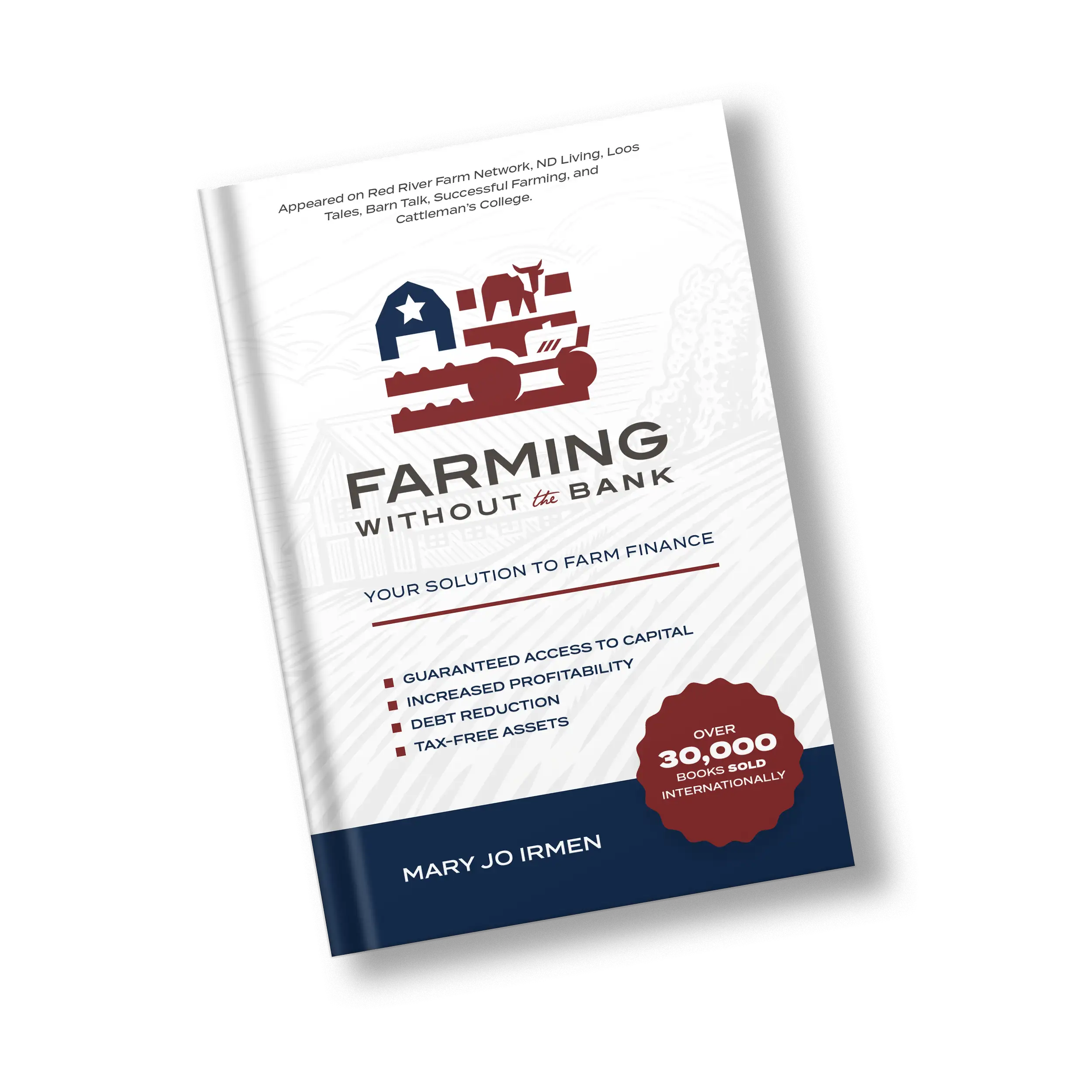
Buy the book: Farming Without the Bank
Email Mary Jo: MaryJo@WithoutTheBank.com
Audio Production by Podsworth Media
CHAPTER TIMESTAMPS
- 00:00What Makes Successful Farmers Different
- 00:18Welcome and Mary Jo’s Two Podcasts
- 00:52Traits of Successful Farm and Ranch Clients
- 01:33No Arrival Syndrome: Keep Learning
- 02:52They Weren’t Given the Farm
- 05:11Why Inheriting a Farm Isn’t Always Easy
- 07:11Starting a Farm From Scratch
- 09:34Problem Solvers, Not Victims
- 12:24Making Time to Learn and Take Action
- 16:45When the Banker Says No
- 18:40Bonus: Know Your Numbers
- 19:27Turning Rejection Into Motivation
- 21:01Managing Your Energy and Thinking Like an Owner
- 24:18Black Sheep Summit and Learning From Others
- 26:14Get the Book and Schedule Your Appointment
YOUTUBE EPISODE
TRANSCRIPTION
"It doesn't matter what industry. The majority of people are going to be down here and you're going to have a very very select few up here. So, these people are going to be looking at these people and saying they got everything handed to them. It's so easy. No, they make it look easy because they did these six things."
Hello, hello and welcome back to the podcast. Thank you very much for being here.
Okay, first of all, I keep forgetting to mention this. But, a lot of you, even clients, don't know that I have two podcasts. And so, I have a Without the Bank podcast and I have a Farming Without the Bank. So, over here, we talk about all things farming. Over there, we talk about all things business and mostly blue-collar business. So, if you don't know, I've got two. Double me every week. Aren't you lucky?
All right, today we're going to talk about the five things that I see with my clients that are not the stereotype of the farming industry. And I think that this is important because when I say something or when we clip something, it's amazing to me how many people comment about basically I'm an idiot and I don't know anything about farming because I'm saying stuff that is out of the norm to them. And I've said some of this stuff before, but let's just go over the five things. And the first one being no arrival syndrome.
My clients, they don't think they know everything. And Nelson talks about this. It is called the arrival syndrome. When we think we have nothing left to learn. My clients are reading books. They are listening to podcasts. They're reading articles and magazines. They're watching videos. They're constantly filling their cup of information on a various level of topics.
They are not just saying, "I'm traditional farming, that's all I'm going to listen to is traditional farming. I do regenerative, that's all I'm going to listen to is regenerative." They try to understand one another. They try to understand new products. They're looking at them, they're researching them. A lot of times they're watching what's going on in the news and those sort of things, but they 100% do not have the arrival syndrome.
Because think about it, if they did they would not be on the phone with me. I am teaching the complete opposite of anything financial and how to use money compared to what they're learning or what they've been brought up with or what anybody's been brought up with. So, anybody that talks to me does not have the arrival syndrome. The other thing is is they were not given anything. I love this. Because most people will think, "Well, yeah Mary Jo, it's easy for your farmers to make money cuz they were given the farm." Oh, really? Really? So, now we have the assumption syndrome where we're going to assume somebody was given something.
I don't react to it anymore, but it's always a little bit internally funny to me when people come into their first meeting and they're like, "Yeah, we have a really unique situation." And then they tell me about what's happening with the farm and it's not unique at all. It is the exact same thing that's happening across the board in every single family.
What's unique is somebody that has an estate plan. Somebody that was given a farm. Those things are unique. It's not unique to have issues because most people are doing it the same and most people are doing it the same because they're not estate planning.
But my clients the majority of my clients, and I'm going to say out of all the clients I have, which are several thousand, I'm going to say that we are probably I've maybe talked to five people. Let's just stretch it and say 10 that have gotten something that were given the farm. They didn't have to actually buy the farm. There was an estate plan there.
It's very rare that happens. And so for somebody to say, "Well, it's easy for the guy that's taking over because it was given to him. Mary Jo, your clients have money cuz it was given to them." No, it wasn't.
The majority of those people that are now farming it had to buy it from siblings. They farmed for many, many years and did not get paid. And so they're all going through the same thing. They've maybe bought their own equipment, they've bought their own land on the side.
They're renting their own land on the side. What they have gotten is to use dad's equipment along the way. Some of them are paying rent in the form of labor. Some of them are paying an actual rent payment on the equipment. Does that give them a little bit of a leg up? Absolutely.
But they still have to manage it. And I think that this is interesting, too, because people will say, "Oh, it's so easy if it's given to you." Is it easy if it's given to you? And I've done podcasts on this a long time ago. Because let's just look at that person that was given to them.
If mom and dad are still alive they sort of have to farm mom and dad's practices. If mom and dad didn't actually give them the land yet, okay? Let's just say that they were given the farming operation, but they weren't given the land.
Dad might say, "You're farming traditional." But the kid might say, "I want to do some regenerative farming." And dad says, "No, cuz it's still my land." So, when we get given something, there's also this understanding of how you're going to do it. And the majority of parents don't want you to change what they were doing.
So, I'm given something or I got started doing something, but if I'm farming with mom and dad, I still have to farm the way they want me to farm. They might not be open to new practices. And so, with being given something also comes the challenges. And let's just look at history. Most operations will fall apart in 3 years. It's kind of a statistic. Anybody that created a lot of wealth, by the end of 3 years, that wealth is gone. And it's gone because the knowledge hasn't been passed down of financial literacy.
And so, even if we look at the Rockefellers, who were doing very, very well. Phenomenal. The Rothschilds? No. We don't ever hear about them anymore because the knowledge of finance and business wasn't passed down. So, you can be given something, but that doesn't mean anything.
My clients were not given anything. They've had to work for it. They've had to understand the financials of it, which has made them better farmers.
And then, number three, I have a lot of clients that start from scratch. Absolute 100% scratch. They may come from the city and start farming on their own. They might come from an operation where they did have the knowledge, but they have moved across the country.
They have left the family farm, and they have started from scratch on their own with zero help. Maybe there were three or four kids in the family that wanted to farm or ranch. And the homestead could not handle that. So now we have a kid that went completely out on his own.
And they started from scratch. Did they have the knowledge? Yes. But what knowledge did they take with them? They most likely took the knowledge of traditional farm and ranch. And that's great if that's how they want to ranch. But if that's not working, they now have to learn everything new.
And they have to implement new things, which is nothing that they know. I have a lot of farmers that do regenerative agriculture. I would say the majority of my clients are regen. Think about it. They had to learn everything over.
What they learned from mom, dad, grandpa, and grandma did not apply. And they left and started from scratch. They are learning somewhat at the same rate as somebody else coming in from town. The difference is the town people, I'll call them town people, the town people that have no background in agriculture, they actually might be picking things up faster because they don't have all this noise of the past that they need to rewire.
It's kind of like infinite banking. You're having to rewire thinking about rates of return, thinking about 401(k)s, IRAs, tax deductions now versus later. I'm asking you to completely rewire your brain. And they're having to do the same thing. But I have a lot of clients that start from scratch. And I have a lot of clients that were given nothing because that's just how farming and ranching goes.
And then number five, my clients are problem solvers. They do not sit and wallow in their tears if something is happening.
It's always very interesting when markets change. It doesn't matter if it's commodity markets, cattle markets, the noise is everybody's screaming and crying because markets went down. My clients don't do that. They're like, "Okay, yep, this is what happens. This is how we prepare for that. Does it suck? 100%. Are we going to pivot and figure it out? 100%.
Do we maybe need to learn about crop insurance? Do we maybe need to learn about buying puts and calls, marketing our grain? Yep. Don't ask me about any of that stuff, but they are doing those things to protect themselves.
They're reading the book. They are problem solvers. We as people can say, "We're just going to sit in bed and cry because the market went down and something happened, our tractor burned up, something unfortunate happened." Or, "We're going to get up, put our feet to the ground, and go do the things." And what I see on social media is the people that want to scream and yell, moan and complain, and they don't actually just shut up and get the job done. Now, that sounds very harsh. I get that. But it does not matter if it's farming or what industry it is, I see it in my own industry. Life insurance agents out there will start in this industry and they will think it's as easy as Mary Jo makes it look out to be. But they have to get their butt out of bed and they have to put in the work. It's no different in farming and ranching. My clients do not react when there is a market change. I shouldn't say that. Most of them don't react. Some of them will react. But if they react, that is a mindset shift. How can I solve that problem? Which I talk about a million times. Ask the question. How can I do that versus I am a victim to a circumstance.
When I look at the majority of my clientele, they're just pivoting. They're just saying, "Okay, prices went down. We'll figure it out." Or how can this not affect me? How can I prepare in the bad years or in the good years for the bad years? There's a lot of stuff that is mindset. And that is one thing that I see with my clients, the majority of my clients, is they don't have a victim mentality.
Because we go back to number one and they're always learning. They're always listening. They're always putting perspective on things.
And the people online are too busy online bitching, moaning, and complaining. And then they wonder why they're the victim. It's because you're spending your time here complaining, hoping somebody else comes in and saves you instead of figuring out how to save yourself.
There's all these life jackets out there. Or life rings or I don't know. I don't swim, okay? Life the ring, the floaty things. There's all these lifesaver things out there.
My books, podcasts, videos, all kinds of books, materials on all sorts of things. If you want to market your grain, there's that. If you want to do sell-buy marketing, there's that. There's all these things that you can be arming yourself with. All these lifesavers out there.
And you're just like, "Nope. Too much work to go over there and grab one of those. I'm just going to wait to be saved. Nobody's coming to save you. You better figure out how your mindset is going to get you to reach for one of those lifesavers and start learning.
Oh, Mary Jo, I'm too busy. You're too busy to listen to a podcast? Really? You're driving? You know how many clients I have that tell me that they drive, they listen to my podcast while they're driving. Their kids know my voice. They know the introduction to this podcast. That's why I try not to cuss on here because I know there's a lot of little people listening. Because mom and dad are saying, well, I'm driving you to school, it's my only time to listen. So, we're listening.
We're going on a family vacation, we're listening to Mary Jo. I can't tell you how many times I've heard that. Like, I've been all over the world. But, they are not victims of their circumstances.
They are problem solvers. They will pivot, they will figure it out, and they will move forward. That is a very different mindset to the majority of who's out there. And it doesn't matter if that majority is farming and ranching, and agriculture, or if that majority is small business, if that majority is doctors, lawyers, it does not matter. It does not matter. Why can somebody start a business and be successful? Why can I have a farmer that started from scratch and is now farming 3,000 to 6,000 acres? Why is oh, he was given it. Oh, we have to make every darn excuse in the book why he is successful, but I am not. And I will tell you, it's very simple.
The guy that's successful has a very different mindset than the guy that isn't. The guy that isn't is working really, really hard, not learning anything, victim mentality. That is what's happening. So, when I am out here talking about my clients and my experiences after visiting with thousands of farmers it is because of these five things. And it really just comes down to those five things.
If you took those away, you have 97% of America. Doesn't matter what industry, but that's what you have.
And I see it, like I've said, with my colleagues. And it's so fun to watch the top 3% who actually do what they need to do, and they don't let the noise get to them.
Is everything going to work right away? No. No. I talked to a guy last week. He's never farmed a day in his life. He doesn't know anything about farming. He didn't come from farming. Grandpa and Grandma didn't farm. He knows nothing.
He's taking classes. He's learning. He's talking to accountants. He's talking to anybody and everybody he can talk to. Will he be successful? I don't know. If he keeps going.
But if you just say, "Well, I can't do that." Then you're not going to be able to do it. This is another one that I like on this topic. Is that when bankers tell people no, I actually enjoy that. I find it's frustrating as heck in the moment. You are frustrated. You need whatever money you need to go do whatever it is you need to do. I don't care if it's building corrals, building the farm from scratch, buying fertilizer, chemical, whatever.
But when the banker says no, it forces you to pivot and do something else to make it work. If the banker tells you no and you shut down, you are not a problem solver. You have the victim mentality, which can be changed, but you are not a problem solver. You immediately say, "Well, I couldn't do it. They wouldn't let me." Nope.
If you persevere and you get through that, then guess what? All of a sudden the bank might say yes later on.
But when the bank says no, I absolutely love it because it makes you do something else and figure out how are you going to fund this endeavor without having the bank easy money right there. Are you going to have to work off the farm? Are you going to have to sell something else? What are you going to have to do to make it all work? How bad do you want it?
All up here. And I talk about this a lot. And you guys can tell me I'm full of hogwash. I really don't care. Doesn't matter to me because I see it firsthand. Who are the successful people?
All of those things, even if you run it like a business with the correct numbers, you could have a bad mindset and it all falls apart.
Add number six in there, I'll give you a bonus of knowing your numbers, now all of a sudden you're running it like a business, you know your numbers, you know what's profitable, you know what's not profitable, you know what to change. Game changer, success.
Might sound like it's easy success. At that point, if you combine all six of these things, it is easy success. We'll see how much hate I get for that.
Bring on the hate because it drives the algorithm, it gives me content. It actually drives me. The more that I get like nasty comments, the more it drives me. If everybody agreed with me, it would be boring. But, as soon as somebody tells me no, I'm the person that's like, "How can I?"
Because I have had speaking events where I have been told I can't come because a bank sponsors it, or I can't speak more than twice, I can't have a breakout, or maybe I can't have two breakout, something like that, because a bank is sponsoring it and they're scared. Or there's a certain farm agency that a lot of my clients belong to that will not let me speak anywhere.
They will shut me down instantly. And you guys pay to be a part of this farm agency. And this farm organization, and they will not let me come in. Oh my goodness. No, no, you're not selling their insurance, so you can't come in and do anything.
That drives me to the point where if I needed to, I will drive this country and put books in mailboxes. You have no idea how much that motivates me.
So, when I'm down and being kicked, I'm trying to figure out how can I get back up? I don't just lay down and concede and be like, "Well, it's all over. They didn't like me." No. No, not at all. You just poked the bear.
And now I am going to figure out how I'm going to do it with or without you. And places like that where you're paying money, and they're supposed to be providing you information in your best interest, oh no. No, no. I'm a fighter.
And I've learned I have to manage that fight energy. And one of the things, and I was just talking to some friends about this on Saturday, is that I really like I like to know what's going on in the news, but I have to manage how much of the news I take in. And when I say news, this also sets people off. I'm not talking about TV news. I'm talking about news across all channels, all platforms, everything, okay?
I have to manage because if I I'm a doer. And so if I see something that needs to be changed, I am typically the one to change it. And I didn't know this about myself until I was working a job. That I had a really good manager. It's like I haven't had that many good managers in my life in my past life, but in this particular job, I finally had one good manager.
And in my performance review, she said, "I want you to stop volunteering to do everything." And I said, "What are you talking about?"
She's like, "Mary Jo, your whole team goes into a team meeting, and they don't say anything. They don't volunteer to do anything. They don't volunteer to take charge of anything because they know you will do it."
I'm like, "What?" She's like, "You just do it all. You take on all of it, and then they sit around and do nothing."
She's like, "I want you to sit on your hands in the next few meetings where I'm asking for volunteers to do something. I don't want you saying a word. You are not going to volunteer to do that." And I thought, "Huh. I had not noticed." If something needs to be done, I'm just going to do it. Nobody else is volunteering, let's go. Let's get it done.
And I liked the big issues that I could clean up. I would take the really big problems that this company had, and I'd be like, "Okay, let's organize it. Let's get it done." And I want it finished, and I want to see the progress, and I like to do that kind of stuff.
And so, I would just take on those big projects where nobody else wanted it cuz it was their job. They just wanted to click to clock in and clock out and whatever.
And I always was like I always wanted to think from the manager standpoint, from the CEO standpoint. Like, I even said something to the CEO of the company at one point. And she kind of stood back and said, "What?"
She was Mary Jo, nobody else here understands that point of the company. I'm like, "What do you mean? You gave us all this stuff that costs us money, that costs you money." And I don't even remember what it was, but she's like, "Nobody else here thinks like that."
And even at that point yet, I still didn't understand that I was thinking from a very different level. I was thinking from that business owner level. I was problem-solving. I was thinking about a much bigger picture than what the majority of people think about. And so, it doesn't matter what industry. The majority of people are going to be down here, and you're going to have a very very select few up here. So, these people are going to be looking at these people and saying they got everything handed to them. It's so easy. No, they make it look easy because they did these six things.
All right, you guys. If you are a client, check your emails. We have our Black Sheep Summit that is coming up. So, make sure that you get registered for that. That is in January. It is going to be phenomenal. You're in a room with a bunch of people that think like you.
A bunch of people that you get to learn from.
And I've been talking to quite a few of you, and it really does come down to priorities. A lot of people will say they can't get away, and I can understand that. But if you can get away for a couple of days, will it advance where you're at today?
I have to leave my business as much as I don't love to. I have to leave my business. We have to find people to take care of our place so that we can get away to do things. So I can surround myself with people very much like me.
And it's amazing. I just talked to one of my colleagues last week. And he had answers for me that I've been looking for 6 months. And I thought, "Duh, Mary Jo, why did you not call him earlier?" And here's the thing, had I not gone and done all the things I've done in this industry, I would have never met him. And so it's very awesome to be able to say, "Hey, I can call him. I can get information from him."
And he's way more experienced than I am. So if you have the ability to come, come. If And here's another thing I've noticed is that a lot of women are saying they'd like to come, but they don't want to come without their husbands. Leave your stinking husband at home. You don't need to bring him along.
We had a whole group of women last year that came by themselves. If he doesn't want to come cuz he doesn't want to leave the farm, then one of you come. At least you can bring that knowledge home and you've made contacts there. So just think about it. Read your emails. Get signed up to go cuz we're excited to see you there. Hey, I get to meet you in person. That's exciting if I've not met you in person yet.
All right, you guys. You let me know if you need anything. maryjo@withoutthebank.com, john@withoutthebank.com. Go to farmingwithoutthebank.com. Grab your book. Schedule your appointment and let's see if we can get you started.
All right, you have a fantastic rest of your day.
View MoreHello, hello and welcome back to the podcast. Thank you very much for being here.
Okay, first of all, I keep forgetting to mention this. But, a lot of you, even clients, don't know that I have two podcasts. And so, I have a Without the Bank podcast and I have a Farming Without the Bank. So, over here, we talk about all things farming. Over there, we talk about all things business and mostly blue-collar business. So, if you don't know, I've got two. Double me every week. Aren't you lucky?
All right, today we're going to talk about the five things that I see with my clients that are not the stereotype of the farming industry. And I think that this is important because when I say something or when we clip something, it's amazing to me how many people comment about basically I'm an idiot and I don't know anything about farming because I'm saying stuff that is out of the norm to them. And I've said some of this stuff before, but let's just go over the five things. And the first one being no arrival syndrome.
My clients, they don't think they know everything. And Nelson talks about this. It is called the arrival syndrome. When we think we have nothing left to learn. My clients are reading books. They are listening to podcasts. They're reading articles and magazines. They're watching videos. They're constantly filling their cup of information on a various level of topics.
They are not just saying, "I'm traditional farming, that's all I'm going to listen to is traditional farming. I do regenerative, that's all I'm going to listen to is regenerative." They try to understand one another. They try to understand new products. They're looking at them, they're researching them. A lot of times they're watching what's going on in the news and those sort of things, but they 100% do not have the arrival syndrome.
Because think about it, if they did they would not be on the phone with me. I am teaching the complete opposite of anything financial and how to use money compared to what they're learning or what they've been brought up with or what anybody's been brought up with. So, anybody that talks to me does not have the arrival syndrome. The other thing is is they were not given anything. I love this. Because most people will think, "Well, yeah Mary Jo, it's easy for your farmers to make money cuz they were given the farm." Oh, really? Really? So, now we have the assumption syndrome where we're going to assume somebody was given something.
I don't react to it anymore, but it's always a little bit internally funny to me when people come into their first meeting and they're like, "Yeah, we have a really unique situation." And then they tell me about what's happening with the farm and it's not unique at all. It is the exact same thing that's happening across the board in every single family.
What's unique is somebody that has an estate plan. Somebody that was given a farm. Those things are unique. It's not unique to have issues because most people are doing it the same and most people are doing it the same because they're not estate planning.
But my clients the majority of my clients, and I'm going to say out of all the clients I have, which are several thousand, I'm going to say that we are probably I've maybe talked to five people. Let's just stretch it and say 10 that have gotten something that were given the farm. They didn't have to actually buy the farm. There was an estate plan there.
It's very rare that happens. And so for somebody to say, "Well, it's easy for the guy that's taking over because it was given to him. Mary Jo, your clients have money cuz it was given to them." No, it wasn't.
The majority of those people that are now farming it had to buy it from siblings. They farmed for many, many years and did not get paid. And so they're all going through the same thing. They've maybe bought their own equipment, they've bought their own land on the side.
They're renting their own land on the side. What they have gotten is to use dad's equipment along the way. Some of them are paying rent in the form of labor. Some of them are paying an actual rent payment on the equipment. Does that give them a little bit of a leg up? Absolutely.
But they still have to manage it. And I think that this is interesting, too, because people will say, "Oh, it's so easy if it's given to you." Is it easy if it's given to you? And I've done podcasts on this a long time ago. Because let's just look at that person that was given to them.
If mom and dad are still alive they sort of have to farm mom and dad's practices. If mom and dad didn't actually give them the land yet, okay? Let's just say that they were given the farming operation, but they weren't given the land.
Dad might say, "You're farming traditional." But the kid might say, "I want to do some regenerative farming." And dad says, "No, cuz it's still my land." So, when we get given something, there's also this understanding of how you're going to do it. And the majority of parents don't want you to change what they were doing.
So, I'm given something or I got started doing something, but if I'm farming with mom and dad, I still have to farm the way they want me to farm. They might not be open to new practices. And so, with being given something also comes the challenges. And let's just look at history. Most operations will fall apart in 3 years. It's kind of a statistic. Anybody that created a lot of wealth, by the end of 3 years, that wealth is gone. And it's gone because the knowledge hasn't been passed down of financial literacy.
And so, even if we look at the Rockefellers, who were doing very, very well. Phenomenal. The Rothschilds? No. We don't ever hear about them anymore because the knowledge of finance and business wasn't passed down. So, you can be given something, but that doesn't mean anything.
My clients were not given anything. They've had to work for it. They've had to understand the financials of it, which has made them better farmers.
And then, number three, I have a lot of clients that start from scratch. Absolute 100% scratch. They may come from the city and start farming on their own. They might come from an operation where they did have the knowledge, but they have moved across the country.
They have left the family farm, and they have started from scratch on their own with zero help. Maybe there were three or four kids in the family that wanted to farm or ranch. And the homestead could not handle that. So now we have a kid that went completely out on his own.
And they started from scratch. Did they have the knowledge? Yes. But what knowledge did they take with them? They most likely took the knowledge of traditional farm and ranch. And that's great if that's how they want to ranch. But if that's not working, they now have to learn everything new.
And they have to implement new things, which is nothing that they know. I have a lot of farmers that do regenerative agriculture. I would say the majority of my clients are regen. Think about it. They had to learn everything over.
What they learned from mom, dad, grandpa, and grandma did not apply. And they left and started from scratch. They are learning somewhat at the same rate as somebody else coming in from town. The difference is the town people, I'll call them town people, the town people that have no background in agriculture, they actually might be picking things up faster because they don't have all this noise of the past that they need to rewire.
It's kind of like infinite banking. You're having to rewire thinking about rates of return, thinking about 401(k)s, IRAs, tax deductions now versus later. I'm asking you to completely rewire your brain. And they're having to do the same thing. But I have a lot of clients that start from scratch. And I have a lot of clients that were given nothing because that's just how farming and ranching goes.
And then number five, my clients are problem solvers. They do not sit and wallow in their tears if something is happening.
It's always very interesting when markets change. It doesn't matter if it's commodity markets, cattle markets, the noise is everybody's screaming and crying because markets went down. My clients don't do that. They're like, "Okay, yep, this is what happens. This is how we prepare for that. Does it suck? 100%. Are we going to pivot and figure it out? 100%.
Do we maybe need to learn about crop insurance? Do we maybe need to learn about buying puts and calls, marketing our grain? Yep. Don't ask me about any of that stuff, but they are doing those things to protect themselves.
They're reading the book. They are problem solvers. We as people can say, "We're just going to sit in bed and cry because the market went down and something happened, our tractor burned up, something unfortunate happened." Or, "We're going to get up, put our feet to the ground, and go do the things." And what I see on social media is the people that want to scream and yell, moan and complain, and they don't actually just shut up and get the job done. Now, that sounds very harsh. I get that. But it does not matter if it's farming or what industry it is, I see it in my own industry. Life insurance agents out there will start in this industry and they will think it's as easy as Mary Jo makes it look out to be. But they have to get their butt out of bed and they have to put in the work. It's no different in farming and ranching. My clients do not react when there is a market change. I shouldn't say that. Most of them don't react. Some of them will react. But if they react, that is a mindset shift. How can I solve that problem? Which I talk about a million times. Ask the question. How can I do that versus I am a victim to a circumstance.
When I look at the majority of my clientele, they're just pivoting. They're just saying, "Okay, prices went down. We'll figure it out." Or how can this not affect me? How can I prepare in the bad years or in the good years for the bad years? There's a lot of stuff that is mindset. And that is one thing that I see with my clients, the majority of my clients, is they don't have a victim mentality.
Because we go back to number one and they're always learning. They're always listening. They're always putting perspective on things.
And the people online are too busy online bitching, moaning, and complaining. And then they wonder why they're the victim. It's because you're spending your time here complaining, hoping somebody else comes in and saves you instead of figuring out how to save yourself.
There's all these life jackets out there. Or life rings or I don't know. I don't swim, okay? Life the ring, the floaty things. There's all these lifesaver things out there.
My books, podcasts, videos, all kinds of books, materials on all sorts of things. If you want to market your grain, there's that. If you want to do sell-buy marketing, there's that. There's all these things that you can be arming yourself with. All these lifesavers out there.
And you're just like, "Nope. Too much work to go over there and grab one of those. I'm just going to wait to be saved. Nobody's coming to save you. You better figure out how your mindset is going to get you to reach for one of those lifesavers and start learning.
Oh, Mary Jo, I'm too busy. You're too busy to listen to a podcast? Really? You're driving? You know how many clients I have that tell me that they drive, they listen to my podcast while they're driving. Their kids know my voice. They know the introduction to this podcast. That's why I try not to cuss on here because I know there's a lot of little people listening. Because mom and dad are saying, well, I'm driving you to school, it's my only time to listen. So, we're listening.
We're going on a family vacation, we're listening to Mary Jo. I can't tell you how many times I've heard that. Like, I've been all over the world. But, they are not victims of their circumstances.
They are problem solvers. They will pivot, they will figure it out, and they will move forward. That is a very different mindset to the majority of who's out there. And it doesn't matter if that majority is farming and ranching, and agriculture, or if that majority is small business, if that majority is doctors, lawyers, it does not matter. It does not matter. Why can somebody start a business and be successful? Why can I have a farmer that started from scratch and is now farming 3,000 to 6,000 acres? Why is oh, he was given it. Oh, we have to make every darn excuse in the book why he is successful, but I am not. And I will tell you, it's very simple.
The guy that's successful has a very different mindset than the guy that isn't. The guy that isn't is working really, really hard, not learning anything, victim mentality. That is what's happening. So, when I am out here talking about my clients and my experiences after visiting with thousands of farmers it is because of these five things. And it really just comes down to those five things.
If you took those away, you have 97% of America. Doesn't matter what industry, but that's what you have.
And I see it, like I've said, with my colleagues. And it's so fun to watch the top 3% who actually do what they need to do, and they don't let the noise get to them.
Is everything going to work right away? No. No. I talked to a guy last week. He's never farmed a day in his life. He doesn't know anything about farming. He didn't come from farming. Grandpa and Grandma didn't farm. He knows nothing.
He's taking classes. He's learning. He's talking to accountants. He's talking to anybody and everybody he can talk to. Will he be successful? I don't know. If he keeps going.
But if you just say, "Well, I can't do that." Then you're not going to be able to do it. This is another one that I like on this topic. Is that when bankers tell people no, I actually enjoy that. I find it's frustrating as heck in the moment. You are frustrated. You need whatever money you need to go do whatever it is you need to do. I don't care if it's building corrals, building the farm from scratch, buying fertilizer, chemical, whatever.
But when the banker says no, it forces you to pivot and do something else to make it work. If the banker tells you no and you shut down, you are not a problem solver. You have the victim mentality, which can be changed, but you are not a problem solver. You immediately say, "Well, I couldn't do it. They wouldn't let me." Nope.
If you persevere and you get through that, then guess what? All of a sudden the bank might say yes later on.
But when the bank says no, I absolutely love it because it makes you do something else and figure out how are you going to fund this endeavor without having the bank easy money right there. Are you going to have to work off the farm? Are you going to have to sell something else? What are you going to have to do to make it all work? How bad do you want it?
All up here. And I talk about this a lot. And you guys can tell me I'm full of hogwash. I really don't care. Doesn't matter to me because I see it firsthand. Who are the successful people?
All of those things, even if you run it like a business with the correct numbers, you could have a bad mindset and it all falls apart.
Add number six in there, I'll give you a bonus of knowing your numbers, now all of a sudden you're running it like a business, you know your numbers, you know what's profitable, you know what's not profitable, you know what to change. Game changer, success.
Might sound like it's easy success. At that point, if you combine all six of these things, it is easy success. We'll see how much hate I get for that.
Bring on the hate because it drives the algorithm, it gives me content. It actually drives me. The more that I get like nasty comments, the more it drives me. If everybody agreed with me, it would be boring. But, as soon as somebody tells me no, I'm the person that's like, "How can I?"
Because I have had speaking events where I have been told I can't come because a bank sponsors it, or I can't speak more than twice, I can't have a breakout, or maybe I can't have two breakout, something like that, because a bank is sponsoring it and they're scared. Or there's a certain farm agency that a lot of my clients belong to that will not let me speak anywhere.
They will shut me down instantly. And you guys pay to be a part of this farm agency. And this farm organization, and they will not let me come in. Oh my goodness. No, no, you're not selling their insurance, so you can't come in and do anything.
That drives me to the point where if I needed to, I will drive this country and put books in mailboxes. You have no idea how much that motivates me.
So, when I'm down and being kicked, I'm trying to figure out how can I get back up? I don't just lay down and concede and be like, "Well, it's all over. They didn't like me." No. No, not at all. You just poked the bear.
And now I am going to figure out how I'm going to do it with or without you. And places like that where you're paying money, and they're supposed to be providing you information in your best interest, oh no. No, no. I'm a fighter.
And I've learned I have to manage that fight energy. And one of the things, and I was just talking to some friends about this on Saturday, is that I really like I like to know what's going on in the news, but I have to manage how much of the news I take in. And when I say news, this also sets people off. I'm not talking about TV news. I'm talking about news across all channels, all platforms, everything, okay?
I have to manage because if I I'm a doer. And so if I see something that needs to be changed, I am typically the one to change it. And I didn't know this about myself until I was working a job. That I had a really good manager. It's like I haven't had that many good managers in my life in my past life, but in this particular job, I finally had one good manager.
And in my performance review, she said, "I want you to stop volunteering to do everything." And I said, "What are you talking about?"
She's like, "Mary Jo, your whole team goes into a team meeting, and they don't say anything. They don't volunteer to do anything. They don't volunteer to take charge of anything because they know you will do it."
I'm like, "What?" She's like, "You just do it all. You take on all of it, and then they sit around and do nothing."
She's like, "I want you to sit on your hands in the next few meetings where I'm asking for volunteers to do something. I don't want you saying a word. You are not going to volunteer to do that." And I thought, "Huh. I had not noticed." If something needs to be done, I'm just going to do it. Nobody else is volunteering, let's go. Let's get it done.
And I liked the big issues that I could clean up. I would take the really big problems that this company had, and I'd be like, "Okay, let's organize it. Let's get it done." And I want it finished, and I want to see the progress, and I like to do that kind of stuff.
And so, I would just take on those big projects where nobody else wanted it cuz it was their job. They just wanted to click to clock in and clock out and whatever.
And I always was like I always wanted to think from the manager standpoint, from the CEO standpoint. Like, I even said something to the CEO of the company at one point. And she kind of stood back and said, "What?"
She was Mary Jo, nobody else here understands that point of the company. I'm like, "What do you mean? You gave us all this stuff that costs us money, that costs you money." And I don't even remember what it was, but she's like, "Nobody else here thinks like that."
And even at that point yet, I still didn't understand that I was thinking from a very different level. I was thinking from that business owner level. I was problem-solving. I was thinking about a much bigger picture than what the majority of people think about. And so, it doesn't matter what industry. The majority of people are going to be down here, and you're going to have a very very select few up here. So, these people are going to be looking at these people and saying they got everything handed to them. It's so easy. No, they make it look easy because they did these six things.
All right, you guys. If you are a client, check your emails. We have our Black Sheep Summit that is coming up. So, make sure that you get registered for that. That is in January. It is going to be phenomenal. You're in a room with a bunch of people that think like you.
A bunch of people that you get to learn from.
And I've been talking to quite a few of you, and it really does come down to priorities. A lot of people will say they can't get away, and I can understand that. But if you can get away for a couple of days, will it advance where you're at today?
I have to leave my business as much as I don't love to. I have to leave my business. We have to find people to take care of our place so that we can get away to do things. So I can surround myself with people very much like me.
And it's amazing. I just talked to one of my colleagues last week. And he had answers for me that I've been looking for 6 months. And I thought, "Duh, Mary Jo, why did you not call him earlier?" And here's the thing, had I not gone and done all the things I've done in this industry, I would have never met him. And so it's very awesome to be able to say, "Hey, I can call him. I can get information from him."
And he's way more experienced than I am. So if you have the ability to come, come. If And here's another thing I've noticed is that a lot of women are saying they'd like to come, but they don't want to come without their husbands. Leave your stinking husband at home. You don't need to bring him along.
We had a whole group of women last year that came by themselves. If he doesn't want to come cuz he doesn't want to leave the farm, then one of you come. At least you can bring that knowledge home and you've made contacts there. So just think about it. Read your emails. Get signed up to go cuz we're excited to see you there. Hey, I get to meet you in person. That's exciting if I've not met you in person yet.
All right, you guys. You let me know if you need anything. maryjo@withoutthebank.com, john@withoutthebank.com. Go to farmingwithoutthebank.com. Grab your book. Schedule your appointment and let's see if we can get you started.
All right, you have a fantastic rest of your day.
ready to start?
Your farm’s financial independence starts with one book.
30,000 farmers and ranchers have already made the shift. The only question is how long you’ll keep paying interest you could be keeping yourself.