 GET THE BOOK
 GET THE BOOK
Most farm families plan for the obvious things. Planting. Harvest. Equipment. Land payments, operating loans, commodity prices, weather, the next season.
But one of the biggest threats to the family farm is the one nobody wants to talk about: long-term care.
Nobody wants to imagine needing help with daily care, or think about nursing homes, health decline, or what happens when Mom or Dad can no longer manage life the way they always have. Avoiding the conversation doesn't make the risk go away.
For farm families, long-term care planning isn't just about care costs. It's about protecting the farm, preserving options, creating liquidity, and making sure one crisis doesn't undo generations of work.
The family farm isn't just an asset on paper. It's the family's livelihood, history, business, identity, and future. That's why this planning needs to happen before a crisis forces the decisions.

Why Long-Term Care Planning Matters for Farm Families
The farm is different from a regular household asset. A typical family plans around a house, retirement accounts, savings, and personal property. A farm family plans around land, equipment, buildings, operating debt, family labor, succession expectations, and a business that may need to keep running while someone needs care.
That raises the stakes.
If a care situation hits without a plan, the family suddenly has to answer questions they should have addressed years earlier:
- Who will pay for care?
- Will farm cash flow be affected?
- Are the right legal documents in place?
- Who has access to accounts, policies, and records?
- Does the next generation know what to do?
- Could the farm operation be disrupted?
- Is there enough liquidity outside the land?
These aren't small questions. They can affect the future of the entire operation. Planning gives the family a chance to think through this before emotions, time pressure, and crisis take over.
What Is Long-Term Care Planning?
Long-term care planning is preparing for future care needs before those needs become urgent. It can include help at home, assisted living, nursing home care, family caregiving, medical decisions, legal documents, financial resources, insurance options, estate planning, and who's responsible for decisions.
For farm families, it should also cover how care needs could affect the farm business. A good plan should answer:
- What happens if one parent needs care? Both parents?
- Who will manage the farm if the current operator can't?
- What money is available without selling land or equipment?
- How does this affect the estate plan and farm succession?
- Who has authority to make decisions?
- What does the next generation need to know now?
The point isn't to predict every possible outcome. It's to create options before the family needs them.
The Family Farm Is Not Just Another Asset
A farm can look valuable on paper and still be cash poor. That's what makes this planning so important.
Land may be worth a lot, but that doesn't mean the family has accessible cash for a care crisis. Equipment may have value, but selling it could weaken the operation. The farm may be the largest asset, but it may also be the next generation's source of income.
Farm families can't treat the farm like a simple investment account. If long-term care costs create financial pressure, the family may be forced into decisions that affect more than one person's care- decisions that touch the business, the heirs, the successor, the debt structure, and whether the operation can keep going.
The question isn't just "how do we pay for care?" It's "how do we plan for care without putting the farm at unnecessary risk."

Nursing Home Costs Can Create a Farm Crisis
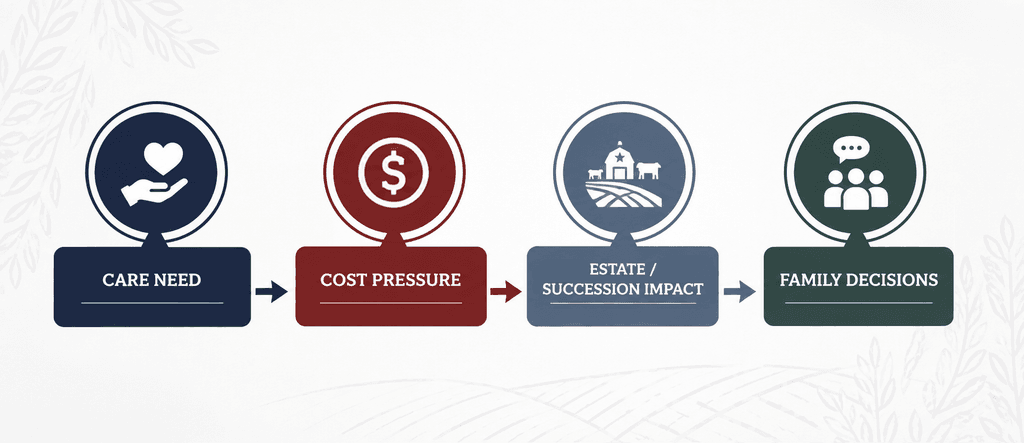
A long-term care event can create pressure fast. It can strain monthly cash flow, create confusion about who's responsible for decisions, expose gaps in the estate plan, spark conflict between farming and non-farming heirs, and force the next generation to take over before they're ready.
For farmers, this hits harder because so much wealth is tied up in the farm itself. A family may have land but not enough liquid cash. They may have equipment they need to keep operating. They may have a succession idea but no written plan. They may have family members who assume different things.
When long-term care enters the picture, those gaps get harder to ignore. Nursing home planning shouldn't wait until someone's already in crisis. By then, options are more limited, emotions run higher, and the family gets pushed into reactive decisions.
Protect Assets Before Care Is Needed, Not After
A lot of families start asking about protecting assets from nursing home costs only after care is already needed. That's usually too late to be strategic.
The earlier the family starts, the more options they have. This is where qualified legal, tax, insurance, and financial professionals matter. Long-term care planning involves complicated rules, timelines, ownership structures, and estate planning considerations.
This isn't legal or financial advice. But the principle is simple: don't wait for the crisis to ask what can be protected.
Farm families should review:
- How the land is titled
- Who owns the operating entity
- What estate planning documents exist
- Whether powers of attorney are updated
- What liquidity is available
- How care costs could affect the farm
- Whether life insurance or other financial tools are part of the plan
- How the next generation would step in if needed
The goal isn't hiding assets or rushing decisions. It's understanding the risk and planning responsibly while the family still has choices.
Long-Term Care and Farm Estate Planning Need to Work Together
A farm estate plan says who receives the land or assets after death. Long-term care affects what happens while the current generation is still alive.
If the estate plan only addresses what happens after death, it may not answer how care costs get paid, prepare the next generation to manage the farm, or clarify who has authority to make financial or medical decisions.
The family needs to know:
- Who makes decisions if someone becomes unable to?
- How will care be paid for?
- Will the farm need to produce income for care costs?
- Will the successor have enough authority to operate?
- Are non-farming heirs aware of the plan?
- What happens if the plan has to change?
An estate plan that ignores long-term care leaves the family exposed.
Liquidity Matters When the Farm Is Under Pressure
Farm families often have assets but not enough liquidity, and that's a major problem during a care crisis.
Liquidity is accessible money, money the family can use without being forced to sell land, liquidate equipment, or borrow under pressure. Without it, the family has fewer choices: sell something they wanted to keep, borrow while already stressed, dip into cash flow meant for operations, or make decisions fast instead of strategically.
This connects directly to the Farming Without the Bank message. Control matters. If the family doesn't control access to capital, a crisis hands that control to someone else: the bank, the marketplace, care providers, legal timelines, family pressure.
Long-term care planning needs a liquidity conversation. It's not enough to say "the farm is worth a lot." The family needs to know where usable money comes from when timing matters.
Why Waiting Too Long Limits the Family's Options
Waiting is one of the most expensive decisions a farm family can make. When everyone's healthy and communicating, there's room to plan: time to review documents, talk to professionals, prepare the next generation, build liquidity, and clarify expectations.
When a care crisis hits, everything gets harder. Decisions feel urgent. Family members disagree. The older generation can't explain what they wanted. The next generation doesn't know where documents are. The farm still needs to operate while everyone's overwhelmed.
Planning early doesn't mean expecting the worst. It means protecting options. The goal isn't fear. It's control.
Questions Farm Families Should Ask Now
- What happens if one parent needs long-term care? Both parents?
- How would care costs affect farm cash flow?
- Is the estate plan current?
- Who has power of attorney?
- Who can access bank accounts, insurance policies, passwords, and farm records?
- Does the successor know the farm's financial picture?
- Are farming and non-farming heirs clear on expectations?
- Is there liquidity outside the farm?
- Would the family need to borrow money, or sell land or equipment?
- What role does life insurance play in the plan?
- Do we have the right professionals involved?
These questions can be uncomfortable. They're much easier to answer before a crisis than during one.
Long-Term Care Planning Checklist for Farm Families
- Talk about what would happen if long-term care is needed
- Review current estate planning documents
- Confirm powers of attorney and healthcare directives
- Identify who has access to key accounts, documents, passwords, and contacts
- Review how the farm is owned and operated
- Discuss who would manage the farm if the current operator couldn't
- Review current debt and cash flow
- Identify available liquidity outside land and equipment
- Discuss how care costs could affect the farm business
- Review life insurance and other financial tools
- Clarify expectations with farming and non-farming heirs
- Connect long-term care planning with the farm succession plan
- Meet with qualified legal, tax, insurance, and financial professionals
- Revisit the plan regularly as the farm and family change
This checklist doesn't replace professional advice. It's a way to find the gaps before they become emergencies.
How Long-Term Care Planning Connects to Farm Succession
Long-term care planning and farm succession planning both come down to control. Who controls the farm, the money, the decisions? Who steps in when the current generation can't? Who actually understands the plan?
If the next generation is supposed to continue the farm, they need to understand what long-term care could do to that plan. A successor may be ready to operate but not ready for unexpected care costs. A family may have talked about inheritance but never about what happens if assets are needed during life. A parent may intend to keep the farm together but not have the liquidity or documents to back that intention up.
The farm doesn't just need a plan for death. It needs a plan for the life events that can disrupt the operation long before death ever comes into it.
Family Communication Is Part of the Plan
A written plan matters, but so does communication. Farm families get into trouble when everyone thinks they know the plan, but nobody's actually talked about it clearly.
The farming heir assumes they'll take over. The non-farming heirs assume assets will be split equally. The parents assume the kids understand why decisions were made. The successor doesn't know if they have authority to act. A spouse doesn't know where important records are kept.
A long-term care event exposes every one of those assumptions.
The goal isn't one giant conversation that solves everything in a day. It's building a habit of talking about this before the family is under pressure, while the older generation can still explain the plan, while the next generation can still ask questions, and while there's still time to adjust.
The Bottom Line
Long-term care planning isn't just a retirement issue. For farm families, it's a farm protection issue.
A care crisis can affect land, cash flow, estate planning, succession, family communication, and the future of the operation. The family may have valuable assets without the liquidity or clarity needed when care costs show up.
The best time to plan is before care is needed. If the family farm matters, talk about what happens when life changes. Not someday, not after a diagnosis, not when everyone's already overwhelmed.
Start now. Review the plan. Organize the documents. Talk to the right professionals. Build liquidity. Clarify expectations. Make sure the next generation knows what they need to know.
Protecting the family farm isn't only about what happens after someone dies. It's also about being ready for what happens while they're still living.
Read the book, listen to the related episodes, and start the conversation before a crisis makes the decisions for you.
Frequently Asked Questions
What is long-term care planning?
Preparing for future care needs before a crisis happens: home care, assisted living, nursing home care, legal documents, financial resources, insurance options, estate planning, and who makes decisions if someone becomes unable to.
Why is long-term care planning important for farmers?
Because the farm is often both a family asset and an operating business. A care crisis can affect cash flow, land, equipment, succession plans, family expectations, and the next generation's ability to continue the operation.
How do nursing home costs affect farm families?
They can pressure farm cash flow, family assets, estate plans, and succession decisions. Without liquidity or a clear plan, families get pushed into rushed decisions during a stressful time.
How can farmers protect assets from nursing home costs?
Start planning before care is needed and work with qualified legal, tax, insurance, and financial professionals. Review ownership structure, estate planning documents, liquidity, powers of attorney, and how care costs could affect the farm.
What is the connection between long-term care planning and estate planning?
Estate planning focuses on what happens to assets after death. Long-term care planning looks at what happens while someone's still alive but needs care. For farm families, both need to work together so the farm, family, and successor aren't left exposed.
When should farm families start long-term care planning?
Before there's a health crisis. Planning early means more options, more time with professionals, and more control over decisions.
Can long-term care costs affect the family farm?
Yes. They can pressure cash flow, force asset sales, disrupt succession plans, or create conflict between heirs. That's why planning and liquidity matter.
How does long-term care planning impact estate planning?
Care needs can affect assets before they're ever transferred. A farm estate plan should account for what happens if care costs arise while the current generation is still alive.
What documents should farm families organize before a care crisis?
Estate documents, powers of attorney, healthcare directives, insurance policies, bank information, farm ownership documents, debt records, operating agreements, passwords, and key professional contacts.
Why does liquidity matter in long-term care planning?
Because farm assets aren't always easy to access quickly. Liquidity for care costs helps the family avoid forced sales, rushed borrowing, or pressure on the operating farm.