 GET THE BOOK
 GET THE BOOK
Choosing the right life insurance policy matters for anyone. It matters more when you're farming.
Farm families aren't just thinking about a death benefit. They're thinking about cash flow, debt, operating costs, equipment, land, succession, emergencies, and whether the next generation will have enough control to keep the operation moving.
That's why whole life vs universal life can't just come down to which policy looks cheaper on paper.
Farmers need to understand what they're buying, how the policy behaves over time, what can change, and whether it actually supports long-term financial control.
Universal life and whole life are both permanent life insurance, but they're not the same. One offers more flexibility and more moving parts. The other is built around guarantees, structure, and predictability. For a farm family, that difference can matter a lot.
Why This Decision Matters for Farmers
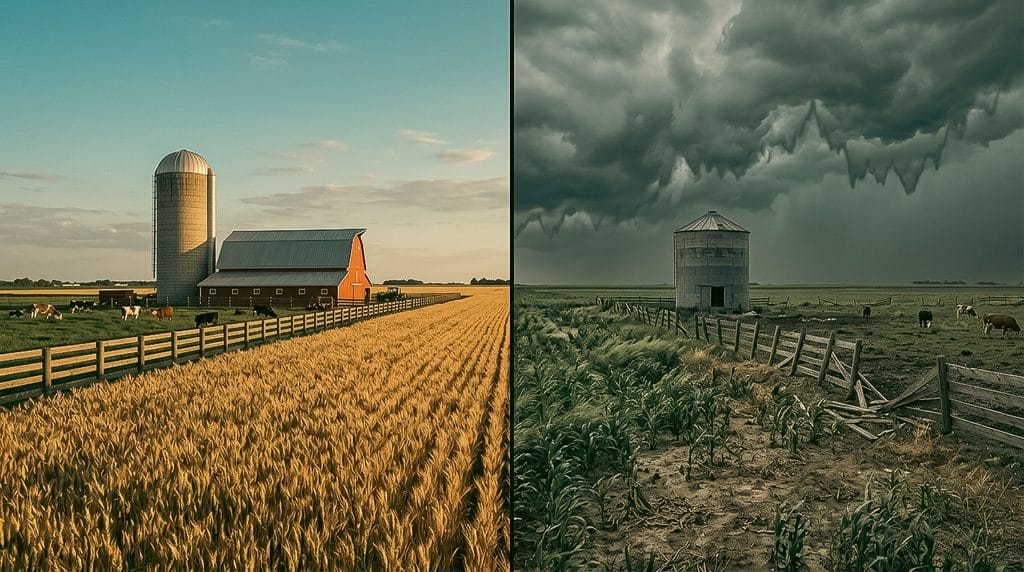
A farm isn't a simple household budget. One year brings strong commodity prices. The next brings tighter margins, higher input costs, equipment repairs, land payments, or a family emergency. Cash flow isn't always smooth, and decisions often get made years before the results are known.
Farmers need financial tools that are predictable and understandable.
A policy that looks good in year one may not still work in year twenty. A flexible premium sounds helpful until the policy needs more money than expected. A lower upfront cost isn't worth much if the policy becomes hard to maintain later.
When comparing universal life vs whole life, the real question isn't which one costs less today. It's which one gives the farm family more clarity, control, and long-term confidence.
What Is Whole Life Insurance?
Whole life insurance is permanent coverage designed to last for the insured's lifetime, as long as the required premiums are paid.
The appeal is its structure. Premiums are typically set, the death benefit is known, and the policy builds guaranteed cash value over time. Depending on the company and policy design, it may also earn dividends, though dividends aren't guaranteed.
For farm families, that structure is part of the value. A properly designed whole life policy isn't built around guessing what the market will do or hoping interest assumptions work out. It gives the owner a predictable foundation, which matters when the policy is part of a broader financial strategy.
Farm families often need access to capital: equipment, operating expenses, debt management, liquidity outside the bank. The cash value inside a well-designed, well-managed whole life policy can become part of that strategy.
The point isn't just to own life insurance. The point is to own a policy that supports the long-term plan.
What Is Universal Life Insurance?
Universal life is also permanent insurance, but it works differently. It's often presented as more flexible: adjustable premiums, adjustable death benefits, and cash value growth tied to interest crediting or policy performance.
That flexibility sounds attractive. It also means more variables to understand.
Universal life policies can depend on assumptions about interest rates, cost of insurance, fees, policy charges, and how much premium gets paid over time. If those assumptions don't hold, or the policy isn't funded properly, it can get more expensive to maintain.
That's where people get surprised. They thought they bought a permanent policy. Later, they find out it needs higher premiums, more funding, or closer management than expected. For a farmer, that's a serious problem, because the farm already has enough moving pieces.

The Biggest Difference: Guarantees vs. Flexibility
Whole life is built around guarantees and structure. Universal life is built around flexibility and assumptions. That doesn't automatically make one good and the other bad. It means they need to be understood differently.
Whole life generally gives the owner more predictability: clearer premiums, guaranteed cash value growth, and a clear death benefit structure from the start.
Universal life may offer flexibility, but the owner needs to understand what has to happen for the policy to stay healthy. Skip premiums, or the cash value underperforms, or costs inside the policy rise, and the policy may need more money later.
For farm families, the danger is buying flexibility without understanding the responsibility that comes with it. A flexible policy still has to be funded. A permanent policy still has to be managed. A low premium still has to be enough to support the policy long-term. If it only works under perfect conditions, that's not the kind of tool a farm family should depend on.
Why Universal Life Policies Can Become a Problem
Universal life policies often become a problem when the owner doesn't fully understand the moving parts. The policy may have been sold using illustrations or projections that looked reasonable at the time. If actual performance turns out different, the policy doesn't behave the way the owner expected.
That's where the trouble shows up:
- The policy needs higher premiums than expected
- Cash value doesn't grow the way the owner assumed
- The cost of insurance increases over time
- The policy is underfunded
- The policy risks lapse without active management
That's frustrating for farmers who bought the policy believing it would provide long-term security. Often the issue isn't a bad decision on purpose. People just didn't know what questions to ask. They trusted the illustration. They trusted the pitch. They thought flexibility meant safety.
Flexibility is not the same as certainty. If a farm family is using life insurance as part of a real financial strategy, they need to know exactly what they own.
Farmers Need to Think Beyond the Premium
Farmers understand better than most that cheap isn't always cheap. Cheap equipment costs more in repairs. Cheap seed costs more in yield. Cheap financing costs more in control. Cheap insurance costs more if it doesn't do what the family needs.
The same idea applies here. A lower premium looks attractive, especially when cash flow is tight, but the premium is only one part of the decision.
Farm families should ask:
- Is the premium guaranteed?
- Can the policy require more money later?
- What happens if farm income is down?
- What happens if interest assumptions change?
- What happens if the policy is underfunded?
- Does the policy build usable cash value?
- Can this policy support the family's long-term strategy?
A policy that looks affordable upfront can become a burden if it's not built to last. Evaluate whole life vs universal life through the lens of long-term control, not just upfront cost.
Cash Value, Liquidity, and Control
Cash value matters because farmers need liquidity. The farm may have assets, but assets aren't the same as accessible cash. Land, equipment, livestock, and buildings represent wealth, but they're not always easy to use when timing matters.
Cash value life insurance can give a farm family another source of liquidity when structured correctly.
With whole life, cash value growth is typically more predictable. The owner can see how the guaranteed values build over time, which makes planning easier. Universal life can also build cash value, but the growth and sustainability depend more heavily on policy performance, costs, and funding. That doesn't mean it can never work. It means the owner needs to pay close attention.
The bigger issue is control. If the farmer needs access to money, does the policy help? If the bank tightens up, is there another option? If cash flow is strained, is the policy still manageable? If the next generation needs liquidity, does the policy support that?
Life insurance shouldn't create more confusion. It should support clarity.
When Universal Life Might Look Attractive
Universal life can look attractive for understandable reasons: it may appear more flexible, show lower initial premiums, offer adjustable death benefits, and get pitched as a permanent policy with more options.
For someone who wants flexibility, that sounds appealing. But appealing isn't automatically better.
Ask what the flexibility actually means. Does it give the family more control, or more uncertainty? Does it reduce risk, or transfer more responsibility onto the owner? A universal life policy may need ongoing monitoring and additional funding, and may not perform the way the original illustration suggested. If the family doesn't understand that going in, it becomes a surprise later. Farmers already deal with enough surprises.
Why Whole Life Often Fits the FWTB Strategy Better
Whole life is often the better fit for the Farming Without the Bank strategy because it's built around long-term structure. The goal isn't just to buy insurance. It's to create a financial tool that supports control, liquidity, and uninterrupted growth over time.
A properly designed whole life policy can provide:
- Predictable premiums
- Guaranteed cash value growth
- A death benefit
- Potential dividends
- Access to policy loans
- A long-term place to store and use capital
That structure is why whole life is often used in Infinite Banking and Banking Concept strategies. It gives the owner a foundation that's easier to understand and plan around.
Farmers don't need more financial products they have to babysit without understanding. They need tools they can use, track, and manage.
That doesn't mean whole life is automatically right for every person or situation. Policy design matters. Premium level matters. The company matters. The advisor matters. Your cash flow matters. But when comparing whole life and universal life for a farm family, the predictability of whole life is usually why it fits the strategy better.

Questions Farmers Should Ask Before Choosing a Policy
Don't just ask what the premium is. Ask:
- Are the premiums guaranteed?
- What happens if I can't pay more later?
- What assumptions are built into the illustration?
- Can the policy lapse?
- What happens if interest rates change?
- How does the cash value grow?
- What fees and internal costs are inside the policy?
- How do policy loans work?
- Can I access the cash value?
- Is this policy designed for long-term control or just a lower upfront cost?
- Does this policy support my farm's cash flow?
- Does this policy help with liquidity?
- Will this policy still make sense 20 or 30 years from now?
Vague answers are a red flag. A farmer should understand the policy well enough to explain what it does, what it doesn't do, and what could go wrong.
Red Flags in a Universal Life Policy
If you already own one, it's worth a close review. Watch for:
- The policy needs more premium than expected
- Cash value is lower than expected
- You don't know the internal costs
- You don't know whether the policy can lapse
- You were told the policy was permanent, but now it needs additional funding
- The original illustration doesn't match what's happening now
- You don't understand how the policy is being supported
- The policy depends on assumptions you can't clearly explain
The point isn't to panic. The point is to get clarity. A policy review tells you whether the policy is actually doing what you thought it would.
The Bottom Line
Whole life vs universal life isn't just a technical insurance comparison. For farm families, it's a control conversation.
Universal life may look flexible, but that flexibility carries risk if the policy isn't properly understood, funded, and managed. Whole life may look more structured, but that structure is exactly what makes it useful for long-term farm planning.
Farmers need policies that support liquidity, predictability, and control. Don't choose a policy because it looks cheaper. Don't keep a policy just because someone told you it was permanent. Don't assume a policy fits the Banking Concept just because it has cash value.
Understand what you own. Ask better questions. Review the policy. Make sure the tool actually supports the farm.
If you're building a strategy around Farming Without the Bank, start with education. Read the book, listen to the related episodes, and get clear on whether your policy is helping you take control, or quietly creating a problem for the future.
Frequently Asked Questions
What is the difference between whole life and universal life insurance?
Whole life is generally built around fixed premiums, guaranteed cash value growth, and long-term predictability. Universal life is more flexible, but has more moving parts: policy costs, interest assumptions, premium flexibility, and lapse risk if not properly funded.
Is whole life better than universal life?
Not automatically for every person, but it's often a better fit for strategies that need predictability, guarantees, cash value, and long-term control. Universal life's flexibility can become risky if the owner doesn't understand how the policy works.
What is universal life insurance vs whole life?
Both are permanent life insurance, but universal life is more flexible and depends more on policy assumptions and funding. Whole life is more structured, with clearer guarantees and predictable cash value growth.
What are the disadvantages of universal life insurance?
Changing policy costs, underfunding risk, premium increases, lower-than-expected cash value growth, and possible lapse if not maintained properly. The owner needs to understand the moving parts.
Why do universal life policies lapse?
When there's not enough value in the policy to support the cost of insurance and policy charges. This happens when the policy is underfunded, interest assumptions don't hold, or the owner doesn't understand how much premium is needed to keep it in force.
Is universal life insurance risky?
It can carry risk if the policy is misunderstood, underfunded, or based on assumptions that don't work out. The risk isn't always obvious upfront, which is why policy review and education matter.
Is whole life insurance good for farmers?
Yes, when it's properly designed and fits the farm's cash flow. It can support long-term liquidity, cash value growth, policy loans, and financial control, but the policy has to be structured correctly.
What type of life insurance is best for farm families?
It depends on the family's goals, cash flow, debt, succession plan, and financial strategy. For farm families using the Banking Concept, properly designed whole life insurance is usually preferred for its guarantees, cash value, and long-term structure.
Why does cash value matter in life insurance?
It can create access to capital while the policy stays in force. For farmers, that liquidity matters during tight cash flow seasons, equipment purchases, operating needs, or unexpected expenses.
Can farmers use whole life insurance for liquidity?
Yes, as part of a liquidity strategy through policy loans. The policy has to be designed and funded correctly, and the farmer needs to understand how loans, interest, premiums, and repayment work.