 GET THE BOOK
 GET THE BOOK




Podcast
EP. 306
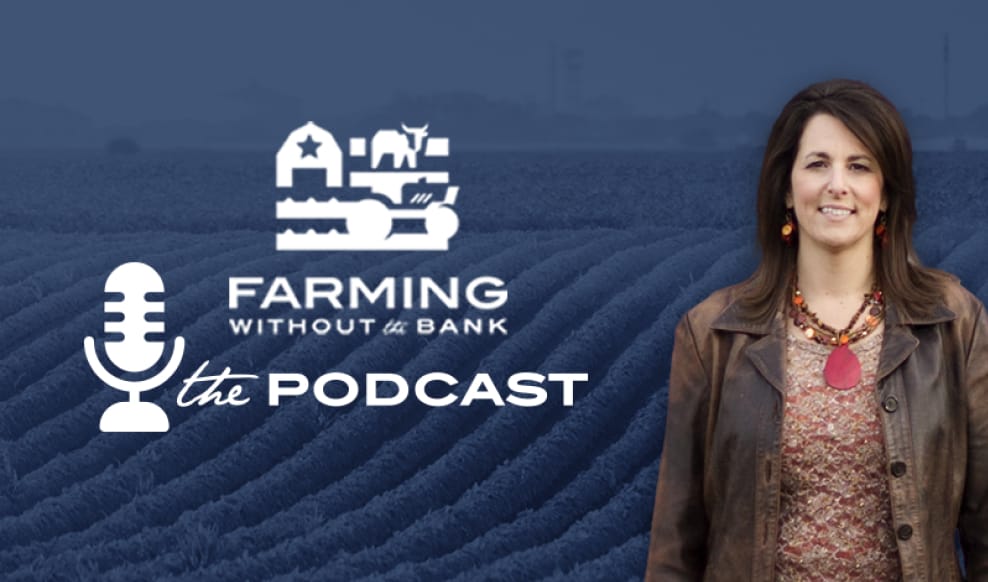
Ep. 306 – Top 10 Farming Concerns
Jun 13, 2025 ·
25 min
0:00 / 24:46
EPISODE OVERVIEW
ABOUT THIS EPISODE
Too many farmers are stuck in survival mode, juggling high input costs, debt, and unpredictable markets, without a real plan for control or long-term success.
In this episode, Mary Jo Irmen unpacks the Top 10 Concerns facing today’s farmers and ranchers, from inconsistent cash flow to retirement worries, and shows how five of them can be tackled with the Infinite Banking Concept (IBC). She also shares real stories from client meetings that highlight the importance of knowing your numbers, creating off-farm income, and understanding the financial tools you already have (but may not be using wisely).
This is a wake-up call for anyone still believing the farm will somehow “figure itself out.” If you’re serious about taking control of your operation, this episode is a must-listen.
🔑 Key Takeaways
- Most farmers don’t have a cash flow problem; they have a utilization problem
- IBC solves 5 of the top 10 farming concerns (including retirement and access to capital)
- Why “knowing your numbers” isn’t optional: it’s the foundation of smart financial decisions
- Custom work, partnerships, and strategic investing can ease cash flow pressure
- Too many farmers are funding banks and Wall Street before their operations
📚 Resources & Links
- 📘 Get your copy of Farming Without the Bank: farmingwithoutthebank.com/book
- 📅 Read the book? Book a meeting with Mary Jo or John
- 🎧 Listen to more episodes, available on all major podcast platforms
- 💬 Got questions? Email Mary Jo: maryjo@withoutthebank.com
- 👍 Follow on Facebook: Farming Without the Bank
🔥 Want to Keep Learning?
Explore past episodes and see how real farmers are transforming their operations with IBC. Whether you’re running a small farm or a multi-LLC enterprise, there’s a better way to manage money in your operations.
CHAPTER TIMESTAMPS
- 00:00Intro and Play Share Reminder
- 00:44The Top 10 Concerns Facing Farmers in 2025
- 01:27#1: Cash Flow Inconsistency and What to Do About It
- 02:46The "How Can I?" Mindset Shift
- 03:53Off-Farm Businesses, Capital Investing, and Cash Flow Strategies
- 04:55#2: High Operating Costs
- 05:47#3: Debt Load and the Problem With How Farmers Buy Equipment
- 07:16#4: Land Affordability and Succession Planning
- 07:36#5: Access to Capital Without Losing Control
- 07:58#6: Price Volatility and Market Uncertainty
- 08:06#7: Tax Liabilities and the Truth About Year-End Spending
- 12:02#8: Misunderstanding Insurance: P&C, Crop, and Life
- 14:53#9: Lack of Liquidity for Emergencies
- 15:16#10: Retirement Is a Concern, but No One Is Preparing for It
- 17:19Real Example: A Client Overfunding IRAs While Borrowing at 7.5%
- 18:13How One Farm Family Runs It Like a Fortune 500 Company
- 21:03The Problem With Diluted Shares in LLCs Across Generations
- 23:00Why You Don't Need to Meet With Both John and Mary Jo
- 23:54Final Thoughts: 5 Problems Solved by IBC
YOUTUBE EPISODE
TRANSCRIPTION
“It was absolutely phenomenal, the way that they ran their business. They ran it like a business. And so is that possible? 100%. Do we need to be more organized? Yes.”
Hello, hello, hello, and welcome back to the podcast. Thank you very much for being here. I appreciate it. All right. I’m going to start this podcast out with: please share, please share. I would appreciate that. The more people that we can share the infinite banking concept with, the better. And, you know, it would be very nice of you.
Okay. I was thinking about what to do today. And I thought, you know, what are the top 10 concerns in the ag industry? And so I put those in ChatGPT, because I do like a little AI. I don’t like it when it’s spying on me, but I do like it for other things. And so the top 10 concerns are actually very interesting. And I learned something. Because do you know what they are? If you are in the ag industry, do you know what the top 10 concerns are? I don’t know where ChatGPT got these, but they are normal concerns. I was surprised by a couple of them.
So number one on their list is cash flow. The consistency of cash flow. You don’t know what that is, right? Like, it can go up. It can go down. Are we going to have cash flow to pay bills? But I talk about that stuff all the time, in the aspect of: we have to prepare in the good years for the bad years, because we don’t know what our cash flow is going to be. Do we want to have a business that coincides with the farm so that we’ve got some constant cash flow? It’s crazy. I don’t think that people understand, or maybe they do, how many farmers have a business outside of the farm? Have rental properties outside of the farm? Have some sort of a guaranteed cash flowing asset off the farm? And a lot of you are going to say, “Well, no kidding, Mary Jo. We all need off-the-farm income to pay for the farm today.” Yeah, that’s true. We do need some sort of off-the-farm income to get started, to buy land, because it’s not paying for itself today. That’s just the facts of the matter. And we can sit and cry and moan and complain about it. Or we can just accept it and figure out how we’re going to get it done.
Cash flow is a main concern. So how do we fix that? These are kind of the questions that we need to ask: how do we fix that? How do we do something? I met with a guy… and I’m going to get a little sidetracked here for one second. I met with a guy this last week, and he started the meeting like, “I’m a typical farmer.” He didn’t have any of his numbers. He was kind of down and out. And the more we talked, like, he’s just had a lot of really bad luck, a horrible estate plan. He lost everything. When Dad passed away, it was just kind of messy. And I said, the question needs to be, how can I get back on my feet? Not, I can’t. If we say I can’t, and you guys have heard me say this before, if we say I can’t, then all of a sudden, we can’t. Our brain shuts down. We can’t do anything. How can I?
So if I am concerned about cash flow, how can I fix that? Is that an off-the-farm business? Is that being a partner in a business where I’m not maybe physically working, but I am a partner, so I’m getting some money from that business? I had a meeting with a farmer this week as well, and he was talking about how he owned part of a calf feeding business. So they feed calves out, and he just owns a percentage of that business. He is not active in that business at all. And obviously, they needed some capital investment. And so he put some money in, and now, you know, not every year does he get money from that business, but when he does, it is quite large, and it’s a nice amount of money. And so can we do something like that? It doesn’t have to be non-ag related. Can we be a capital investor for somebody? And to what extent does that have to be? But it’s going to create some cash flow, right? And we think, well, we don’t have the money to do it. To what extent? Did you need a million dollars? Probably not. What do you need? Because not everybody’s running these huge operations where they need a massive influx of money.
Okay, so that was number one, cash flow. Number two is high operating costs. We know that farmers are concerned about high operating costs, and the costs just continue to go up, and they go up, and they go up, and they come down a little bit. They go up a whole bunch. They come down a little bit. And again, I don’t think agriculture is any different than anyplace else, because the cost of everything is going up. It’s called inflation. And then it’s not coming down to where it used to be. It never will, because people get used to paying that, and they just take advantage of us, in my opinion. They’re like, oh, okay, well, everybody down the chain is used to paying it. Everybody up the chain is used to paying it, so we’re just going to keep it the same. They’ll just adjust, but some of them don’t.
Number three, debt load. We just talked about that a little bit. Obviously, debt load is a concern when we are looking at land, when we’re looking at equipment costs. Any of that stuff is just massive. The cost to do business is massive. If we want to do it, like I just said, how can we get it done, and how can we get it done differently? I am starting to see a lot of people that are partnering on equipment. They might say, hey, you know what? The neighbor needs equipment. I need equipment. Or, I have this piece of equipment, and they have that piece of equipment, and we’ll just borrow that. People are not necessarily buying their own equipment until they get to a certain stage, and then, of course, they’re going to buy their own equipment. And even at those higher-end acres or bigger productions, they are buying their own equipment, but they’re doing a lot of custom work. And I’ve talked about custom work before, and it is absolutely insane to me how beat up I got online. When I talk about how profitable custom work can be… I don’t know what the hell all your problem is out there. Like, what are you doing telling me that we can’t make money on custom work when I see it constantly? There is a lot of money to be made on custom work that could make a payment for a piece of equipment you’re using on your farm.
Number four, land affordability and succession planning. Now, to me, those would be two different things. I don’t know why ChatGPT put them in one, because that doesn’t make sense to me. But land affordability is tough, right? And succession planning is just, frankly, not happening. It needs to happen, but it’s not happening.
Number five, access to capital without losing control. I thought that was pretty interesting, because it’s not just access to capital. Farmers are concerned about access to capital without losing control. How do we do that? How do we do that? We do that with infinite banking, right? We can access the capital, and we still have control of it, because it’s our capital.
Price volatility and market uncertainty. That one, yeah, no kidding. That goes back to cash flow. We don’t know if we’re going to have access to cash flow.
Tax liabilities. This one was quite interesting to me, because if this is a concern, why are we not looking at our numbers differently? If we get to the end of the year and we have to pay in on taxes, and we don’t have the money to pay the taxes, we didn’t keep our books clean enough. And just think about this. If we get to the end of the year and say we do not have cash to pay our taxes… if we have to pay taxes, that means we made income. What happened to the income? We obviously spent our tax money on something we didn’t need. We spent it on interest to the bank. We spent it on pre-buying fertilizer, chemical, seed. We spent it somewhere. If we’re going to sell our commodity, we should be taking 20% off the top of that check, putting it in another account if necessary, and saying that is for taxes. So at the end of the year, we have our taxes. Whatever tax bracket you are in, that is what we should be putting aside. After the money for taxes is put aside, what we have left over should cover our expenses. If it is not covering our expenses, then we are spending too much, or we did not sell our commodity for enough.
If you look at the Profit First system, he says you sell, and then you take out your taxes, and you take out your pay, what you pay yourself for payroll, and the rest of it should be spent on expenses. Now, people in the farm sector are going to tell me that that is not possible. “Mary Jo, that’s not possible.” It is possible. Why you think it’s not possible is because you have the volatility in the market. But if the market is down and you sell your commodities for less, you’re not going to have to pay as much in taxes, right? So the taxes should still come out at the beginning. If we don’t know our numbers, we don’t know what we’re doing. We don’t know where we’re at. We don’t know what to sell our product for. Of all the meetings I have had this week, two of them did not know their numbers. One of them has met with John, and he met with myself, and he still didn’t have his numbers. And this was two years apart, I believe. How do you think you’re ever going to get anywhere if you don’t know your numbers? How are you ever going to pay taxes if you don’t remove the taxes and then spend what you have left? Because what’s happening is we’re spending our tax money, most likely, on stuff to avoid taxes. It’s not making sense, because then we just created a payment. So taxes are this huge burden, but they’re only a burden because we don’t ever put the money aside, or we don’t ever figure taxes into our overall expenses. If we need to sell a commodity to pay expenses, are we figuring the taxes and the expenses, so we sell the commodity at enough to be able to pay both of those? If we’re avoiding taxes and we are not even figuring that in, we’re just figuring raw expenses, we’re not keeping real books, and we need to keep real books, real numbers, so that we know exactly what our break-even is and our basis is, so that we can go make some money.
Number eight is misunderstanding insurance, which I also found interesting, because then they put this little description under that for me, and that says property and casualty insurance, life insurance, and crop insurance. Now, I used to be in the P&C world. I have a lot of clients that are in the P&C world, and the P&C world is property and casualty. So your car, your auto, your farm insurance, and the crop insurance piece of it. I have never sold crop insurance, but it is complicated. There are a lot of moving parts. And here is my advice. Just like in the life insurance world, in the property and casualty world, in the crop insurance world, you should be finding an agent that can explain it to you. No different than if you are going to have your commodities, and you’re going to contract those, or you’re going to do puts and calls. You need to find somebody that understands that and can explain that in English, so that you can understand it.
When I was in the property and casualty world, it was absolutely crazy to me to see how many people were underinsured, or they had buildings that were not insured, because the agent was too lazy to drive out to the farm and look at everything that they had. Maybe there was equipment that wasn’t insured. There were buildings that the farmers thought were insured, and maybe they were insured, but they weren’t insured for collapse, snow, that kind of thing. Make sure that you’re going over every single item on your declaration pages and everything on the farm, to make sure it’s in the policy and it’s covered in the policy. It’s really crazy how we just think that the agent’s going to take care of us. And in fact, the agent doesn’t, because most agents are lazy. If you have to pay a little bit higher premium because you have a good agent that’s going to fight for you and have coverage for you, fantastic. Same with crop insurance. Make sure you have somebody that can explain that stuff.
For life insurance, well, you know where to go for that, don’t you? And it’s the same thing. We do these podcasts over and over and over. And if you’ve listened to Without the Bank recently, it’s Tarisa and I that are doing that podcast. And we talk a lot about IULs and ULs and why they’re not good, and all these scammers out there. And the other day, Tarisa and I were talking, and we’re like, man, we’re kind of doom and gloom over here. We’re talking a lot about just negative stuff. And that’s just not kind of who we are as people. And I said, but it’s education. It sounds doom and gloom, and it sounds like we’re harping on something, but it’s truly just us trying to educate you. Anything that I do over here with life insurance, I’m just trying to educate you. I want you to have the best information that you can have.
Number nine was lack of liquidity for emergencies. We don’t have access to liquid money, because we’ve not built up liquid money. But guess what? Farmers aren’t special in that arena either. The majority of people in this country do not even have $500 liquid, right? We automatically go to a credit card, because we don’t save money.
And then, of course, number 10 is retirement. They don’t have anything for retirement. They’re uncertain about retirement. And again, they’re the same as the majority of the population. What business owner is prepared for retirement? There’s just not a lot of them. There’s just not a lot. People are so busy trying to keep their head above water, and they’re not looking at how they’re utilizing money. And so therefore, we don’t have anything. Or if we do have retirement, we have money sitting in a retirement account, but then we’re borrowing on a line of credit. And so we’re paying 7.5% on a line of credit, but we have money sitting in retirement. I mean, why are we doing that? Are we trying to grow our operation? What are we doing? The utilization of money is extremely important.
Some more clients I had this week. I had a busy week, you guys. I had some other clients this week that were overpaying on a vehicle debt. They were overpaying on their mortgage. They were maxing out a SIMPLE IRA. They were maxing out a Roth, I believe. They’re maxing out two investments. And then they had money just sitting in a brokerage account, but they’re borrowing money at 7.5% for operating. And I said, why aren’t you using any of that money? And they’re like, “Well, I don’t know. It’s what we were taught.” I’m like, right. You’re taking all this money, and you’re overpaying on debts that are 3% or 6%. You’re paying them down so that you can get that car paid off really fast. And then you go back to the same bank, and you borrow money for operating at 7.5%. You’re putting money into IRAs that’s not liquid, out of your control. You have a penalty to access it. You need to buy some farm ground from your parents, but you’re borrowing money at 7.5% for operating. And we are telling ourselves we can’t do these other things. We can’t buy this other land because we don’t have the money. But we do have the money. It’s going into a so-called retirement account. When in fact, we could just redirect those dollars into a whole life insurance policy, borrow against them, buy the land, pay it back. And we have retirement, right? It’s not super fancy. It’s not super complicated. We tend to make it more complicated. But they’re really good savers. They’re in a really good position, but they were segregating all of their money. And it’s one pool of money. If you have money sitting somewhere making 3%, but you’re paying 7%, that’s one pool of money.
The only time you should not be taking retirement money and lending it to the farm to operate is when the farm doesn’t know its numbers, and you’re never going to get paid back for that, right? So if you’re in a situation where you have no idea what the farm is making, because there is not an Excel spreadsheet, there is not QuickBooks, there is not something to show me what it’s making, then I wouldn’t be lending money to the farm entity. But if that farm is being run like a business, then lend it all day long.
I probably had one of my more exciting meetings with a big farmer this week. And it was insane. That guy knew his numbers. They had LLCs. The LLCs had… not profit sharing, but stocks. And I mean, those LLCs were set up like no other that I’ve ever seen. They had family meetings. They would go on a family trip. He would present a PowerPoint presentation of what’s going on with the land values, what the equity is, what loans they have. They are talking about who’s going to buy who out. What does that look like? Are we going to move shares over? Are we going to buy shares? It was absolutely phenomenal, the way that they ran their business. They ran it like a business. And so is that possible? 100%. Do we need to be more organized? Yes. Yes.
And it was him and his brother. His brother’s doing all the work, and he’s doing all the finances. And guess who’s not questioning him? His brother. Because his brother says, hey, you’re good at the finances. I’m going to trust you. And the family trusts them, but he keeps them informed. And he’s just honest about all of it. He’s like, well, we have this concern, or we have this concern. And I brought something up that I don’t believe he had thought of. And that was, this brother owned 53%, and the other brother owned 47, or 52 and 48, or something like that. So this brother was majority shareholder, because of the fact that he’s the one that started the farm. So he was there before the second brother. The brother that owns 52% has five children. The other brother has three. And I said, okay, so when you die, your shares get split five ways. When your brother dies, his shares get split three ways. So your shares are actually diluted, to the point where you as a family may not own the majority of the shares, unless you have agreements to represent the majority of the shares. So I’m like, you really have to figure out what that looks like if the next generation is your children and they get those shares. How is that going to be passed down to keep your shares as the majority, because you started it? And I don’t have the answer to that. I’ve suggested this a couple of times, but in this situation, it needed to be solved more than in other situations, because he’s in control. Mostly when I talk to people that are in this situation, they’re not the ones that are in control. And so they can’t really do anything about it, but he can. And so think about that when you have an LLC. And I know I’m a little off topic here, but think about that when you have an LLC: how diluted are your shares going to be versus other siblings who have fewer children? Another reason I don’t like LLCs, which is a podcast I did not so long ago.
But farmers are obviously concerned about retirement, but they’re not planning for retirement. So guess what? Out of all these 10 things, five of them are solved with the infinite banking concept. Five. The one thing the infinite banking concept can’t solve is the volatility of the market and the cash flow. We can help with the cash flow in certain circumstances, but five of these issues can be solved with the infinite banking concept. So are we ready to make a change and do something different? If you’ve been listening, and you have read the book, and you haven’t made an appointment, where is that going to get you? Where are you going to be three years from now if you don’t make the appointment? It’s not like John and I are over here holding a gun to your head telling you you have to buy a policy. We are just trying to help you navigate how the policy is structured, how it works, how loans work. What are the strategies to make that work? What does that all look like?
And while I’m on the note of John: if you make an appointment with John, do not make an appointment with me. John is 100% capable of making sure that you are taken care of. Every person that schedules an appointment with me after they schedule with John, I watch the meeting. And I tell them the same thing: if you want to meet with me, then wait three months to meet with me, and let John serve somebody else. But by you making an appointment with John and then making an appointment with me, because for whatever reason you don’t think John knows what he’s talking about, all you did was take up somebody else’s time, and people are waiting three months to get in to me. And so when I meet with you, I’m like, what is the point of this? This conversation with me did not necessarily need to happen, because John already went over all of this stuff. I don’t care that I gave you my time. What I care about is that somebody else is having to wait to meet with me, because you decided that you were not going to wait, and you met with John. So I’ve had a lot of that lately. And I don’t feel that there’s a good reason for it. If you’re going to meet with John, then John’s going to be able to help you. There’s no reason then to go ahead and schedule with me. The boy knows what he’s doing. Okay? I trained him. Why don’t you guys have faith in my training?
All right, those are the top 10 concerns, and we can help you with five. So let us know how we can help. Get the book, read the book, make your appointment, read the book again, whatever. Happy to help. Hope we can help. You guys have a fantastic rest of your day.
Thanks for listening to the Farming Without the Bank podcast. We hope today’s episode has inspired you to take control of your finances in new ways. Don’t forget to check out our website, farmingwithoutthebank.com, and engage with us on our Facebook page, Farming Without the Bank. Join us next week as we smash more financial myths and empower you to accomplish your financial goals.
View MoreHello, hello, hello, and welcome back to the podcast. Thank you very much for being here. I appreciate it. All right. I’m going to start this podcast out with: please share, please share. I would appreciate that. The more people that we can share the infinite banking concept with, the better. And, you know, it would be very nice of you.
Okay. I was thinking about what to do today. And I thought, you know, what are the top 10 concerns in the ag industry? And so I put those in ChatGPT, because I do like a little AI. I don’t like it when it’s spying on me, but I do like it for other things. And so the top 10 concerns are actually very interesting. And I learned something. Because do you know what they are? If you are in the ag industry, do you know what the top 10 concerns are? I don’t know where ChatGPT got these, but they are normal concerns. I was surprised by a couple of them.
So number one on their list is cash flow. The consistency of cash flow. You don’t know what that is, right? Like, it can go up. It can go down. Are we going to have cash flow to pay bills? But I talk about that stuff all the time, in the aspect of: we have to prepare in the good years for the bad years, because we don’t know what our cash flow is going to be. Do we want to have a business that coincides with the farm so that we’ve got some constant cash flow? It’s crazy. I don’t think that people understand, or maybe they do, how many farmers have a business outside of the farm? Have rental properties outside of the farm? Have some sort of a guaranteed cash flowing asset off the farm? And a lot of you are going to say, “Well, no kidding, Mary Jo. We all need off-the-farm income to pay for the farm today.” Yeah, that’s true. We do need some sort of off-the-farm income to get started, to buy land, because it’s not paying for itself today. That’s just the facts of the matter. And we can sit and cry and moan and complain about it. Or we can just accept it and figure out how we’re going to get it done.
Cash flow is a main concern. So how do we fix that? These are kind of the questions that we need to ask: how do we fix that? How do we do something? I met with a guy… and I’m going to get a little sidetracked here for one second. I met with a guy this last week, and he started the meeting like, “I’m a typical farmer.” He didn’t have any of his numbers. He was kind of down and out. And the more we talked, like, he’s just had a lot of really bad luck, a horrible estate plan. He lost everything. When Dad passed away, it was just kind of messy. And I said, the question needs to be, how can I get back on my feet? Not, I can’t. If we say I can’t, and you guys have heard me say this before, if we say I can’t, then all of a sudden, we can’t. Our brain shuts down. We can’t do anything. How can I?
So if I am concerned about cash flow, how can I fix that? Is that an off-the-farm business? Is that being a partner in a business where I’m not maybe physically working, but I am a partner, so I’m getting some money from that business? I had a meeting with a farmer this week as well, and he was talking about how he owned part of a calf feeding business. So they feed calves out, and he just owns a percentage of that business. He is not active in that business at all. And obviously, they needed some capital investment. And so he put some money in, and now, you know, not every year does he get money from that business, but when he does, it is quite large, and it’s a nice amount of money. And so can we do something like that? It doesn’t have to be non-ag related. Can we be a capital investor for somebody? And to what extent does that have to be? But it’s going to create some cash flow, right? And we think, well, we don’t have the money to do it. To what extent? Did you need a million dollars? Probably not. What do you need? Because not everybody’s running these huge operations where they need a massive influx of money.
Okay, so that was number one, cash flow. Number two is high operating costs. We know that farmers are concerned about high operating costs, and the costs just continue to go up, and they go up, and they go up, and they come down a little bit. They go up a whole bunch. They come down a little bit. And again, I don’t think agriculture is any different than anyplace else, because the cost of everything is going up. It’s called inflation. And then it’s not coming down to where it used to be. It never will, because people get used to paying that, and they just take advantage of us, in my opinion. They’re like, oh, okay, well, everybody down the chain is used to paying it. Everybody up the chain is used to paying it, so we’re just going to keep it the same. They’ll just adjust, but some of them don’t.
Number three, debt load. We just talked about that a little bit. Obviously, debt load is a concern when we are looking at land, when we’re looking at equipment costs. Any of that stuff is just massive. The cost to do business is massive. If we want to do it, like I just said, how can we get it done, and how can we get it done differently? I am starting to see a lot of people that are partnering on equipment. They might say, hey, you know what? The neighbor needs equipment. I need equipment. Or, I have this piece of equipment, and they have that piece of equipment, and we’ll just borrow that. People are not necessarily buying their own equipment until they get to a certain stage, and then, of course, they’re going to buy their own equipment. And even at those higher-end acres or bigger productions, they are buying their own equipment, but they’re doing a lot of custom work. And I’ve talked about custom work before, and it is absolutely insane to me how beat up I got online. When I talk about how profitable custom work can be… I don’t know what the hell all your problem is out there. Like, what are you doing telling me that we can’t make money on custom work when I see it constantly? There is a lot of money to be made on custom work that could make a payment for a piece of equipment you’re using on your farm.
Number four, land affordability and succession planning. Now, to me, those would be two different things. I don’t know why ChatGPT put them in one, because that doesn’t make sense to me. But land affordability is tough, right? And succession planning is just, frankly, not happening. It needs to happen, but it’s not happening.
Number five, access to capital without losing control. I thought that was pretty interesting, because it’s not just access to capital. Farmers are concerned about access to capital without losing control. How do we do that? How do we do that? We do that with infinite banking, right? We can access the capital, and we still have control of it, because it’s our capital.
Price volatility and market uncertainty. That one, yeah, no kidding. That goes back to cash flow. We don’t know if we’re going to have access to cash flow.
Tax liabilities. This one was quite interesting to me, because if this is a concern, why are we not looking at our numbers differently? If we get to the end of the year and we have to pay in on taxes, and we don’t have the money to pay the taxes, we didn’t keep our books clean enough. And just think about this. If we get to the end of the year and say we do not have cash to pay our taxes… if we have to pay taxes, that means we made income. What happened to the income? We obviously spent our tax money on something we didn’t need. We spent it on interest to the bank. We spent it on pre-buying fertilizer, chemical, seed. We spent it somewhere. If we’re going to sell our commodity, we should be taking 20% off the top of that check, putting it in another account if necessary, and saying that is for taxes. So at the end of the year, we have our taxes. Whatever tax bracket you are in, that is what we should be putting aside. After the money for taxes is put aside, what we have left over should cover our expenses. If it is not covering our expenses, then we are spending too much, or we did not sell our commodity for enough.
If you look at the Profit First system, he says you sell, and then you take out your taxes, and you take out your pay, what you pay yourself for payroll, and the rest of it should be spent on expenses. Now, people in the farm sector are going to tell me that that is not possible. “Mary Jo, that’s not possible.” It is possible. Why you think it’s not possible is because you have the volatility in the market. But if the market is down and you sell your commodities for less, you’re not going to have to pay as much in taxes, right? So the taxes should still come out at the beginning. If we don’t know our numbers, we don’t know what we’re doing. We don’t know where we’re at. We don’t know what to sell our product for. Of all the meetings I have had this week, two of them did not know their numbers. One of them has met with John, and he met with myself, and he still didn’t have his numbers. And this was two years apart, I believe. How do you think you’re ever going to get anywhere if you don’t know your numbers? How are you ever going to pay taxes if you don’t remove the taxes and then spend what you have left? Because what’s happening is we’re spending our tax money, most likely, on stuff to avoid taxes. It’s not making sense, because then we just created a payment. So taxes are this huge burden, but they’re only a burden because we don’t ever put the money aside, or we don’t ever figure taxes into our overall expenses. If we need to sell a commodity to pay expenses, are we figuring the taxes and the expenses, so we sell the commodity at enough to be able to pay both of those? If we’re avoiding taxes and we are not even figuring that in, we’re just figuring raw expenses, we’re not keeping real books, and we need to keep real books, real numbers, so that we know exactly what our break-even is and our basis is, so that we can go make some money.
Number eight is misunderstanding insurance, which I also found interesting, because then they put this little description under that for me, and that says property and casualty insurance, life insurance, and crop insurance. Now, I used to be in the P&C world. I have a lot of clients that are in the P&C world, and the P&C world is property and casualty. So your car, your auto, your farm insurance, and the crop insurance piece of it. I have never sold crop insurance, but it is complicated. There are a lot of moving parts. And here is my advice. Just like in the life insurance world, in the property and casualty world, in the crop insurance world, you should be finding an agent that can explain it to you. No different than if you are going to have your commodities, and you’re going to contract those, or you’re going to do puts and calls. You need to find somebody that understands that and can explain that in English, so that you can understand it.
When I was in the property and casualty world, it was absolutely crazy to me to see how many people were underinsured, or they had buildings that were not insured, because the agent was too lazy to drive out to the farm and look at everything that they had. Maybe there was equipment that wasn’t insured. There were buildings that the farmers thought were insured, and maybe they were insured, but they weren’t insured for collapse, snow, that kind of thing. Make sure that you’re going over every single item on your declaration pages and everything on the farm, to make sure it’s in the policy and it’s covered in the policy. It’s really crazy how we just think that the agent’s going to take care of us. And in fact, the agent doesn’t, because most agents are lazy. If you have to pay a little bit higher premium because you have a good agent that’s going to fight for you and have coverage for you, fantastic. Same with crop insurance. Make sure you have somebody that can explain that stuff.
For life insurance, well, you know where to go for that, don’t you? And it’s the same thing. We do these podcasts over and over and over. And if you’ve listened to Without the Bank recently, it’s Tarisa and I that are doing that podcast. And we talk a lot about IULs and ULs and why they’re not good, and all these scammers out there. And the other day, Tarisa and I were talking, and we’re like, man, we’re kind of doom and gloom over here. We’re talking a lot about just negative stuff. And that’s just not kind of who we are as people. And I said, but it’s education. It sounds doom and gloom, and it sounds like we’re harping on something, but it’s truly just us trying to educate you. Anything that I do over here with life insurance, I’m just trying to educate you. I want you to have the best information that you can have.
Number nine was lack of liquidity for emergencies. We don’t have access to liquid money, because we’ve not built up liquid money. But guess what? Farmers aren’t special in that arena either. The majority of people in this country do not even have $500 liquid, right? We automatically go to a credit card, because we don’t save money.
And then, of course, number 10 is retirement. They don’t have anything for retirement. They’re uncertain about retirement. And again, they’re the same as the majority of the population. What business owner is prepared for retirement? There’s just not a lot of them. There’s just not a lot. People are so busy trying to keep their head above water, and they’re not looking at how they’re utilizing money. And so therefore, we don’t have anything. Or if we do have retirement, we have money sitting in a retirement account, but then we’re borrowing on a line of credit. And so we’re paying 7.5% on a line of credit, but we have money sitting in retirement. I mean, why are we doing that? Are we trying to grow our operation? What are we doing? The utilization of money is extremely important.
Some more clients I had this week. I had a busy week, you guys. I had some other clients this week that were overpaying on a vehicle debt. They were overpaying on their mortgage. They were maxing out a SIMPLE IRA. They were maxing out a Roth, I believe. They’re maxing out two investments. And then they had money just sitting in a brokerage account, but they’re borrowing money at 7.5% for operating. And I said, why aren’t you using any of that money? And they’re like, “Well, I don’t know. It’s what we were taught.” I’m like, right. You’re taking all this money, and you’re overpaying on debts that are 3% or 6%. You’re paying them down so that you can get that car paid off really fast. And then you go back to the same bank, and you borrow money for operating at 7.5%. You’re putting money into IRAs that’s not liquid, out of your control. You have a penalty to access it. You need to buy some farm ground from your parents, but you’re borrowing money at 7.5% for operating. And we are telling ourselves we can’t do these other things. We can’t buy this other land because we don’t have the money. But we do have the money. It’s going into a so-called retirement account. When in fact, we could just redirect those dollars into a whole life insurance policy, borrow against them, buy the land, pay it back. And we have retirement, right? It’s not super fancy. It’s not super complicated. We tend to make it more complicated. But they’re really good savers. They’re in a really good position, but they were segregating all of their money. And it’s one pool of money. If you have money sitting somewhere making 3%, but you’re paying 7%, that’s one pool of money.
The only time you should not be taking retirement money and lending it to the farm to operate is when the farm doesn’t know its numbers, and you’re never going to get paid back for that, right? So if you’re in a situation where you have no idea what the farm is making, because there is not an Excel spreadsheet, there is not QuickBooks, there is not something to show me what it’s making, then I wouldn’t be lending money to the farm entity. But if that farm is being run like a business, then lend it all day long.
I probably had one of my more exciting meetings with a big farmer this week. And it was insane. That guy knew his numbers. They had LLCs. The LLCs had… not profit sharing, but stocks. And I mean, those LLCs were set up like no other that I’ve ever seen. They had family meetings. They would go on a family trip. He would present a PowerPoint presentation of what’s going on with the land values, what the equity is, what loans they have. They are talking about who’s going to buy who out. What does that look like? Are we going to move shares over? Are we going to buy shares? It was absolutely phenomenal, the way that they ran their business. They ran it like a business. And so is that possible? 100%. Do we need to be more organized? Yes. Yes.
And it was him and his brother. His brother’s doing all the work, and he’s doing all the finances. And guess who’s not questioning him? His brother. Because his brother says, hey, you’re good at the finances. I’m going to trust you. And the family trusts them, but he keeps them informed. And he’s just honest about all of it. He’s like, well, we have this concern, or we have this concern. And I brought something up that I don’t believe he had thought of. And that was, this brother owned 53%, and the other brother owned 47, or 52 and 48, or something like that. So this brother was majority shareholder, because of the fact that he’s the one that started the farm. So he was there before the second brother. The brother that owns 52% has five children. The other brother has three. And I said, okay, so when you die, your shares get split five ways. When your brother dies, his shares get split three ways. So your shares are actually diluted, to the point where you as a family may not own the majority of the shares, unless you have agreements to represent the majority of the shares. So I’m like, you really have to figure out what that looks like if the next generation is your children and they get those shares. How is that going to be passed down to keep your shares as the majority, because you started it? And I don’t have the answer to that. I’ve suggested this a couple of times, but in this situation, it needed to be solved more than in other situations, because he’s in control. Mostly when I talk to people that are in this situation, they’re not the ones that are in control. And so they can’t really do anything about it, but he can. And so think about that when you have an LLC. And I know I’m a little off topic here, but think about that when you have an LLC: how diluted are your shares going to be versus other siblings who have fewer children? Another reason I don’t like LLCs, which is a podcast I did not so long ago.
But farmers are obviously concerned about retirement, but they’re not planning for retirement. So guess what? Out of all these 10 things, five of them are solved with the infinite banking concept. Five. The one thing the infinite banking concept can’t solve is the volatility of the market and the cash flow. We can help with the cash flow in certain circumstances, but five of these issues can be solved with the infinite banking concept. So are we ready to make a change and do something different? If you’ve been listening, and you have read the book, and you haven’t made an appointment, where is that going to get you? Where are you going to be three years from now if you don’t make the appointment? It’s not like John and I are over here holding a gun to your head telling you you have to buy a policy. We are just trying to help you navigate how the policy is structured, how it works, how loans work. What are the strategies to make that work? What does that all look like?
And while I’m on the note of John: if you make an appointment with John, do not make an appointment with me. John is 100% capable of making sure that you are taken care of. Every person that schedules an appointment with me after they schedule with John, I watch the meeting. And I tell them the same thing: if you want to meet with me, then wait three months to meet with me, and let John serve somebody else. But by you making an appointment with John and then making an appointment with me, because for whatever reason you don’t think John knows what he’s talking about, all you did was take up somebody else’s time, and people are waiting three months to get in to me. And so when I meet with you, I’m like, what is the point of this? This conversation with me did not necessarily need to happen, because John already went over all of this stuff. I don’t care that I gave you my time. What I care about is that somebody else is having to wait to meet with me, because you decided that you were not going to wait, and you met with John. So I’ve had a lot of that lately. And I don’t feel that there’s a good reason for it. If you’re going to meet with John, then John’s going to be able to help you. There’s no reason then to go ahead and schedule with me. The boy knows what he’s doing. Okay? I trained him. Why don’t you guys have faith in my training?
All right, those are the top 10 concerns, and we can help you with five. So let us know how we can help. Get the book, read the book, make your appointment, read the book again, whatever. Happy to help. Hope we can help. You guys have a fantastic rest of your day.
Thanks for listening to the Farming Without the Bank podcast. We hope today’s episode has inspired you to take control of your finances in new ways. Don’t forget to check out our website, farmingwithoutthebank.com, and engage with us on our Facebook page, Farming Without the Bank. Join us next week as we smash more financial myths and empower you to accomplish your financial goals.
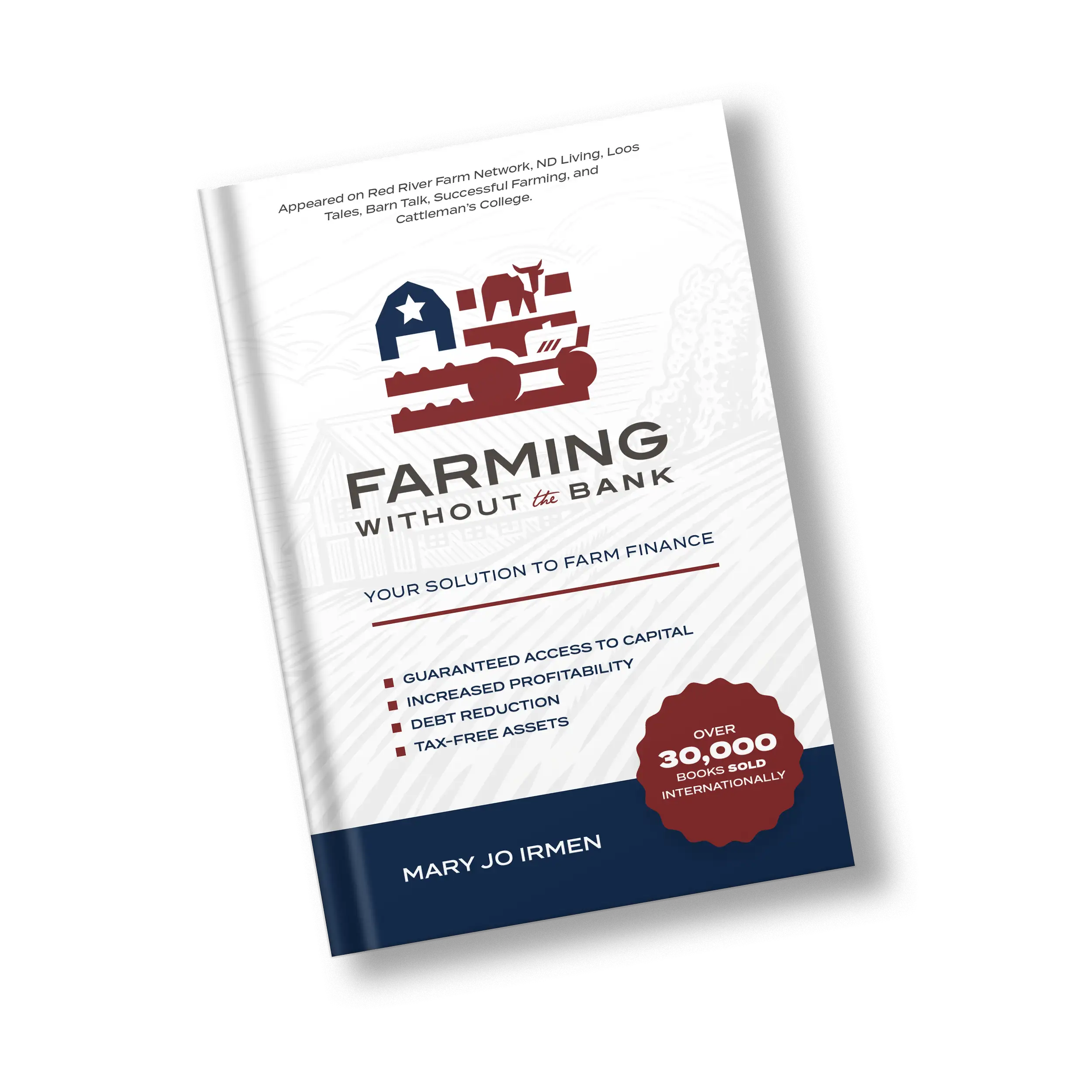
ready to start?
Your farm’s financial independence starts with one book.
30,000 farmers and ranchers have already made the shift. The only question is how long you’ll keep paying interest you could be keeping yourself.