 GET THE BOOK
 GET THE BOOK




Podcast
EP. 289
Ep. 289 – Using Your Operating Line to Pay Premium
Feb 13, 2025 ·
16 min
0:00 / 16:01
EPISODE OVERVIEW
ABOUT THIS EPISODE
The Pitfalls of Borrowing to Pay Life Insurance Premiums: Timing, Loans, and Financial Strategy
In this episode, we delve into the complexities of borrowing money to pay life insurance premiums and discuss the potential pitfalls. This discussion aims to provide you with a clear understanding of the consequences and options available, especially for those in agriculture or with irregular income timing issues.
- ► Learn more: farmingwithoutthebank.com
- ► Get the book
Audio Production by Podsworth Media
Video Production by The Post Production Shop
CHAPTER TIMESTAMPS
- 00:00Introduction and Policy Lapse Risks
- 00:26Borrowing Money to Pay Premiums
- 01:53Managing Premium Payments and Timing Issues
- 03:29The Dangers of Multiple Loans
- 08:28Flexible Payment Options and Company Policies
- 13:51Final Thoughts and Contact Information
YOUTUBE EPISODE
TRANSCRIPTION
“If we continue that cycle, the interest inside the policy that we owe the insurance company is going to be huge. If we can’t pay that, we’re going to lapse the policy, because that’s going to compound from policy year to policy year. You are going to find yourself in a hurt bag.”
Hello, hello, hello, and welcome back to the podcast. Thank you very much for being here. I appreciate it.
Okay, today, let’s talk about borrowing money to pay your premium. There are actually a few things on this topic that we should discuss. One being timing. So a lot of you, if you are a client of mine, or if you are possibly a client of somebody else’s, you have a whole life insurance policy, and you’re like, oh my gosh, Mary Jo, I cannot pay my premiums because they do not come due at the right time. And sometimes clients will borrow against their operating note to pay their premium due to timing. Is this ideal? No. Am I promoting that? No.
I know along the however many years I’ve been doing this podcast, since 2021, maybe four years, I don’t really know that for sure either, but whatever, I have talked about the fact that I will not encourage… I can’t tell you what to do with your money. I mean, at the end of the day, it’s your money. You guys are doing whatever you want with it. But I do not encourage or promote people to borrow operating money to pay premium.
Now, if we know that we’re going to have enough income off of commodities, right? Or off of sales of cattle, whatever your commodity is. So let’s say… Well, it doesn’t matter what it is. Let’s just use ranchers, for example. My premium is due in March, but I’m not shipping calves. I’m not selling calves till fall. You know, that’s when most people sell. So now what? Well, I don’t have the money because I didn’t sell calves yet. Because if I start my policy in March, I used my fall money to start my first policy, right? Then it’s going to time up every year, unless we pre-buy stuff. Then it’s not going to work. Unless we buy things to avoid taxes. Then it’s not going to work, because we’ve used our money to buy something at the end of the year and our premium comes due in March. So now what?
Well, if we have to borrow from operating, that’s okay. Borrow from operating. And then when you sell calves, you need to pay back operating. Now, here is the thing. You need to be a really good money manager when you do this. This is why I do not encourage it. Because a lot of people don’t know their numbers, and they don’t keep their books, and they’re not honest bankers. So I’m not going to be out here touting this is fantastic. And here is why.
So let’s say that you’ve borrowed from operating and you pay your premium, and then you borrow your cash value and you pay back operating. Okay, great. All we did in that scenario was we moved our loan from our operating note to our cash value. Right? Now we control it in cash value. In that scenario, all would be good in the world. However, what if we’ve borrowed from operating, we’ve paid our premium, and we borrow cash value to buy what we need: vet bills, seed, fertilizer, chemical. We use it for operating expenses. Now what? Now we owe the policy money and we owe our operating note money, and we have two loans. If we do that and we do not make enough money to pay both of those back, oh, we’re in trouble.
Even though in the life insurance policy all you have to pay is interest, I do not under any circumstance want you to go, oh, well, I’ll just pay interest forever on that note and I’ll just pray we have a really good year. And the reason I’m not going to want you to do that is because of human nature. Human nature says, ah, I can just pay interest forever on that note. It’s no big deal, because when I have a little extra cash and I make money the following year, I’m just going to what? Go buy something to avoid taxes. And Nelson talks about this in his book, the human elements. Parkinson’s Law is one of the biggest ones, right? He talks about Willie Sutton’s law. So Nelson didn’t forget about that. That’s why I always say you need to be an honest banker, because we can get upside down in the policy.
Now think about this. You’ve borrowed money to pay premium. You’ve used the cash value for operating expenses. You sold calves. You sold wheat, corn, durum, cotton, whatever it is you’re selling. And now we’ve paid that back to the bank, but we did not make enough to pay back our cash value loan. So then what? Year two comes along. You borrow money again to pay premium because the timing is wrong. And then we borrow the cash value for operating expenses. Now, because we can’t pay both of them back, we can’t pay cash value and the bank, our loan in cash value is even higher. So now we have even more interest to pay. If we continue that cycle, the interest inside the policy that we owe the insurance company is going to be huge. If we can’t pay that, we’re going to lapse the policy, because that’s going to compound from policy year to policy year. You are going to find yourself in a hurt bag.
So I am not a huge proponent of this. Now, there are people out there, slimy-ass schmoes… Okay, this is a hot topic for me. Obviously, I’m already cursing and I didn’t even tell you what’s happening. So there are slimy, slimy planners out there who are saying, why don’t you go borrow against your land? You take the equity and put it in a policy. You go borrow on your operating note and use that money to start a policy. My friends, this is not a way to save an operation. It is a way to kill an operation. I mean, if that’s the goal, that you want to lose everything, then go ahead. And in those scenarios, those slimy people are not telling you that interest compounds year to year. They’re not telling you to pay interest only. They’re not explaining that you’re going to have two loans.
Okay. Oh my God. I just saw myself do this. If you guys are watching, I just did a DeSantis move, or not DeSantis. What the hell is the governor of California? The goober. The goober pants. He does the… Never mind. Okay.
So you’re going to have two loans. If you’re borrowing from your operating and then you’re going to pay your premium, and then you’re going to borrow from cash value, you have a loan on cash value and you have a loan to the bank. And if you do not keep your books, and you do not know your numbers, and you are not certain you are going to make money, you should not be doing that.
So then the question becomes, well, Mary Jo, what happens if my premium is due in April and I don’t want to borrow from my operating note because I don’t trust myself? Well, we can change your payment mode to monthly. We can change it to semiannual. We can change it to quarterly. And we do that a lot, you guys. There are a lot of times that our clients have started in the winter, and their premium comes due at the worst possible time. April, May, June, July. Right? Those are not good times. But that’s because you had to wait to get in to see me, because underwriting took so long. Y’all are not meeting with me in July, August, September. Typically, that’s not the case, because you’re too busy to do that. But then that throws off your timing of when money comes in. So sometimes we will go, oh, well, let’s just change that to monthly. And then when you sell commodities, then we can pay that premium in full and we can change that.
This is not every company. And I want to make this abundantly clear. I write the majority of my business with OneAmerica. And the reason that I do that is because they have the most flexible premium payment options. So they will allow us to go from monthly to annual. There are other companies I write with where you need to know 30 days in advance of your premium being due what you’re going to do, and then you have to stay with that plan for the whole entire year. That does not work for farmers. And so the reason I use the insurance company I use is for many reasons, and this is one of them. Huge, huge deal. And the company knows that, because they have talked about it, and they’re like, well, that is going to disrupt Mary Jo’s clients. Because they understand who I’m working with.
If you do not have a policy with me and you have a policy with somebody else, you are going to want to see if that is an option. It is not with any other company that I am aware of. You really do have to decide what you’re going to do 30 days in advance, and they’re not going to be super flexible. So can you add money to the paid-up additions at a different time? I don’t know. Check with that company. This is one reason, again, that I like this company. But they’re not the only good company. Let’s just say that.
If you have a policy with another company that’s whole life, I’m not telling you to cancel it so you can change the mode of how you pay. That is not what I’m saying. If you have a whole life insurance policy with a mutual company, then you need to keep that policy. And don’t be 1035-ing it and moving it to another company. If you ever have an agent that says you should do that, you should run like hell, because that agent is just trying to make commission or they’re completely ignorant. You don’t need to be 1035-ing and moving and canceling whole life to whole life. Universal, variable, indexed to whole life, different story. Whole life to whole life, absolutely not. Okay, so keep that in mind.
And the reason I bring this up is because we have a potential client where this is the problem right now. And I’ve just never talked about it. And I thought, well, this is obviously a good topic, because it happens to a ton of our clients. It is just a timing issue. If you are good at keeping your books, and you are good at running your numbers and knowing where you’re going to be, it is not a bad strategy. If you are not good at that, and you do not have a 100% grasp on your numbers and your books, and you do not have a system of making sure that things are getting paid back, then I do not suggest you do this. Okay, I probably have a handful of clients that I have said, yep, you can do that, because they have come to me and said, would that work? Does that strategy work? It does.
And here’s the other thing. Do you want to borrow money at 8% or 10% to pay premium? Hmm, probably not. And so there are factors that are going to make a difference here. You need to think this through. If you are a client, please call me so we can talk about that. If you have questions, whatever, let me know. That is what I’m here for. If you are not a client, you’re going to figure it out on your own. Use this information to sit down and figure it out. But would I borrow money at 10% or 8% to save my policy? Absolutely. Do I need to plan differently in the future? Hmm, maybe. What are we doing that we didn’t have the money? We had it the first year, second year, third year, whatever, and now all of a sudden we don’t have it. What happened in there? Are we understanding and remembering what’s coming up? There’s just a lot of moving parts to this.
That’s the gist of it. If that confused the hell out of you, let me know, because I didn’t mean to. It just kind of came to my head today that this is what I needed to talk about. So I should have planned this better. But let me know: maryjo@withoutthebank.com. If you have questions about anything, if you have comments, whatever, you know, you can email me. Happy to answer those. I always find it funny when people are like, oh, I’m so surprised that you emailed back. If you email me, I’m going to email you back. If you don’t email me a question, just a statement, I may not email you back and say, oh, that was a nice email, or whatever. Just because there’s nothing to say. Or, you know, a small thank you or whatever. But most of the time, 99.9% of the time, I am emailing you guys back, and we do read every email. Now, somebody said to me the other day, I never got a reply. Well, that’s weird. So obviously it went to spam or something. I don’t know. Very strange. My email gets checked all day, every day. And so we see those.
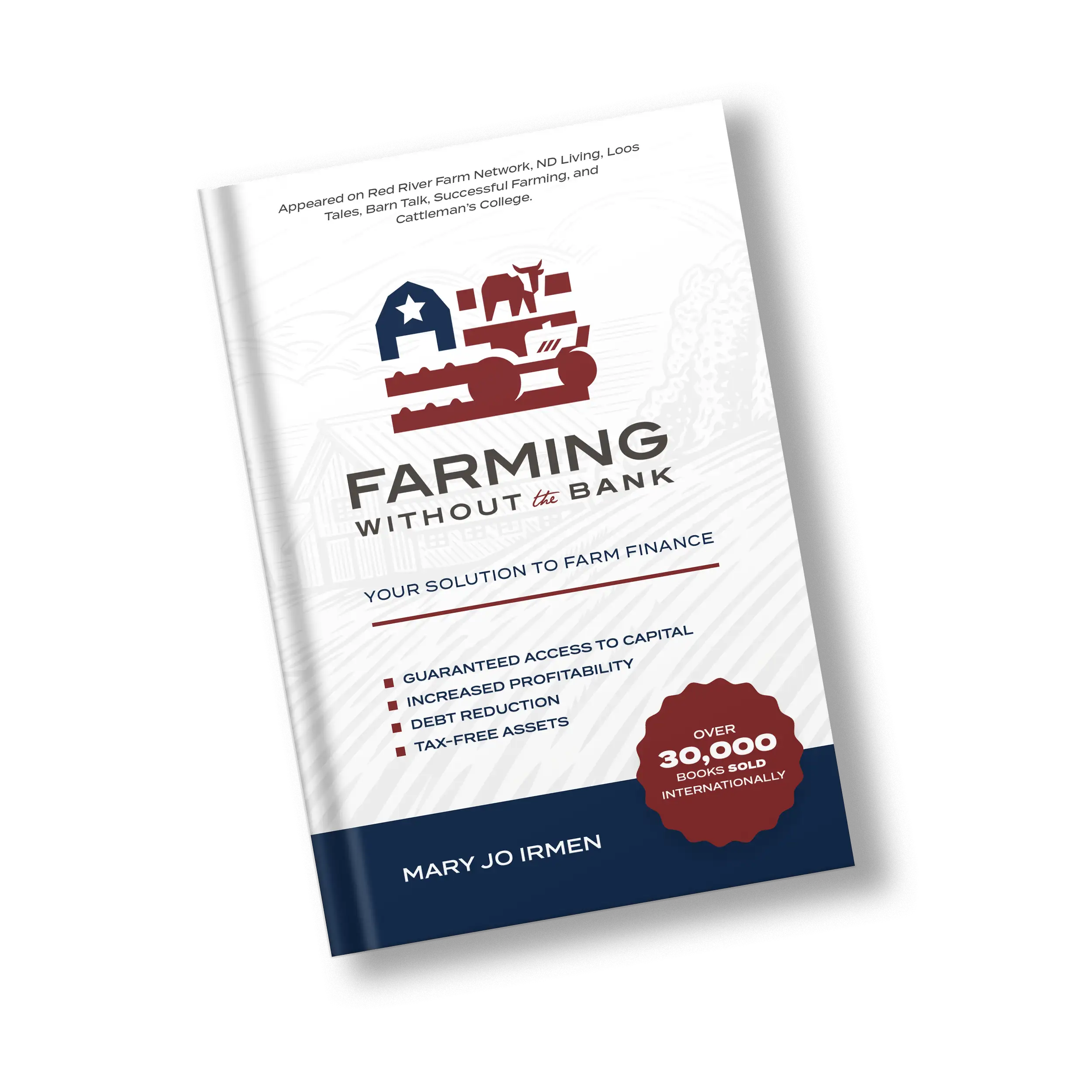
If you’ve not gotten the book yet, go to farmingwithoutthebank.com. Grab your book. If you are in Canada and you are listening to this, go to ranchyourway.com and you can get the Canadian version of the book. You can then go ahead and make an appointment with Lacey or Winnie, and they can help you. Lacey ranches herself. She totally understands all of this. And so if you are Canadian, if you have Canadian friends… We just got done publishing the Canadian version of this, because in Canada it works a little bit differently. So go to ranchyourway.com for the Canadian version. All right, you guys. You have an absolutely fantastic rest of your day, and let me know how I can help.
Thanks for listening to the Farming Without the Bank podcast. We hope today’s episode has inspired you to take control of your finances in new ways. Don’t forget to check out our website, farmingwithoutthebank.com, and engage with us on our Facebook page, Farming Without the Bank. Join us next week as we smash more financial myths and empower you to accomplish your financial goals.
View MoreHello, hello, hello, and welcome back to the podcast. Thank you very much for being here. I appreciate it.
Okay, today, let’s talk about borrowing money to pay your premium. There are actually a few things on this topic that we should discuss. One being timing. So a lot of you, if you are a client of mine, or if you are possibly a client of somebody else’s, you have a whole life insurance policy, and you’re like, oh my gosh, Mary Jo, I cannot pay my premiums because they do not come due at the right time. And sometimes clients will borrow against their operating note to pay their premium due to timing. Is this ideal? No. Am I promoting that? No.
I know along the however many years I’ve been doing this podcast, since 2021, maybe four years, I don’t really know that for sure either, but whatever, I have talked about the fact that I will not encourage… I can’t tell you what to do with your money. I mean, at the end of the day, it’s your money. You guys are doing whatever you want with it. But I do not encourage or promote people to borrow operating money to pay premium.
Now, if we know that we’re going to have enough income off of commodities, right? Or off of sales of cattle, whatever your commodity is. So let’s say… Well, it doesn’t matter what it is. Let’s just use ranchers, for example. My premium is due in March, but I’m not shipping calves. I’m not selling calves till fall. You know, that’s when most people sell. So now what? Well, I don’t have the money because I didn’t sell calves yet. Because if I start my policy in March, I used my fall money to start my first policy, right? Then it’s going to time up every year, unless we pre-buy stuff. Then it’s not going to work. Unless we buy things to avoid taxes. Then it’s not going to work, because we’ve used our money to buy something at the end of the year and our premium comes due in March. So now what?
Well, if we have to borrow from operating, that’s okay. Borrow from operating. And then when you sell calves, you need to pay back operating. Now, here is the thing. You need to be a really good money manager when you do this. This is why I do not encourage it. Because a lot of people don’t know their numbers, and they don’t keep their books, and they’re not honest bankers. So I’m not going to be out here touting this is fantastic. And here is why.
So let’s say that you’ve borrowed from operating and you pay your premium, and then you borrow your cash value and you pay back operating. Okay, great. All we did in that scenario was we moved our loan from our operating note to our cash value. Right? Now we control it in cash value. In that scenario, all would be good in the world. However, what if we’ve borrowed from operating, we’ve paid our premium, and we borrow cash value to buy what we need: vet bills, seed, fertilizer, chemical. We use it for operating expenses. Now what? Now we owe the policy money and we owe our operating note money, and we have two loans. If we do that and we do not make enough money to pay both of those back, oh, we’re in trouble.
Even though in the life insurance policy all you have to pay is interest, I do not under any circumstance want you to go, oh, well, I’ll just pay interest forever on that note and I’ll just pray we have a really good year. And the reason I’m not going to want you to do that is because of human nature. Human nature says, ah, I can just pay interest forever on that note. It’s no big deal, because when I have a little extra cash and I make money the following year, I’m just going to what? Go buy something to avoid taxes. And Nelson talks about this in his book, the human elements. Parkinson’s Law is one of the biggest ones, right? He talks about Willie Sutton’s law. So Nelson didn’t forget about that. That’s why I always say you need to be an honest banker, because we can get upside down in the policy.
Now think about this. You’ve borrowed money to pay premium. You’ve used the cash value for operating expenses. You sold calves. You sold wheat, corn, durum, cotton, whatever it is you’re selling. And now we’ve paid that back to the bank, but we did not make enough to pay back our cash value loan. So then what? Year two comes along. You borrow money again to pay premium because the timing is wrong. And then we borrow the cash value for operating expenses. Now, because we can’t pay both of them back, we can’t pay cash value and the bank, our loan in cash value is even higher. So now we have even more interest to pay. If we continue that cycle, the interest inside the policy that we owe the insurance company is going to be huge. If we can’t pay that, we’re going to lapse the policy, because that’s going to compound from policy year to policy year. You are going to find yourself in a hurt bag.
So I am not a huge proponent of this. Now, there are people out there, slimy-ass schmoes… Okay, this is a hot topic for me. Obviously, I’m already cursing and I didn’t even tell you what’s happening. So there are slimy, slimy planners out there who are saying, why don’t you go borrow against your land? You take the equity and put it in a policy. You go borrow on your operating note and use that money to start a policy. My friends, this is not a way to save an operation. It is a way to kill an operation. I mean, if that’s the goal, that you want to lose everything, then go ahead. And in those scenarios, those slimy people are not telling you that interest compounds year to year. They’re not telling you to pay interest only. They’re not explaining that you’re going to have two loans.
Okay. Oh my God. I just saw myself do this. If you guys are watching, I just did a DeSantis move, or not DeSantis. What the hell is the governor of California? The goober. The goober pants. He does the… Never mind. Okay.
So you’re going to have two loans. If you’re borrowing from your operating and then you’re going to pay your premium, and then you’re going to borrow from cash value, you have a loan on cash value and you have a loan to the bank. And if you do not keep your books, and you do not know your numbers, and you are not certain you are going to make money, you should not be doing that.
So then the question becomes, well, Mary Jo, what happens if my premium is due in April and I don’t want to borrow from my operating note because I don’t trust myself? Well, we can change your payment mode to monthly. We can change it to semiannual. We can change it to quarterly. And we do that a lot, you guys. There are a lot of times that our clients have started in the winter, and their premium comes due at the worst possible time. April, May, June, July. Right? Those are not good times. But that’s because you had to wait to get in to see me, because underwriting took so long. Y’all are not meeting with me in July, August, September. Typically, that’s not the case, because you’re too busy to do that. But then that throws off your timing of when money comes in. So sometimes we will go, oh, well, let’s just change that to monthly. And then when you sell commodities, then we can pay that premium in full and we can change that.
This is not every company. And I want to make this abundantly clear. I write the majority of my business with OneAmerica. And the reason that I do that is because they have the most flexible premium payment options. So they will allow us to go from monthly to annual. There are other companies I write with where you need to know 30 days in advance of your premium being due what you’re going to do, and then you have to stay with that plan for the whole entire year. That does not work for farmers. And so the reason I use the insurance company I use is for many reasons, and this is one of them. Huge, huge deal. And the company knows that, because they have talked about it, and they’re like, well, that is going to disrupt Mary Jo’s clients. Because they understand who I’m working with.
If you do not have a policy with me and you have a policy with somebody else, you are going to want to see if that is an option. It is not with any other company that I am aware of. You really do have to decide what you’re going to do 30 days in advance, and they’re not going to be super flexible. So can you add money to the paid-up additions at a different time? I don’t know. Check with that company. This is one reason, again, that I like this company. But they’re not the only good company. Let’s just say that.
If you have a policy with another company that’s whole life, I’m not telling you to cancel it so you can change the mode of how you pay. That is not what I’m saying. If you have a whole life insurance policy with a mutual company, then you need to keep that policy. And don’t be 1035-ing it and moving it to another company. If you ever have an agent that says you should do that, you should run like hell, because that agent is just trying to make commission or they’re completely ignorant. You don’t need to be 1035-ing and moving and canceling whole life to whole life. Universal, variable, indexed to whole life, different story. Whole life to whole life, absolutely not. Okay, so keep that in mind.
And the reason I bring this up is because we have a potential client where this is the problem right now. And I’ve just never talked about it. And I thought, well, this is obviously a good topic, because it happens to a ton of our clients. It is just a timing issue. If you are good at keeping your books, and you are good at running your numbers and knowing where you’re going to be, it is not a bad strategy. If you are not good at that, and you do not have a 100% grasp on your numbers and your books, and you do not have a system of making sure that things are getting paid back, then I do not suggest you do this. Okay, I probably have a handful of clients that I have said, yep, you can do that, because they have come to me and said, would that work? Does that strategy work? It does.
And here’s the other thing. Do you want to borrow money at 8% or 10% to pay premium? Hmm, probably not. And so there are factors that are going to make a difference here. You need to think this through. If you are a client, please call me so we can talk about that. If you have questions, whatever, let me know. That is what I’m here for. If you are not a client, you’re going to figure it out on your own. Use this information to sit down and figure it out. But would I borrow money at 10% or 8% to save my policy? Absolutely. Do I need to plan differently in the future? Hmm, maybe. What are we doing that we didn’t have the money? We had it the first year, second year, third year, whatever, and now all of a sudden we don’t have it. What happened in there? Are we understanding and remembering what’s coming up? There’s just a lot of moving parts to this.
That’s the gist of it. If that confused the hell out of you, let me know, because I didn’t mean to. It just kind of came to my head today that this is what I needed to talk about. So I should have planned this better. But let me know: maryjo@withoutthebank.com. If you have questions about anything, if you have comments, whatever, you know, you can email me. Happy to answer those. I always find it funny when people are like, oh, I’m so surprised that you emailed back. If you email me, I’m going to email you back. If you don’t email me a question, just a statement, I may not email you back and say, oh, that was a nice email, or whatever. Just because there’s nothing to say. Or, you know, a small thank you or whatever. But most of the time, 99.9% of the time, I am emailing you guys back, and we do read every email. Now, somebody said to me the other day, I never got a reply. Well, that’s weird. So obviously it went to spam or something. I don’t know. Very strange. My email gets checked all day, every day. And so we see those.
If you’ve not gotten the book yet, go to farmingwithoutthebank.com. Grab your book. If you are in Canada and you are listening to this, go to ranchyourway.com and you can get the Canadian version of the book. You can then go ahead and make an appointment with Lacey or Winnie, and they can help you. Lacey ranches herself. She totally understands all of this. And so if you are Canadian, if you have Canadian friends… We just got done publishing the Canadian version of this, because in Canada it works a little bit differently. So go to ranchyourway.com for the Canadian version. All right, you guys. You have an absolutely fantastic rest of your day, and let me know how I can help.
Thanks for listening to the Farming Without the Bank podcast. We hope today’s episode has inspired you to take control of your finances in new ways. Don’t forget to check out our website, farmingwithoutthebank.com, and engage with us on our Facebook page, Farming Without the Bank. Join us next week as we smash more financial myths and empower you to accomplish your financial goals.
ready to start?
Your farm’s financial independence starts with one book.
30,000 farmers and ranchers have already made the shift. The only question is how long you’ll keep paying interest you could be keeping yourself.