 GET THE BOOK
 GET THE BOOK



Podcast
EP. 305
Ep. 305 – Yes, I Know Farming.
Jun 6, 2025 ·
26 min
0:00 / 25:34
EPISODE OVERVIEW
ABOUT THIS EPISODE
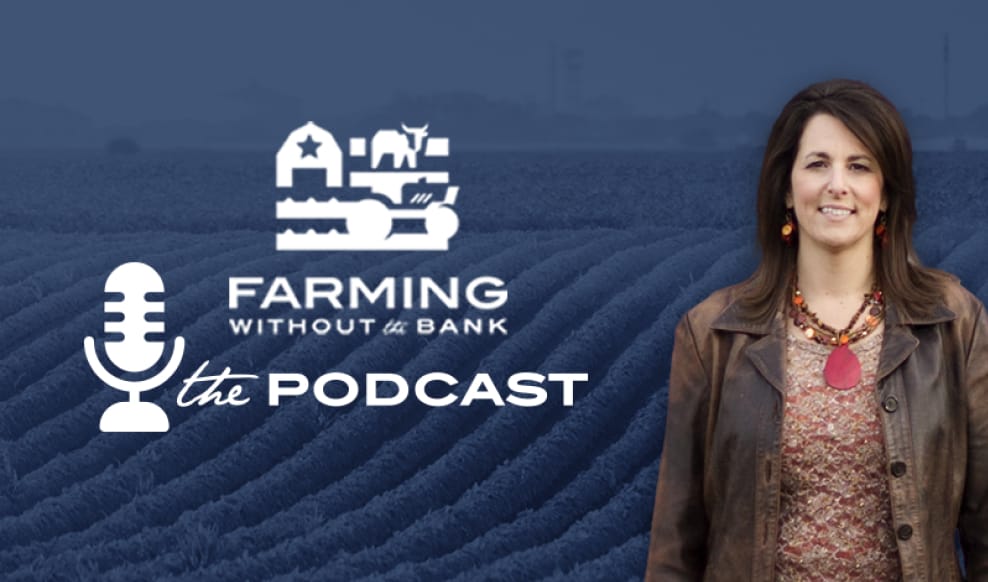
Some folks think Mary Jo Irmen doesn’t understand farming. Spoiler alert: she does.
In this episode, Mary Jo sets the record straight about her deep roots in agriculture, from growing up on a cattle ranch in North Dakota to working with thousands of farmers across the country.
She shares her personal story, her family’s generational farm history, and why that firsthand experience is critical when helping farmers implement the Infinite Banking Concept (IBC).
If you’ve ever wondered whether Mary Jo “gets it,” this episode is the proof. From banker demands to cattle cycles to generational land transfers, she knows the realities farmers face and why most financial advisors don’t.
🔑 Key Takeaways
- Farmers don’t need a banker who knows how to farm; they need one who knows how money works
- You can’t save the farm without first understanding how to manage cash flow and build your own banking system
- Generational wealth in farming takes more than grit; it takes the right mindset and financial strategy
- Advisors who don’t understand the lifestyle have no business giving you advice
📚 Resources & Links
- 📘 Grab your copy of Farming Without the Bank: farmingwithoutthebank.com/book
- 📅 Ready to talk? Book a meeting with Mary Jo
- 💬 Questions or feedback? maryjo@withoutthebank.com
- 👍 Follow on Facebook: Farming Without the Bank
🔥 Want to Keep Learning?
Binge past episodes and hear how real farmers are using IBC to take back control. If you’ve ever thought “she doesn’t get it,” this episode proves you wrong.
CHAPTER TIMESTAMPS
- 00:00The Forgotten Piece of Every Farm Operation: The Money
- 00:26People Don't Know Mary Jo's Background in Farming
- 01:10Common Assumptions During Client Meetings
- 01:47Mary Jo's Family History: 4 Generations of Farming
- 03:27Discovering Infinite Banking and Its Fit for Farmers
- 04:44Why She Focused Her Business on Working With Farmers
- 05:52The Idea Behind Writing Farming Without the Bank
- 07:01Owning the Bank Is Pointless If You Don't Use It
- 07:47Why You Need to Tend to Your Own Bank
- 08:00Thousands of One-on-One Conversations With Farmers
- 10:03You Don't Need an Agronomist; You Need a Money Expert
- 11:03Learning Farming Practices Across 47+ States
- 13:02Most Farmers Are Ignoring the Most Important Asset: Money
- 14:00Preparing for Generational Transfer Isn't Premature; It's Essential
- 16:01Why Mary Jo Really Gets Farming
- 17:01There Is No Such Thing as a Predictable Profit Margin
- 18:08Don't Take Advice From Someone Who Doesn't Know the Industry
- 19:17Farming Isn't a Job; It's a Way of Life
- 20:12"Every Farmer Is My Farmer": Why Mary Jo Defends Her People
- 22:20You Have Enough Vultures. Don't Work With One More
- 23:26Yes, Mary Jo Still Owns Farm Ground
- 24:31Why Her Husband Should've Been Born a Farmer
- 24:50How to Get the Book or Contact Mary Jo
YOUTUBE EPISODE
TRANSCRIPTION
“We are so focused on what we need to put on the field for yield, what we need to put in these cattle to get them the weight gain that they need. And those things are all important. But what we’re not focused on is the biggest piece of our operation, and that is the money.”
Hello, hello, hello, and welcome back to the podcast. Thank you very much for being here. Okay, it has been brought to my attention that people don’t know my background and why I know anything, diddly squat, about farming. And so let me share a little bit about my background, and how we got here, and why I got here, and why I may know a few things about farming. I don’t know, I guess I thought I’ve talked about it in the past. I talk about it in some podcasts, you know, that my family farms. And so I just figured everybody knew. But maybe if you’re new, you maybe don’t know.
And it is funny when people set up meetings with me. Typically, 99.9% of the time, a wife will set up a meeting with me. The husband sits in the meeting like, you don’t know anything about farming. You don’t know what you’re talking about. Farming, ranching, whatever. And by the end of the meeting, they go, “Oh, you really do know something.” I always find that funny. It’s never insulting. It’s always quite comical to me. Because why would I be doing this if I didn’t know anything? Now, there are people out there that don’t know anything, and that is very evident, right?
So I grew up on a farm and ranch operation in western North Dakota. My dad was a purebred breeder, and so we had Charolais cattle. For those of you that have never heard me talk about that either, that’s exciting. We had Charolais cattle. I still love them for no other reason except that we had them. In today’s world, it’s pretty rare to see white cattle. I really like them because they’re also rare. Now, they were not so rare when I was growing up. Anyway, so my dad took over the operation from my grandfather, who took over the operation from my great-grandmother. My great-grandfather was killed in a tornado. So she continued to farm and continued to raise all the children. I believe, if I’m correct, there were eight of them. She continued to raise all the children. My grandfather took over. And then my dad took over. And now, if my dad ever retires, which I don’t think is ever going to happen… he might be ready to. Not so sure that he would find things to do with his time, but he loves being able to just help my brother. And so at some point, my brother will take over. But my brother has his own operation. My dad has his own operation. They do everything together. You know how it goes.
And so I was raised in a farm and ranch operation. My dad had, I don’t know how many head of cattle. I want to say like 250, 300, something like that. And so when I came across the infinite banking concept, it was just like, I saw the need that farmers had. I remember sitting at the table and talking with my parents and my brother, and hearing about how the bank’s name is on the check. And early in this career, I had clients that were farmers, and they would talk to me about, you know, hey, I got seed, but they won’t let me have fertilizer. Or we’re struggling making payments, or cattle prices are up, cattle prices are down, whatever. Just talking about farming in general. And even in my past work life, I was a property and casualty agent. When I was a property and casualty agent, I liked to specialize in farms, because that’s what I cared about. That’s what I knew. That’s what was exciting to me. And so some of those clients trickled over into this industry when I started teaching the infinite banking concept.
And so very early on, I realized that, hey, I am not a huge fan of people that don’t have a business. Your typical employee that just punches a clock… no, not all of them, because I have a lot of clients that punch a clock, but they think like entrepreneurs. The people that don’t think like entrepreneurs, that don’t question, basically the people that are punching a clock and they don’t question their 401(k)s. They don’t question how to make more cash flow. They don’t want to do all those things. Those are not my favorite people to talk to. I’m just going to be honest. And so when I had to figure out who do I really, really love talking to, it was farmers. So therefore, we got the book, Farming Without the Bank.
Because I would go to farmers and say, hey, I’ve got this solution for you, so you can start building your own banking system. You can borrow from yourself. You can pay it back when you want. You have control of money. You have liquidity. You have uninterrupted compound interest. You have guarantees. You have all of these things inside of the policy. And we just have to teach you to think about money correctly. We just have to teach you to utilize money correctly. And so I was doing that when corn was $7 a bushel, and everybody said I was an idiot. Cattle prices weren’t great. So your ranchers are saying, “Hey, Mary Jo, I don’t have any money.” Farmers are saying, “I’m already farming without the bank. I don’t need this.” So then I wrote Farming Without the Bank. Because I thought, okay, I’m pretty ornery. I’m 100% German. So I’m going to meet ornery with ornery.
And that’s another reason I love my farmers: because they’re a little bit ornery. And I can just say whatever the heck it is that I want to say. For the most part, I don’t have to sugarcoat things, because the agriculture industry is not soft and fuzzy. And I did not grow up in an environment that was soft and fuzzy. And so honestly, 100%, not an excuse, my brain does not think of how to say things nicely. Okay. My husband can say things, and I’m like, how did you even think that? Because I can’t. How did you come up with that? That’s so nice. And my brain doesn’t think that way. We’re just very direct. So I love this industry because of that as well.
But anyway, so I wrote the book because it’s all about a thought process on one side and about the banking process on the other side. And so we have to combine those two. And if we’re not going to think correctly about utilizing money and how to grow it as a business, then it does not matter if we own the bank. We can own a bank and never go visit the bank. That wouldn’t make any sense, right? Think about that. What if you built the farm and then you never went out and farmed it? You bought the ground, but you never farmed it. Or you bought the ground and you planted a crop, but you never sprayed fertilizer, chemical. You never went out and looked at it. You didn’t till it. Let’s say that you’re doing some organic stuff. You didn’t till it. None of that stuff. Well, then what? Is it going to grow? Are you going to have anything to harvest? No, you have to tend to it. Just like your bank when you start your bank.
So anyway, I wrote the book and started working with farmers. That was in like 2014, I believe. And since then, 99% of my clients have been farmers. And so I have talked to thousands and thousands of farmers one-on-one, gotten numbers. And I’ve learned a lot about farming. So obviously, I grew up with wheat, durum. We didn’t even plant any corn back then. So it was basically wheat, durum. Since then, they plant sunflowers. It was kind of the same. Dad just kind of planted the same crop every year. We had our cattle. And then when Grandpa and Grandma passed away, my dad bought out his siblings. And so the cows got sold. Charolais prices had not been doing well, because I’m sure Angus had started… if I look back in history, Angus probably really started their marketing campaign right there. And so the whole Charolais market dropped out. So Dad got rid of the cattle and slowly went to farming. At that same time, my brother had just graduated from high school. And so he was like, hey, let’s farm. There’s more money in farming, because he’s very much a business-minded person. And so that’s what they did. They started farming.
So now people are saying, well, how do you know anything about it? Well, I knew from my background. I knew calving, and I knew cattle. And let’s be honest, I’m not going to lie to you guys. I was not 100% versed in the farm side of it. And I still am not. I’m still not 100% versed in the cattle side of it. I mean, I haven’t worked cows in 25 years, probably. And so it’s not like I’m out there every single day doing those things, but I understand those things. And it’s interesting, because a lot of people think I need to know how to farm. I don’t need to know what chemicals to put on, what fertilizers to put on, how you actually farm. I don’t care, because that’s not the side of it that I’m teaching you. I’m not an agronomist. Is your banker an agronomist? No. And so a lot of people are like, oh, hey, you should know how to technically farm if you’re going to give me advice. No, no, no. I am giving you suggestions, and I am giving you a thought process around the utilization of money. What you do with that money is 100% up to you. It doesn’t matter if you’re using it for business. It doesn’t matter if you’re using it for retirement. It doesn’t matter if you’re using it for farming. It all works the same, right? We have to utilize money correctly.
Now, I didn’t know anything about sheep. I didn’t know anything about goats. I didn’t know anything about pigs. I didn’t, frankly, know anything about cotton. I didn’t know anything about farming in the South. I am in North Dakota. The Midwest does not farm like they do in the South. And so beans… I have clients in 47 states or 48 states, whatever it is. It is super interesting to get to learn how people are farming across the country. And so I’m not asking people technical questions about, oh, what are you putting on? How much anhydrous are you doing? What is your yield per acre? Those of you that meet with John, he may ask you that stuff, because John loves that kind of thing. So if you don’t know who John is because you’re just tuning in, he’s an agent that I work with out of South Dakota. He helps me. And so John loves all that stuff. He loves the per acre. He loves the technicalities of farming, because he’s actually out there working cattle for the neighbors, who are Charolais breeders. So there’s a little fun fact there. And John’s dad was also a Charolais breeder too.
But the technicality of it is not what we’re giving you advice on. We are not saying, hey, why don’t you go put this on? No, go find an agronomist to tell you how to do that. That is not something we do. I’m not going to say, hey, you should go get this lick barrel, or you should go get this mineral for your cows. No, no, that’s not what I’m here for. That’s what your feed guy is for, right? Or whoever that is that’s helping you with that kind of stuff. That is not what we’re doing. Do I know that industry? Yes. Did I grow up in a feedlot? No. Do I know feedlots? Yep. Well enough to know exactly how we’re rotating cattle in and out. But it’s something I’m fascinated to learn about all the time. And so I know the industry. I know the lifestyle. And I know what it means for the next generation to come up. I understand that piece of it.
We are so focused on what we need to put on the field for yield, what we need to put in these cattle to get them the weight gain that they need. And those things are all important. But what we’re not focused on is the biggest piece of our operation, and that is the money. And that money is going through our hands. I understand that you don’t have it. I get that. But it is you. You’re not looking at it. You’re just saying, oh, the money is not there. We can’t do this. So instead of figuring out how to utilize money differently, what we’re doing is we’re just figuring out how to cut expenses, how to buy chemical at a cheaper price. We’re looking at the things that we can’t control, when the thing that we can control is how we’re utilizing that money. How we can start our own banking system. How we can pass it on for generations. And those are things that bankers are not talking about. The accountants are not talking about. Right. Your accountant’s going to talk about it when you’re 70 or 80. The accountant’s not going to say, hey, you’re 50 years old, how is this going to get passed on? I’m going to say, hey, you’re 50 years old, how is this going to get passed on? You may think that’s a premature question, but that’s not a premature question. I want to know how things are going to look. How are you setting yourself up so the next generation can keep farming? I understand the importance of that, because I come from that background.
And a lot of people think, well, you’re not living it today. Well, I may not be actively farming today, but I own farm ground. That also has to be passed on correctly. Does that mean that my kids farm? No. Does that mean that one of them may want to farm? Maybe. Does it mean that we sell it to a farmer? Maybe. I don’t know what that looks like for us. But I do know what that looks like for my family. I know the importance of that for your family, and for every family listening. Because we homesteaded it. In most cases, if you are listening, your father… well, most likely not your father, but your grandfather, your great-grandfather, your great-great-great-great-grandfather may have homesteaded it. Here in the Midwest, we don’t go back much further than a great. Okay? My great-grandfather homesteaded it. So we are only on to the fifth generation, when you go south and you’re seven, eight generations deep already. That’s crazy to me. We just don’t have that kind of history up here. So I get that piece of it. I get the importance of making sure that we are surviving. I know what cattle prices are doing. I know what grain prices are doing. I know what questions the banker’s asking. I have that experience.
And so it’s always funny when people are like, “Oh, you actually do know farming.” And they say that because I will be using farm terminology, right? Like, I might say, for example, how many cows are you running? Well, that is not something somebody that doesn’t understand farming is going to ask, right? They might say, how many cows do you have? How many head, or how many cattle? They wouldn’t even know what it’s called. And so I believe 100% that you need to work with somebody that understands the industry.
I have some colleagues that very early on, this was years ago, were like, “Oh, Mary Jo, we want to work with farmers.” I mean, we’re talking some city boys, okay? And I said, why? And they said, “Because we have this client that’s got cows, and he’s just got so much money.” And at that point, the cattle market was shit. And I said, what? And they’re like, “Yeah, he’s got a lot of money. What’s their profit margin like?” I said, they don’t have a profit margin. He’s like, “You know, Mary Jo, profit margin. Like, most companies have a 30% profit margin or a 20% profit margin.” I said, there is no profit margin. They might make 100% one year, and they might lose 100% the next year. There is no profit margin. They don’t know if it’s going to rain. They don’t know if there’s going to be a tornado. They don’t know if it’s going to hail. They don’t know if the cattle are going to die. They don’t know. There are so many unknowns. What are you talking about? And they’re like, “Well, this guy’s got cattle, and he’s just making a ton of money.” So we kept talking. This client owned a construction business, and the construction business was making a ton of money. So I guarantee you that this client had cattle as a write-off. He was ranching, farming, as a write-off. And I said to these two, “Do you guys know the difference between a cow and a bull?” And they had no idea, of course. Right?
So for them, it was fun. Maybe this client thought that that was okay, because he doesn’t have this generational farm. He just bought a place, threw some cattle on it so he could use it as a farm write-off, have a Schedule F. Right? That is not what you’re going to get into when you get into farming. And so you need to understand what the mindset is, and why we’re fighting so hard to save something we’re not making any money on. Because let’s be honest, it’s not like every industry goes, “Oh, I have a business, and it’s not making any money, so I’m just going to keep it going.” No, that’s not how that works. They shut that business down. Farming is not the same. You might have three, four, five bad years, and you’re going to figure out how to save it, because it was homesteaded by somebody in your family, most likely. Or you’ve worked your butt off to get it started yourself. You’re not going to just let that go. And so whoever you’re working with needs to understand that. And yes, I do. Because I grew up in that environment. We have a family operation that is important to save for the next generation. So I get it. I get the feeling behind it. I get the thought process behind it. I get all of that stuff.
I understand that piece of it. It’s a way of life, and you’re born into it. You can’t get rid of it. I don’t care how many farm kids you take and move to town. You don’t get that out of their blood. At some point in their life, they’re going to say, you know what? I maybe don’t want to move back to the farm, but I want the peace and quiet of the farm. I am tired of living in suburbia, where I have neighbors and barking dogs. And they have a work ethic like no other. And so it is just a different breed of people. And they happen to be my people.
And you guys have maybe heard me say before that I always say every farmer in this country is my farmer. And I don’t mean that every farmer in this country has to come and see me as their agent. What I mean is, if there is an agent out there and he is trying to help a farmer, and he doesn’t know what he’s doing, and he actually screws that farmer, I’m going to be pissed. Because if you don’t know the industry, stay the heck out of it. You know who I don’t help? Doctors and lawyers. I don’t help them. I don’t do business on the golf course. I don’t know anything about doctors. I don’t understand their systems. I don’t understand their thought processes. I have met with a couple of them. I never get them to be clients, because I don’t have anything in common with them. They’re not my people. And that’s okay. There are agents out there that love them, and they understand that market. There are agents out there that understand engineers. Now, I have a few engineers as clients, and they’re wonderful. Absolutely wonderful. Most engineers are very, very technical. They want things in spreadsheets. They need evidence that this is real. And here’s the thing: I’m not going to put anything in a spreadsheet for you. So you might want to go find somebody else that understands that thought process. We all have people to work with.
I met with a guy a few weeks ago who’s trying to do some stuff with land and farmers. And I said, “Don’t you dare screw my farmers.” And that’s what I meant. They are my people. I am not here to serve every single one of you. I can’t possibly do that. But I am going to dang sure make sure that you are protected and somebody doesn’t come along and screw you. Because what you’re working so, so hard for needs to be protected correctly. And if you don’t do it correctly, we’re not doing anything except being greedy and taking more money from you. You have enough vultures in your life. You don’t need one more.
All right. I don’t know if that even gave you what you needed. But now you know where I came from, how I feel about it, how the book got started, all the things. So let me know if you have more questions. Somebody may ask, well, do you guys farm? No, we don’t. We don’t. My husband grew up a city kid. He likes farm ground, and he likes being on the farm, and he puts his food plots in. We lease everything out to be grazed. And so it’s still in ag production, because we make sure that it stays in agriculture. I’m never going to buy land that’s not in ag production. So our farm ground that we have, my brother farms. The pasture we have, our neighbor grazes. And so it’s all in ag production.
But he works. He’s a maintenance mechanic. That’s another thing people ask about me: what does your husband do? He’s a blue collar dude, man. He is a maintenance mechanic for the city. He’s fixing building stuff, doing electrical, industrial maintenance mechanic. And he’s done that for a long time. He used to work at Dean Foods, and then he went from Dean Foods to the city because we got tired of him working crappy hours. He’s very mechanical. Very hands-on. But he’s my blue collar dude. So he probably should have grown up on a farm. I don’t know. He’s pretty easygoing. Doesn’t get stressed about a lot. Not so sure how he would do with the weather. He watches the weather like a hawk, but not so sure what he would do with the weather. Maybe I’ll have to have him on a podcast at some point. He’s very shy, and he does not like attention at all. So we’ll see if that ever happens.
But anyway. Okay. There’s another little tidbit about me. And if you have other questions, let me know. I am happy to answer them. I’m pretty much an open book. Not going to hide anything over here. It’s as real as you can get. All right. You guys have a fantastic rest of your day. And go and grab the book if you haven’t gotten it. Email me if you need me. You know the routine: maryjo@withoutthebank.com. Have a good one.
Thanks for listening to the Farming Without the Bank podcast. We hope today’s episode has inspired you to take control of your finances in new ways. Don’t forget to check out our website, farmingwithoutthebank.com, and engage with us on our Facebook page, Farming Without the Bank. Join us next week as we smash more financial myths and empower you to accomplish your financial goals.
View MoreHello, hello, hello, and welcome back to the podcast. Thank you very much for being here. Okay, it has been brought to my attention that people don’t know my background and why I know anything, diddly squat, about farming. And so let me share a little bit about my background, and how we got here, and why I got here, and why I may know a few things about farming. I don’t know, I guess I thought I’ve talked about it in the past. I talk about it in some podcasts, you know, that my family farms. And so I just figured everybody knew. But maybe if you’re new, you maybe don’t know.
And it is funny when people set up meetings with me. Typically, 99.9% of the time, a wife will set up a meeting with me. The husband sits in the meeting like, you don’t know anything about farming. You don’t know what you’re talking about. Farming, ranching, whatever. And by the end of the meeting, they go, “Oh, you really do know something.” I always find that funny. It’s never insulting. It’s always quite comical to me. Because why would I be doing this if I didn’t know anything? Now, there are people out there that don’t know anything, and that is very evident, right?
So I grew up on a farm and ranch operation in western North Dakota. My dad was a purebred breeder, and so we had Charolais cattle. For those of you that have never heard me talk about that either, that’s exciting. We had Charolais cattle. I still love them for no other reason except that we had them. In today’s world, it’s pretty rare to see white cattle. I really like them because they’re also rare. Now, they were not so rare when I was growing up. Anyway, so my dad took over the operation from my grandfather, who took over the operation from my great-grandmother. My great-grandfather was killed in a tornado. So she continued to farm and continued to raise all the children. I believe, if I’m correct, there were eight of them. She continued to raise all the children. My grandfather took over. And then my dad took over. And now, if my dad ever retires, which I don’t think is ever going to happen… he might be ready to. Not so sure that he would find things to do with his time, but he loves being able to just help my brother. And so at some point, my brother will take over. But my brother has his own operation. My dad has his own operation. They do everything together. You know how it goes.
And so I was raised in a farm and ranch operation. My dad had, I don’t know how many head of cattle. I want to say like 250, 300, something like that. And so when I came across the infinite banking concept, it was just like, I saw the need that farmers had. I remember sitting at the table and talking with my parents and my brother, and hearing about how the bank’s name is on the check. And early in this career, I had clients that were farmers, and they would talk to me about, you know, hey, I got seed, but they won’t let me have fertilizer. Or we’re struggling making payments, or cattle prices are up, cattle prices are down, whatever. Just talking about farming in general. And even in my past work life, I was a property and casualty agent. When I was a property and casualty agent, I liked to specialize in farms, because that’s what I cared about. That’s what I knew. That’s what was exciting to me. And so some of those clients trickled over into this industry when I started teaching the infinite banking concept.
And so very early on, I realized that, hey, I am not a huge fan of people that don’t have a business. Your typical employee that just punches a clock… no, not all of them, because I have a lot of clients that punch a clock, but they think like entrepreneurs. The people that don’t think like entrepreneurs, that don’t question, basically the people that are punching a clock and they don’t question their 401(k)s. They don’t question how to make more cash flow. They don’t want to do all those things. Those are not my favorite people to talk to. I’m just going to be honest. And so when I had to figure out who do I really, really love talking to, it was farmers. So therefore, we got the book, Farming Without the Bank.
Because I would go to farmers and say, hey, I’ve got this solution for you, so you can start building your own banking system. You can borrow from yourself. You can pay it back when you want. You have control of money. You have liquidity. You have uninterrupted compound interest. You have guarantees. You have all of these things inside of the policy. And we just have to teach you to think about money correctly. We just have to teach you to utilize money correctly. And so I was doing that when corn was $7 a bushel, and everybody said I was an idiot. Cattle prices weren’t great. So your ranchers are saying, “Hey, Mary Jo, I don’t have any money.” Farmers are saying, “I’m already farming without the bank. I don’t need this.” So then I wrote Farming Without the Bank. Because I thought, okay, I’m pretty ornery. I’m 100% German. So I’m going to meet ornery with ornery.
And that’s another reason I love my farmers: because they’re a little bit ornery. And I can just say whatever the heck it is that I want to say. For the most part, I don’t have to sugarcoat things, because the agriculture industry is not soft and fuzzy. And I did not grow up in an environment that was soft and fuzzy. And so honestly, 100%, not an excuse, my brain does not think of how to say things nicely. Okay. My husband can say things, and I’m like, how did you even think that? Because I can’t. How did you come up with that? That’s so nice. And my brain doesn’t think that way. We’re just very direct. So I love this industry because of that as well.
But anyway, so I wrote the book because it’s all about a thought process on one side and about the banking process on the other side. And so we have to combine those two. And if we’re not going to think correctly about utilizing money and how to grow it as a business, then it does not matter if we own the bank. We can own a bank and never go visit the bank. That wouldn’t make any sense, right? Think about that. What if you built the farm and then you never went out and farmed it? You bought the ground, but you never farmed it. Or you bought the ground and you planted a crop, but you never sprayed fertilizer, chemical. You never went out and looked at it. You didn’t till it. Let’s say that you’re doing some organic stuff. You didn’t till it. None of that stuff. Well, then what? Is it going to grow? Are you going to have anything to harvest? No, you have to tend to it. Just like your bank when you start your bank.
So anyway, I wrote the book and started working with farmers. That was in like 2014, I believe. And since then, 99% of my clients have been farmers. And so I have talked to thousands and thousands of farmers one-on-one, gotten numbers. And I’ve learned a lot about farming. So obviously, I grew up with wheat, durum. We didn’t even plant any corn back then. So it was basically wheat, durum. Since then, they plant sunflowers. It was kind of the same. Dad just kind of planted the same crop every year. We had our cattle. And then when Grandpa and Grandma passed away, my dad bought out his siblings. And so the cows got sold. Charolais prices had not been doing well, because I’m sure Angus had started… if I look back in history, Angus probably really started their marketing campaign right there. And so the whole Charolais market dropped out. So Dad got rid of the cattle and slowly went to farming. At that same time, my brother had just graduated from high school. And so he was like, hey, let’s farm. There’s more money in farming, because he’s very much a business-minded person. And so that’s what they did. They started farming.
So now people are saying, well, how do you know anything about it? Well, I knew from my background. I knew calving, and I knew cattle. And let’s be honest, I’m not going to lie to you guys. I was not 100% versed in the farm side of it. And I still am not. I’m still not 100% versed in the cattle side of it. I mean, I haven’t worked cows in 25 years, probably. And so it’s not like I’m out there every single day doing those things, but I understand those things. And it’s interesting, because a lot of people think I need to know how to farm. I don’t need to know what chemicals to put on, what fertilizers to put on, how you actually farm. I don’t care, because that’s not the side of it that I’m teaching you. I’m not an agronomist. Is your banker an agronomist? No. And so a lot of people are like, oh, hey, you should know how to technically farm if you’re going to give me advice. No, no, no. I am giving you suggestions, and I am giving you a thought process around the utilization of money. What you do with that money is 100% up to you. It doesn’t matter if you’re using it for business. It doesn’t matter if you’re using it for retirement. It doesn’t matter if you’re using it for farming. It all works the same, right? We have to utilize money correctly.
Now, I didn’t know anything about sheep. I didn’t know anything about goats. I didn’t know anything about pigs. I didn’t, frankly, know anything about cotton. I didn’t know anything about farming in the South. I am in North Dakota. The Midwest does not farm like they do in the South. And so beans… I have clients in 47 states or 48 states, whatever it is. It is super interesting to get to learn how people are farming across the country. And so I’m not asking people technical questions about, oh, what are you putting on? How much anhydrous are you doing? What is your yield per acre? Those of you that meet with John, he may ask you that stuff, because John loves that kind of thing. So if you don’t know who John is because you’re just tuning in, he’s an agent that I work with out of South Dakota. He helps me. And so John loves all that stuff. He loves the per acre. He loves the technicalities of farming, because he’s actually out there working cattle for the neighbors, who are Charolais breeders. So there’s a little fun fact there. And John’s dad was also a Charolais breeder too.
But the technicality of it is not what we’re giving you advice on. We are not saying, hey, why don’t you go put this on? No, go find an agronomist to tell you how to do that. That is not something we do. I’m not going to say, hey, you should go get this lick barrel, or you should go get this mineral for your cows. No, no, that’s not what I’m here for. That’s what your feed guy is for, right? Or whoever that is that’s helping you with that kind of stuff. That is not what we’re doing. Do I know that industry? Yes. Did I grow up in a feedlot? No. Do I know feedlots? Yep. Well enough to know exactly how we’re rotating cattle in and out. But it’s something I’m fascinated to learn about all the time. And so I know the industry. I know the lifestyle. And I know what it means for the next generation to come up. I understand that piece of it.
We are so focused on what we need to put on the field for yield, what we need to put in these cattle to get them the weight gain that they need. And those things are all important. But what we’re not focused on is the biggest piece of our operation, and that is the money. And that money is going through our hands. I understand that you don’t have it. I get that. But it is you. You’re not looking at it. You’re just saying, oh, the money is not there. We can’t do this. So instead of figuring out how to utilize money differently, what we’re doing is we’re just figuring out how to cut expenses, how to buy chemical at a cheaper price. We’re looking at the things that we can’t control, when the thing that we can control is how we’re utilizing that money. How we can start our own banking system. How we can pass it on for generations. And those are things that bankers are not talking about. The accountants are not talking about. Right. Your accountant’s going to talk about it when you’re 70 or 80. The accountant’s not going to say, hey, you’re 50 years old, how is this going to get passed on? I’m going to say, hey, you’re 50 years old, how is this going to get passed on? You may think that’s a premature question, but that’s not a premature question. I want to know how things are going to look. How are you setting yourself up so the next generation can keep farming? I understand the importance of that, because I come from that background.
And a lot of people think, well, you’re not living it today. Well, I may not be actively farming today, but I own farm ground. That also has to be passed on correctly. Does that mean that my kids farm? No. Does that mean that one of them may want to farm? Maybe. Does it mean that we sell it to a farmer? Maybe. I don’t know what that looks like for us. But I do know what that looks like for my family. I know the importance of that for your family, and for every family listening. Because we homesteaded it. In most cases, if you are listening, your father… well, most likely not your father, but your grandfather, your great-grandfather, your great-great-great-great-grandfather may have homesteaded it. Here in the Midwest, we don’t go back much further than a great. Okay? My great-grandfather homesteaded it. So we are only on to the fifth generation, when you go south and you’re seven, eight generations deep already. That’s crazy to me. We just don’t have that kind of history up here. So I get that piece of it. I get the importance of making sure that we are surviving. I know what cattle prices are doing. I know what grain prices are doing. I know what questions the banker’s asking. I have that experience.
And so it’s always funny when people are like, “Oh, you actually do know farming.” And they say that because I will be using farm terminology, right? Like, I might say, for example, how many cows are you running? Well, that is not something somebody that doesn’t understand farming is going to ask, right? They might say, how many cows do you have? How many head, or how many cattle? They wouldn’t even know what it’s called. And so I believe 100% that you need to work with somebody that understands the industry.
I have some colleagues that very early on, this was years ago, were like, “Oh, Mary Jo, we want to work with farmers.” I mean, we’re talking some city boys, okay? And I said, why? And they said, “Because we have this client that’s got cows, and he’s just got so much money.” And at that point, the cattle market was shit. And I said, what? And they’re like, “Yeah, he’s got a lot of money. What’s their profit margin like?” I said, they don’t have a profit margin. He’s like, “You know, Mary Jo, profit margin. Like, most companies have a 30% profit margin or a 20% profit margin.” I said, there is no profit margin. They might make 100% one year, and they might lose 100% the next year. There is no profit margin. They don’t know if it’s going to rain. They don’t know if there’s going to be a tornado. They don’t know if it’s going to hail. They don’t know if the cattle are going to die. They don’t know. There are so many unknowns. What are you talking about? And they’re like, “Well, this guy’s got cattle, and he’s just making a ton of money.” So we kept talking. This client owned a construction business, and the construction business was making a ton of money. So I guarantee you that this client had cattle as a write-off. He was ranching, farming, as a write-off. And I said to these two, “Do you guys know the difference between a cow and a bull?” And they had no idea, of course. Right?
So for them, it was fun. Maybe this client thought that that was okay, because he doesn’t have this generational farm. He just bought a place, threw some cattle on it so he could use it as a farm write-off, have a Schedule F. Right? That is not what you’re going to get into when you get into farming. And so you need to understand what the mindset is, and why we’re fighting so hard to save something we’re not making any money on. Because let’s be honest, it’s not like every industry goes, “Oh, I have a business, and it’s not making any money, so I’m just going to keep it going.” No, that’s not how that works. They shut that business down. Farming is not the same. You might have three, four, five bad years, and you’re going to figure out how to save it, because it was homesteaded by somebody in your family, most likely. Or you’ve worked your butt off to get it started yourself. You’re not going to just let that go. And so whoever you’re working with needs to understand that. And yes, I do. Because I grew up in that environment. We have a family operation that is important to save for the next generation. So I get it. I get the feeling behind it. I get the thought process behind it. I get all of that stuff.
I understand that piece of it. It’s a way of life, and you’re born into it. You can’t get rid of it. I don’t care how many farm kids you take and move to town. You don’t get that out of their blood. At some point in their life, they’re going to say, you know what? I maybe don’t want to move back to the farm, but I want the peace and quiet of the farm. I am tired of living in suburbia, where I have neighbors and barking dogs. And they have a work ethic like no other. And so it is just a different breed of people. And they happen to be my people.
And you guys have maybe heard me say before that I always say every farmer in this country is my farmer. And I don’t mean that every farmer in this country has to come and see me as their agent. What I mean is, if there is an agent out there and he is trying to help a farmer, and he doesn’t know what he’s doing, and he actually screws that farmer, I’m going to be pissed. Because if you don’t know the industry, stay the heck out of it. You know who I don’t help? Doctors and lawyers. I don’t help them. I don’t do business on the golf course. I don’t know anything about doctors. I don’t understand their systems. I don’t understand their thought processes. I have met with a couple of them. I never get them to be clients, because I don’t have anything in common with them. They’re not my people. And that’s okay. There are agents out there that love them, and they understand that market. There are agents out there that understand engineers. Now, I have a few engineers as clients, and they’re wonderful. Absolutely wonderful. Most engineers are very, very technical. They want things in spreadsheets. They need evidence that this is real. And here’s the thing: I’m not going to put anything in a spreadsheet for you. So you might want to go find somebody else that understands that thought process. We all have people to work with.
I met with a guy a few weeks ago who’s trying to do some stuff with land and farmers. And I said, “Don’t you dare screw my farmers.” And that’s what I meant. They are my people. I am not here to serve every single one of you. I can’t possibly do that. But I am going to dang sure make sure that you are protected and somebody doesn’t come along and screw you. Because what you’re working so, so hard for needs to be protected correctly. And if you don’t do it correctly, we’re not doing anything except being greedy and taking more money from you. You have enough vultures in your life. You don’t need one more.
All right. I don’t know if that even gave you what you needed. But now you know where I came from, how I feel about it, how the book got started, all the things. So let me know if you have more questions. Somebody may ask, well, do you guys farm? No, we don’t. We don’t. My husband grew up a city kid. He likes farm ground, and he likes being on the farm, and he puts his food plots in. We lease everything out to be grazed. And so it’s still in ag production, because we make sure that it stays in agriculture. I’m never going to buy land that’s not in ag production. So our farm ground that we have, my brother farms. The pasture we have, our neighbor grazes. And so it’s all in ag production.
But he works. He’s a maintenance mechanic. That’s another thing people ask about me: what does your husband do? He’s a blue collar dude, man. He is a maintenance mechanic for the city. He’s fixing building stuff, doing electrical, industrial maintenance mechanic. And he’s done that for a long time. He used to work at Dean Foods, and then he went from Dean Foods to the city because we got tired of him working crappy hours. He’s very mechanical. Very hands-on. But he’s my blue collar dude. So he probably should have grown up on a farm. I don’t know. He’s pretty easygoing. Doesn’t get stressed about a lot. Not so sure how he would do with the weather. He watches the weather like a hawk, but not so sure what he would do with the weather. Maybe I’ll have to have him on a podcast at some point. He’s very shy, and he does not like attention at all. So we’ll see if that ever happens.
But anyway. Okay. There’s another little tidbit about me. And if you have other questions, let me know. I am happy to answer them. I’m pretty much an open book. Not going to hide anything over here. It’s as real as you can get. All right. You guys have a fantastic rest of your day. And go and grab the book if you haven’t gotten it. Email me if you need me. You know the routine: maryjo@withoutthebank.com. Have a good one.
Thanks for listening to the Farming Without the Bank podcast. We hope today’s episode has inspired you to take control of your finances in new ways. Don’t forget to check out our website, farmingwithoutthebank.com, and engage with us on our Facebook page, Farming Without the Bank. Join us next week as we smash more financial myths and empower you to accomplish your financial goals.
ready to start?
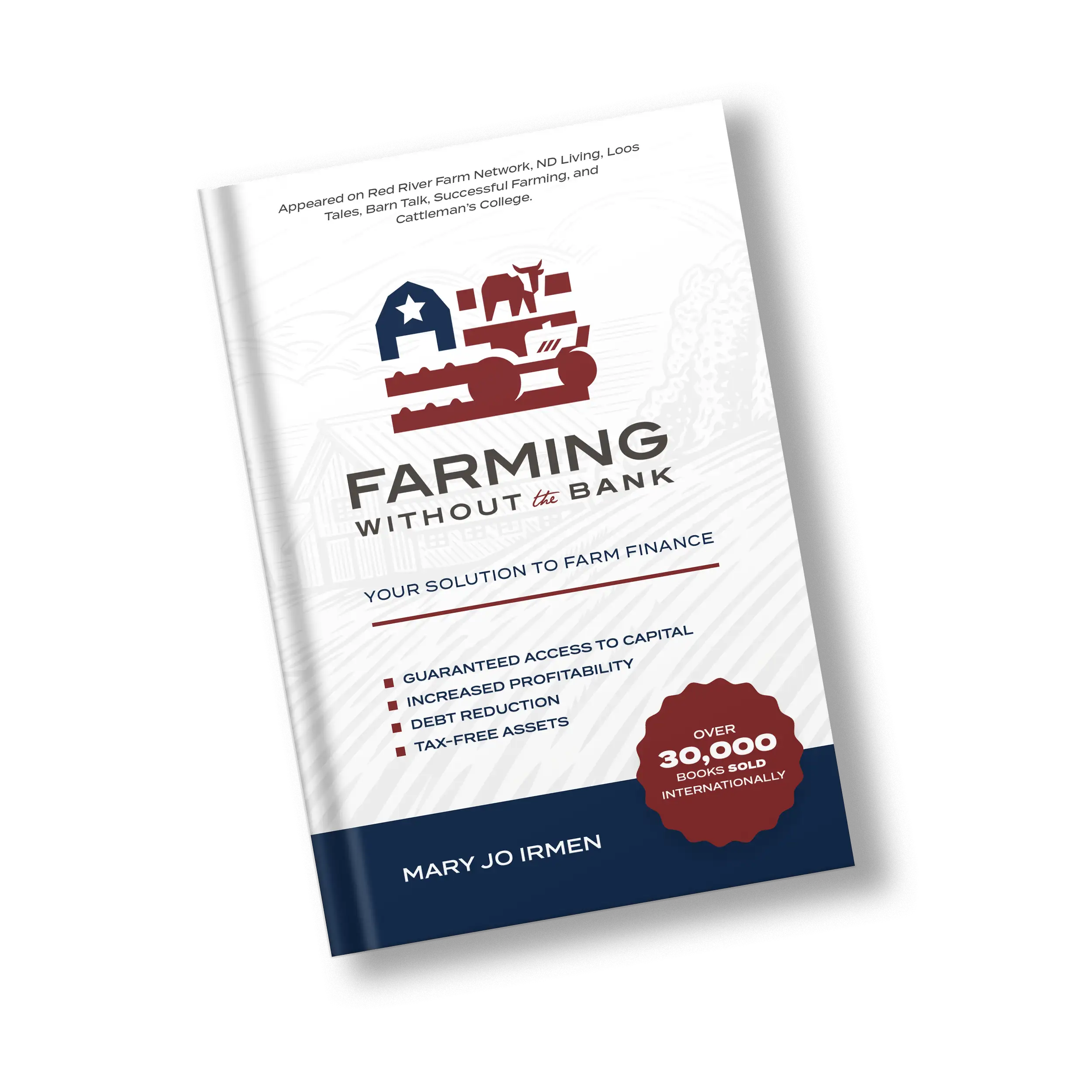
Your farm’s financial independence starts with one book.
30,000 farmers and ranchers have already made the shift. The only question is how long you’ll keep paying interest you could be keeping yourself.