 GET THE BOOK
 GET THE BOOK




Podcast
EP. 309
Ep. 309 – Starting a Bank vs. Starting a Policy
Jul 4, 2025 ·
28 min
0:00 / 28:27
EPISODE OVERVIEW
ABOUT THIS EPISODE
Most farmers don’t question putting capital into their land, cattle, or equipment. But when it comes to life insurance policies, suddenly they hesitate. Why is that?
In this episode, Mary Jo Irmen and John Hasche dig into Nelson Nash’s classic chapter “Creating a Bank Like the Ones You Already Know” and unpack why starting a life insurance policy isn’t all that different from starting a traditional bank. They break down why capitalization is key, how due diligence sets you up for success, and what it means to be the banker, not just the policyholder.
Whether you’re new to IBC or revisiting your strategy, this episode is a must-listen for anyone serious about building long-term wealth the right way.
🔑 Key Takeaways
- Why capitalization is just as important for policies as it is for farms
- How starting a life insurance policy mirrors starting a traditional bank
- Why studying the business of banking helps you make better financial decisions
- How uninterrupted compound interest builds long-term wealth
- Why it’s critical to choose the right company and the right agent
- What happens when you “lock the doors” on your policy and stop funding it
- Why treating your policy like a real business is the only way to succeed
📚 Resources & Links
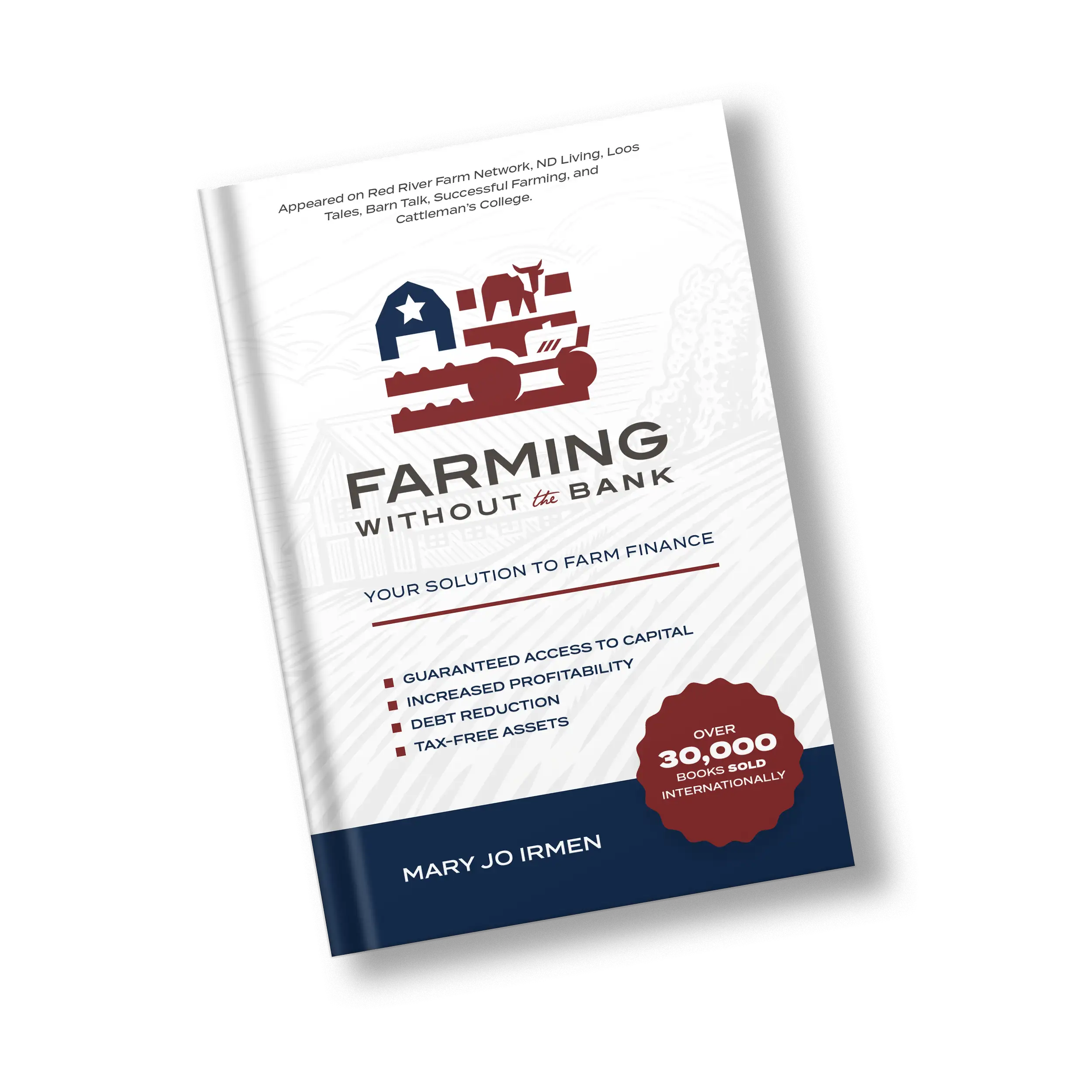
- 📘 Grab your copy of Farming Without the Bank: farmingwithoutthebank.com/book
- 📅 Read the book? Book a meeting
- 🎧 Listen to more episodes of the Farming Without the Bank podcast, available on all major podcast platforms
- 💬 Email your questions: maryjo@withoutthebank.com
- 👍 Follow on Facebook: Farming Without the Bank
🔥 Want to Keep Learning?
Binge past episodes and learn how real farmers are using IBC to transform their operations. You’ll never look at money the same way again.
CHAPTER TIMESTAMPS
- 00:00Why Capitalization Is Non-Negotiable
- 00:36John Hasche Returns to Review Becoming Your Own Banker
- 01:13Starting a Bank vs. Starting a Policy
- 02:37Study the Business of Banking
- 05:19Capitalization: Why You Need to Put Money In
- 07:06Qualifying for a Policy vs. a Bank Charter
- 08:41Picking the Right Company (Location of Your "Bank")
- 10:22Making Deposits: Keeping Your Policy Alive
- 12:03Breaking Even: 7 to 10 Years for Banks and Policies
- 14:38Why Whole Life Insurance Is a Proven System
- 16:01Fractional Reserve Banking vs. 1:1 Lending
- 19:14Lessons From Midland Bank's Collapse
- 22:01Faith in Banks, Dollars, and Crypto
- 23:20Why Loan Repayments Are Crucial
- 25:02Your Responsibility as the Banker
- 26:05Why Policies Are Boring (and That's Good)
- 27:05How to Book With Mary Jo or John
YOUTUBE EPISODE
TRANSCRIPTION
“You did not buy your farm and not capitalize it. If you paid cash for it, you capitalized it. If you put a down payment on, you capitalized it. If you borrowed money for cattle, you put a little money in, you capitalized those. You capitalize everything else and you see that that’s okay. But when we get to the policy, then we start questioning, well, where’s that money going? I don’t have access to all of it. You bought life insurance. You need to capitalize, and you have to understand you’re doing that with everything.”
Hello, hello, hello, and welcome back to the podcast. Thank you very much for being here. Okay, I’ve got John back, and that means we’re reviewing BYOB again. So we took a little hiatus, John.
Yeah, I thought you weren’t going to ask me back, but here we are.
Well, yeah, here we are. I was like, oh, John’s schedule has been super busy. Meeting with people. My schedule has been busy. I’ve been gone. And so I looked at John’s calendar today and I’m like, he’s got a little bit of time. So I’m going to see if he can squeeze one in for us. So we are going to talk about the next chapter in Nelson’s book. So if your book is dusty, brush it off. We’re back in there. Your BYOB book. If you’re new, go back a few podcasts. We started at the beginning of Becoming Your Own Banker, and we’re reviewing the financial Bible, as I call it, because it’s really what John and I go by.
Yes, it is.
Okay. So we’re in the chapter “Creating a Bank Like the Ones You Already Know.” In the beginning of this chapter, Nelson talks about there being a number of steps. And what he’s doing as a whole is comparing starting a bank, an actual brick and mortar bank, to starting a life insurance policy. And how do those two things compare? And so I got to be honest, like I always am. When I read this the first time, I thought, well, I don’t care about this story, Nelson. That’s stupid. Why does that even apply? But now that I break it down, and you guys listening should do the same thing, I read this book paragraph by paragraph and try to really think about what he is trying to say. Because it would have been easier if Nelson just said what he wanted to say. But that’s not how he is.
Yeah, he’s a storyteller.
He is a storyteller. So the first thing he talks about is you must study the business of banking. He’s talking about brick and mortar. “You must study the business so that you have a firm grip on what it’s all about and feel you can run such a business. Without this confidence, you’re fighting a lost cause. It’s a jungle out there.” So if I said, John, hey, you should go start a bank, you should build a bank, and you thought that was a good idea, you’d probably do a little research.
Oh, absolutely. And you know what just came to my mind is, back in the day when we got certified as practitioners, a lot of the learning that we had to do was just about banks and how they work. So Nelson even had us learn a lot of that when we got licensed.
When we got our authorization, we had to study Austrian economics. We had to know all of that stuff, because he thought that that was important to know when we do this. But when you and your dad found infinite banking, you read the book, and then you dug into it and you did more studying.
Oh, yeah. Yeah. You got to research it. And this is the first chapter where he’s really trying to get you to put that banker hat on. Right. And how do I think like a banker? What does that even mean? He’s going to lay it out here in this chapter.
Right. So there are people that come to us that we have meetings with, and they’re like, “Oh, I read your book once super fast, and this is great, and this is a great idea. How do I get started?” That’s fantastic. But the people that come to us that do their due diligence and study the business, they understand.
Yeah. Yeah, you can definitely tell fairly quickly when you get in a meeting who knows what they’re talking about, either from doing a lot of banking, or they’ve read this book and your book and did all the research to figure out how they should even approach this concept.
Yeah. If you’re going to get into the business of banking, then you need to study. Yep. Okay. So the moral of the story is do your due diligence, because if you opened any other business, you would do your due diligence. You’re not going to go buy cows without doing your due diligence and be like, “Well, I came from the city. I’m going to go to the sale barn and I’m just going to buy some cows.” Nobody does that.
No. You might want to know how you got to feed them.
Yeah, that is true.
His next point in here, or step two, I guess, would be: “You must get some capital,” aka money, “and it had better be in the order of 20 million or more.” Well, of course, you don’t need 20 million to start a policy. But I just met with some people today that I’d met with a few months ago, and then we had another meeting today, because they were like, where am I supposed to find the money to do this? They don’t want to start a huge policy. But in their case, the wife was stepping away from her job so she could be at home more. And where are we going to get the money? And is it even worth doing a policy if it’s this small? It’s like, hey, you got to start somewhere. There’s a capitalization period here. And that’s kind of what Nelson’s talking about with this step.
Right. A, number one, that’s why John and I are here: to help you figure out where your money is going so we can help you figure out how to capitalize it. But you have to capitalize it. You’re going to have to put some money in to be able to borrow money back out. You don’t start a brick and mortar company, you don’t start your farm, without capital. So you can take the brick and mortar piece out of this, of a bank, and apply it all to farming. You did not buy your farm and not capitalize it. If you paid cash for it, you capitalized it. If you put a down payment on, you capitalized it. If you borrowed money for cattle, you put a little money in, you capitalized those. You capitalize everything else and you see that that’s okay. But when we get to the policy, then we start questioning, well, where’s that money going? I don’t have access to all of it. You bought life insurance. So you need to capitalize, and you have to understand you’re doing that with everything.
That is exactly right.
Okay. Number three. If you’re going to start a brick and mortar bank, you’re going to go to the banking commissioner’s office and apply for a bank charter. “Bear in mind, the commissioner doesn’t hand these charters out indiscriminately.” It is going to be hard to get that licensing to be a banker. So on the insurance side, is it hard? Do we have to qualify? Yeah. You have to go through a health exam. It’s not as hard as getting a bank charter, but you have to go through a health exam. They don’t just willy-nilly give life insurance policies out.
Yeah, I would say he says in here, you know, the chance of getting one is less than 100 to 1. It’s a little easier than that to get a life insurance policy, and they’re not going to turn that many people away. But there’s some effort you got to put in to prove that you should be in our group, be a part of the company.
Yeah. And he says, I underlined this too, “There’s a lot going on in the unseen. At this point, you need to use your imagination. The bottom line is that you’re going to spend a lot of time and money in this phase of creating a bank. You are likely to have passed before you will finally win the coveted charter.” We don’t have to go through that huge pain in the butt, because the insurance company already has it figured out. All we have to do is qualify. So it’s not going to be as hard, but you’re going to have to qualify. So that was number three. You got to check it off.
Yep. Yep.
What do you got for four?
“In the meantime, you will probably have gone through the part about picking a good location and a suitable building.” So what he means by this is you got to find the right place to house this bank. In our case, that’s dividend-paying whole life insurance.
Right. And what company?
OneAmerica.
Right. Yeah. What company is the good company for you and fit? What agent is the perfect agent for you and fit? And so if that’s our agency, great. Fantastic. You can work with John or I. If we decide kind of who the company is, we’re happy to tell you why we love the companies we use, which the majority of them is OneAmerica. That’s who we’re using, for many reasons. But you have to pick the location. What is that location? And again, you’re not just picking that location willy-nilly. You’re doing your due diligence on it. So if you want to leave it up to us to do the due diligence, that’s okay too, because I’ve done the due diligence. I just sat with the chief investment officer two weeks ago at dinner, and I had a lot of questions, because I’m always wondering what’s going on with the financials of the company. And so I’m doing that due diligence for you, but if you want to, you can do it as well. Because you wouldn’t just go buy a lot, put a building up, and then you’re like, oh, that’s in the ghetto. That’s probably not a good place for my bank.
Yeah. You want the one on the highway, on the corner, you know, with nice access and all that.
Yeah. Yeah. And then number five is now you’re finally in the business as a bank. “You must make your bank known by lots of advertising and inducing people to make deposits into the bank.” So you don’t just start your bank and then lock your doors and be like, oh, we’re not going to invite any more people in. And I was just talking about this with my colleagues in Canada. They have a client that started a bank, and then they locked the doors and said, no more deposits are allowed. When we sell you a policy, at that moment, you have your banker hat on. You’re like, yep, I want a policy. I want to be a banker. And then you get your policy. You sign for your policy. And most of you shut the front doors, and you’re like, it’s just a lot of work running that place, so I’m just not going to pay attention to it. And you never make any more deposits. Can you imagine if a bank is like, yep, I’m going to build 10 branches, and let’s just hope and pray somebody comes in and makes a deposit and pays attention to us?
Business wouldn’t go very good.
Right. The banks wouldn’t make money, because they need deposits in order to lend more money. The more money you deposit in your policy, the more money the insurance company pays you in compound interest and dividends.
And I also think part of this too is like, hey, your cash value is there for a reason. Go use it. Put your deposit in, but then go use it too. If you’re not using it, it’s because you’re not putting enough money in, which means you have enough cash on the other side that you don’t need to go there.
Yep, exactly. In the last sentence of this column, he says, “Do you notice thus far that you have been paying out money for years in getting this business established?” So if you look at Nelson’s illustrations in his book, he’s saying you capitalize for four years, and then you can borrow against it. We’re not doing that. We’re capitalizing and borrowing 10 days later. But he is already telling you to beat Parkinson’s law. Notice they’ve been capitalizing this for years, and they’ve not once complained about it, because they know they’re going to get it in the end. They know that this is going to be a benefit. But in our head, we’re already complaining. We’re capitalizing our 401(k)s and IRAs. We’re not complaining about that. We just keep putting money there, and that money is completely locked up and not accessible. But here, we want to complain about losing access to 25, 30% of the money?
I had wrote down, banking isn’t an overnight success. There are costs of starting a bank, whether that’s a real bank or infinite banking. There are some startup costs to either one.
Yep. Okay. So then Nelson gets a little off track. So I’m going to go to the last page of this chapter, and then we’re going to come back and keep him on track. He got a little squirrely in the middle of this chapter, I think. In the very last column of this chapter, he says, “You must admit that getting into the business this way is very costly and time consuming. It will be a long time before you show a profit, probably as much as 10 years.” And I also find that interesting, because when does this policy typically break even?
Year 7 to 10.
Yep. So if you’re in the business of banking, you’re probably not going to make money for 10 years. If you’re in a brick and mortar business… I mean, I’ve interviewed hundreds and hundreds of business owners. They didn’t make money for the first five years. It took them five years. I just talked to somebody today that’s just starting their farm, their little farm and ranch operation. And they’re starting from scratch. They bought a place. They’ve got all their own stuff. It will always take those people about five years to break even. They’re probably not really going to see any profit till year 7 through 10. Nelson knew that. He was already comparing it in the book.
Yeah, this is no different than any business. Same boat.
Yep. Then he says, “There’s a much easier way to accomplish the creation of your own banking system. And the mechanism has been around for over 200 years. It’s tried and true. It’s called participating dividend-paying whole life insurance. But the problem is that very few people know about the business and how it works, including home office folks.” And so we think, oh, this is some new grandiose thing. It’s 200 years old. It’s not new. It is super old. It’s just truly that people don’t know about it. But they’ve already got the startup. They’ve already got the actuaries in place. They already went through the capitalization phase. They already have the money in the bank so that they can turn around and lend it out. They already did all that stuff.
Yeah, 190 years ago.
Yeah. The company we use is 147 years old. They did that 147 years ago. Now we get to come in and reap the rewards, because they hired all the staff. They have all the programs. They’ve picked their location. They’ve done everything for us. All we got to do is go through the health exam and find a good agent.
Easy.
Easy peasy. Easy peasy. Yeah. And then he goes on to talk about co-generation and electrical power and all that good stuff. And he said, in this system of selling power, “sell them the power. It is much more efficient than trying to do it any other way.” So we could try to do infinite banking another way. But how? I just did a podcast not so long ago about some clients that were talked to by somebody local: “Oh, we’re starting this life insurance company in this state, and you could buy a policy.” And guess what? If they died, the death benefit never got paid out for seven years. So they would give them a little bit, and then they’d get the rest of it over seven years. Why? Because it’s a brand new life insurance company. They have to capitalize their system. Why would I help another company capitalize their system when I don’t know their history of paying dividends? I don’t know the CEO. They even talked about the fact that, oh, yeah, we’ll sell it to a bigger company once it gets established. How about I just go with tried and true? Because he said all the ingredients are already there in place. “All you have to do is understand what is going on in such an insurance plan and tap into the system.” That’s it. You’re tapping into the system.
Okay, let’s go back to where he was interrupting us. And he talks about loans. “The banker cannot make a loan unless there is a deposit.” And then he talks about the fact that the banks do fractional reserve banking and they lend 10 to 1. But it’s always interesting to me when people say, well, I can put this in and borrow against the death benefit, right? Hmm. No. I think you’ve missed the point.
Yep. You can only borrow against the cash value piece. So if you want to borrow, you have to fund it. If you want to take money out of a savings account, you first have to put the money into the savings account. It’s 1 to 1 instead of 1 to 10 banking.
Right. Right. Yes. And so in the policy… because Nelson starts talking about fractional reserve banking in here. In the bank, they’re doing fractional reserve banking. So you put $1 in, they can lend you $10. The life insurance company can’t do that. They can’t inflate money. So the big piece of the Austrian part of this that we had to learn was that if people did this… yes, you still need a bank. You still need to deposit your money into a bank. But ideally, Nelson is saying, don’t use the bank for your large purchases, which we went over in a previous chapter. You should be using your life insurance policy, because they cannot inflate the dollar 10 to 1.
Well, he says here you want a prudent relationship between capital and assets. So you can’t let that balance get out of whack. You’re just like a real bank.
Yep. Because he goes on to say “the relationship between capital and assets, which is to say, the loans on the books, and between the loans and the deposits.” Then he continues on to tell us a story about the First Bank of Midland, Texas, and how they were lending money and they got caught. They had more loans out than they had assets. And what they found out is that the bank shareholders were lending money to themselves and not paying it back.
So I want to touch on something before I forget. There’s a fair amount of conversations I have, and maybe you have too, with people that say, “I paid that tractor off, but they wouldn’t release it from collateral. They wouldn’t give me the title.” Well, if that’s the case, there’s only two options. One, the guy is lying. Or two, the bank has more money lent out than they have assets and collateral for. So they have over-lent, and the feds are coming in and auditing their books. So now, as a good farmer, they might say, well, I’m going to take more collateral for your land. I want 50% collateral. But the farmer down the road that isn’t so good, they’re allowing him to take a loan with very little collateral. Well, yeah, because you’re at the same bank. The good farmer’s collateral is covering the bad farmer on the books.
Yeah, on paper. As a whole.
And this is exactly what Nelson was talking about with the Midland bank. And then the shareholders were the problem. They were lending money to themselves and not paying it back. And Nelson says they were “making loans to themselves, neglecting to pay them back.” If they had repaid the loans plus interest, their bank would have still been in operation, “but greed prevailed and did them in.” It did them in, and every other shareholder or depositor in the bank. Think about what happened. He talks about higher up on the page how overnight, basically, their deposits decreased by $500 million.
I mean, that’s fractional reserve banking there. The goal is to not have everybody want their money at once. And that’s what happened to this bank.
And guess what? Everybody lost faith in that bank. So their deposits decreased, because everybody lost faith in the bank. A bank is only as good, and the U.S. dollar is only as good, as what we believe it to be. Crypto is only as good as what people believe it to be. When people lose faith in crypto, what happens? It goes down. This is why I don’t like crypto. I think it’s stupid. And I’ve tried to understand it. People keep sending me emails and trying to get me to understand it. And then I come back with another reason. And you can’t come back to me with an explanation as to why I should like crypto. So until then, keep sending the emails. But crypto… if everybody believes in crypto today because they don’t believe in the U.S. dollar, we’re going to go crypto. But people are ignorant to finance. 97% of the population does not even know how to manage their money. That’s why Dave Ramsey is so famous, because they need help managing the dollar. Do you really think, if they can’t even manage a dollar, that they’re going to lose faith in the dollar and understand fractional reserve banking? No. Not anytime soon. Not going to happen.
And so later on that page… John, you already said this about the grocery stores. It’s like the grocery store. You don’t take food out the back door. You pay for it out the front door. But he says in here, “The banking system I’m going to tell you about, you can destroy by not obeying the basic rules of banking. Loans have to be paid back, or you can kill the best business in the world. It is up to you. But do not try to blame others when it happens.”
Mic drop right there. And we’re done here.
And I see this.
We see this. And I see it kind of across the board. Not necessarily in IBC, but just as you see people post on social media, “I tried that and it didn’t work,” or whatever. But you didn’t know what you were doing. You weren’t running the business correctly.
I had a client that paid his full premium, took a full loan every year, never paid the loan, never paid the interest. He had no cash value to borrow at some point. It all went to interest. It’s not my fault. You didn’t call me. You didn’t read the book. You ran your bank like the Midland of Texas. It was a ticking time bomb.
I mean, it only works for so long.
Yep. And you can’t blame somebody else because you built your bank, you locked the doors, you opened them once a year to take a loan, and you never paid attention to the bank again. If you’re going to start a bank, and you’re going to start a life insurance policy, you need to be the banker. And we preach this over and over and over, but it is important again and again and again, because it’s not about starting a policy and then saying, you know what? I never have to pay attention to it. And then I’m going to call John and be like, “What do you mean I bought life insurance? What are you talking about?” Because it happens. And we try to be really good about catching people that should not have policies. But occasionally, they’ll get by us, and we’re like, oh yeah, they get it. They understand. But they don’t. When you say you’re going to have a policy, think about it literally: you are building the bank, and if that bank fails, it’s nobody’s fault but your own.
You’re the shareholder in this case. So it goes under, you’re the shareholder. You’re the owner. You’re the depositor. You’re the lender. You’re everybody.
Yeah. The insurance company is doing their job, and their job is great. I had a client meeting this week, and the guy said, “Well, I just want to do a review of my stuff. How’s it going?” I said, “It’s going just like it’s supposed to.” And he’s like, “Is there anything I need to do?” I’m like, “Nope. You just keep paying premium.” People sometimes think, well, I need to meet with them like I need a financial advisor. What’s my rate of return? How are the markets? This is just steady. It’s doing exactly what it’s supposed to. So we’re happy to talk to you. I love it, because I love to catch up on the personal side and what’s happening. But there’s nothing to talk about in the policy, because it’s doing exactly what it’s supposed to do. It’s the most boring, unsexy thing on the planet.
That is a good way to describe it. And I like boring. So I am good with that.
All right. Anything to add, John, before we close this up?
No, I think this is a good… I mean, it’s not a long chapter, but it’s got a lot of good content in it. And it’s really, like I said, kind of the first chapter where he’s really trying to get you to put on your banker hat and put yourself in that mindset.
I agree. Okay. With that, you guys know the routine. Go to farmingwithoutthebank.com, grab your book, schedule your appointment with John or myself. I’m going to say this: if you schedule with John, you do not need to talk to me. So if you want to talk to me, you schedule, you wait and talk to me, but don’t think you’re going to meet with John and then meet with me to talk about the exact same stuff. We have a ton of people waiting to get in and have meetings. So please be considerate of those people, because they also don’t want to wait three months, but they are. So anyway, schedule your appointment with one of us, and then we’ll figure out where you can get started, if you can get started, if it’s a fit, and go from there. Otherwise, let us know how we can help. All right, you guys have a fantastic rest of your day.
Thanks for listening to the Farming Without the Bank podcast. We hope today’s episode has inspired you to take control of your finances in new ways. Don’t forget to check out our website, farmingwithoutthebank.com, and engage with us on our Facebook page, Farming Without the Bank. Join us next week as we smash more financial myths and empower you to accomplish your financial goals.
View MoreHello, hello, hello, and welcome back to the podcast. Thank you very much for being here. Okay, I’ve got John back, and that means we’re reviewing BYOB again. So we took a little hiatus, John.
Yeah, I thought you weren’t going to ask me back, but here we are.
Well, yeah, here we are. I was like, oh, John’s schedule has been super busy. Meeting with people. My schedule has been busy. I’ve been gone. And so I looked at John’s calendar today and I’m like, he’s got a little bit of time. So I’m going to see if he can squeeze one in for us. So we are going to talk about the next chapter in Nelson’s book. So if your book is dusty, brush it off. We’re back in there. Your BYOB book. If you’re new, go back a few podcasts. We started at the beginning of Becoming Your Own Banker, and we’re reviewing the financial Bible, as I call it, because it’s really what John and I go by.
Yes, it is.
Okay. So we’re in the chapter “Creating a Bank Like the Ones You Already Know.” In the beginning of this chapter, Nelson talks about there being a number of steps. And what he’s doing as a whole is comparing starting a bank, an actual brick and mortar bank, to starting a life insurance policy. And how do those two things compare? And so I got to be honest, like I always am. When I read this the first time, I thought, well, I don’t care about this story, Nelson. That’s stupid. Why does that even apply? But now that I break it down, and you guys listening should do the same thing, I read this book paragraph by paragraph and try to really think about what he is trying to say. Because it would have been easier if Nelson just said what he wanted to say. But that’s not how he is.
Yeah, he’s a storyteller.
He is a storyteller. So the first thing he talks about is you must study the business of banking. He’s talking about brick and mortar. “You must study the business so that you have a firm grip on what it’s all about and feel you can run such a business. Without this confidence, you’re fighting a lost cause. It’s a jungle out there.” So if I said, John, hey, you should go start a bank, you should build a bank, and you thought that was a good idea, you’d probably do a little research.
Oh, absolutely. And you know what just came to my mind is, back in the day when we got certified as practitioners, a lot of the learning that we had to do was just about banks and how they work. So Nelson even had us learn a lot of that when we got licensed.
When we got our authorization, we had to study Austrian economics. We had to know all of that stuff, because he thought that that was important to know when we do this. But when you and your dad found infinite banking, you read the book, and then you dug into it and you did more studying.
Oh, yeah. Yeah. You got to research it. And this is the first chapter where he’s really trying to get you to put that banker hat on. Right. And how do I think like a banker? What does that even mean? He’s going to lay it out here in this chapter.
Right. So there are people that come to us that we have meetings with, and they’re like, “Oh, I read your book once super fast, and this is great, and this is a great idea. How do I get started?” That’s fantastic. But the people that come to us that do their due diligence and study the business, they understand.
Yeah. Yeah, you can definitely tell fairly quickly when you get in a meeting who knows what they’re talking about, either from doing a lot of banking, or they’ve read this book and your book and did all the research to figure out how they should even approach this concept.
Yeah. If you’re going to get into the business of banking, then you need to study. Yep. Okay. So the moral of the story is do your due diligence, because if you opened any other business, you would do your due diligence. You’re not going to go buy cows without doing your due diligence and be like, “Well, I came from the city. I’m going to go to the sale barn and I’m just going to buy some cows.” Nobody does that.
No. You might want to know how you got to feed them.
Yeah, that is true.
His next point in here, or step two, I guess, would be: “You must get some capital,” aka money, “and it had better be in the order of 20 million or more.” Well, of course, you don’t need 20 million to start a policy. But I just met with some people today that I’d met with a few months ago, and then we had another meeting today, because they were like, where am I supposed to find the money to do this? They don’t want to start a huge policy. But in their case, the wife was stepping away from her job so she could be at home more. And where are we going to get the money? And is it even worth doing a policy if it’s this small? It’s like, hey, you got to start somewhere. There’s a capitalization period here. And that’s kind of what Nelson’s talking about with this step.
Right. A, number one, that’s why John and I are here: to help you figure out where your money is going so we can help you figure out how to capitalize it. But you have to capitalize it. You’re going to have to put some money in to be able to borrow money back out. You don’t start a brick and mortar company, you don’t start your farm, without capital. So you can take the brick and mortar piece out of this, of a bank, and apply it all to farming. You did not buy your farm and not capitalize it. If you paid cash for it, you capitalized it. If you put a down payment on, you capitalized it. If you borrowed money for cattle, you put a little money in, you capitalized those. You capitalize everything else and you see that that’s okay. But when we get to the policy, then we start questioning, well, where’s that money going? I don’t have access to all of it. You bought life insurance. So you need to capitalize, and you have to understand you’re doing that with everything.
That is exactly right.
Okay. Number three. If you’re going to start a brick and mortar bank, you’re going to go to the banking commissioner’s office and apply for a bank charter. “Bear in mind, the commissioner doesn’t hand these charters out indiscriminately.” It is going to be hard to get that licensing to be a banker. So on the insurance side, is it hard? Do we have to qualify? Yeah. You have to go through a health exam. It’s not as hard as getting a bank charter, but you have to go through a health exam. They don’t just willy-nilly give life insurance policies out.
Yeah, I would say he says in here, you know, the chance of getting one is less than 100 to 1. It’s a little easier than that to get a life insurance policy, and they’re not going to turn that many people away. But there’s some effort you got to put in to prove that you should be in our group, be a part of the company.
Yeah. And he says, I underlined this too, “There’s a lot going on in the unseen. At this point, you need to use your imagination. The bottom line is that you’re going to spend a lot of time and money in this phase of creating a bank. You are likely to have passed before you will finally win the coveted charter.” We don’t have to go through that huge pain in the butt, because the insurance company already has it figured out. All we have to do is qualify. So it’s not going to be as hard, but you’re going to have to qualify. So that was number three. You got to check it off.
Yep. Yep.
What do you got for four?
“In the meantime, you will probably have gone through the part about picking a good location and a suitable building.” So what he means by this is you got to find the right place to house this bank. In our case, that’s dividend-paying whole life insurance.
Right. And what company?
OneAmerica.
Right. Yeah. What company is the good company for you and fit? What agent is the perfect agent for you and fit? And so if that’s our agency, great. Fantastic. You can work with John or I. If we decide kind of who the company is, we’re happy to tell you why we love the companies we use, which the majority of them is OneAmerica. That’s who we’re using, for many reasons. But you have to pick the location. What is that location? And again, you’re not just picking that location willy-nilly. You’re doing your due diligence on it. So if you want to leave it up to us to do the due diligence, that’s okay too, because I’ve done the due diligence. I just sat with the chief investment officer two weeks ago at dinner, and I had a lot of questions, because I’m always wondering what’s going on with the financials of the company. And so I’m doing that due diligence for you, but if you want to, you can do it as well. Because you wouldn’t just go buy a lot, put a building up, and then you’re like, oh, that’s in the ghetto. That’s probably not a good place for my bank.
Yeah. You want the one on the highway, on the corner, you know, with nice access and all that.
Yeah. Yeah. And then number five is now you’re finally in the business as a bank. “You must make your bank known by lots of advertising and inducing people to make deposits into the bank.” So you don’t just start your bank and then lock your doors and be like, oh, we’re not going to invite any more people in. And I was just talking about this with my colleagues in Canada. They have a client that started a bank, and then they locked the doors and said, no more deposits are allowed. When we sell you a policy, at that moment, you have your banker hat on. You’re like, yep, I want a policy. I want to be a banker. And then you get your policy. You sign for your policy. And most of you shut the front doors, and you’re like, it’s just a lot of work running that place, so I’m just not going to pay attention to it. And you never make any more deposits. Can you imagine if a bank is like, yep, I’m going to build 10 branches, and let’s just hope and pray somebody comes in and makes a deposit and pays attention to us?
Business wouldn’t go very good.
Right. The banks wouldn’t make money, because they need deposits in order to lend more money. The more money you deposit in your policy, the more money the insurance company pays you in compound interest and dividends.
And I also think part of this too is like, hey, your cash value is there for a reason. Go use it. Put your deposit in, but then go use it too. If you’re not using it, it’s because you’re not putting enough money in, which means you have enough cash on the other side that you don’t need to go there.
Yep, exactly. In the last sentence of this column, he says, “Do you notice thus far that you have been paying out money for years in getting this business established?” So if you look at Nelson’s illustrations in his book, he’s saying you capitalize for four years, and then you can borrow against it. We’re not doing that. We’re capitalizing and borrowing 10 days later. But he is already telling you to beat Parkinson’s law. Notice they’ve been capitalizing this for years, and they’ve not once complained about it, because they know they’re going to get it in the end. They know that this is going to be a benefit. But in our head, we’re already complaining. We’re capitalizing our 401(k)s and IRAs. We’re not complaining about that. We just keep putting money there, and that money is completely locked up and not accessible. But here, we want to complain about losing access to 25, 30% of the money?
I had wrote down, banking isn’t an overnight success. There are costs of starting a bank, whether that’s a real bank or infinite banking. There are some startup costs to either one.
Yep. Okay. So then Nelson gets a little off track. So I’m going to go to the last page of this chapter, and then we’re going to come back and keep him on track. He got a little squirrely in the middle of this chapter, I think. In the very last column of this chapter, he says, “You must admit that getting into the business this way is very costly and time consuming. It will be a long time before you show a profit, probably as much as 10 years.” And I also find that interesting, because when does this policy typically break even?
Year 7 to 10.
Yep. So if you’re in the business of banking, you’re probably not going to make money for 10 years. If you’re in a brick and mortar business… I mean, I’ve interviewed hundreds and hundreds of business owners. They didn’t make money for the first five years. It took them five years. I just talked to somebody today that’s just starting their farm, their little farm and ranch operation. And they’re starting from scratch. They bought a place. They’ve got all their own stuff. It will always take those people about five years to break even. They’re probably not really going to see any profit till year 7 through 10. Nelson knew that. He was already comparing it in the book.
Yeah, this is no different than any business. Same boat.
Yep. Then he says, “There’s a much easier way to accomplish the creation of your own banking system. And the mechanism has been around for over 200 years. It’s tried and true. It’s called participating dividend-paying whole life insurance. But the problem is that very few people know about the business and how it works, including home office folks.” And so we think, oh, this is some new grandiose thing. It’s 200 years old. It’s not new. It is super old. It’s just truly that people don’t know about it. But they’ve already got the startup. They’ve already got the actuaries in place. They already went through the capitalization phase. They already have the money in the bank so that they can turn around and lend it out. They already did all that stuff.
Yeah, 190 years ago.
Yeah. The company we use is 147 years old. They did that 147 years ago. Now we get to come in and reap the rewards, because they hired all the staff. They have all the programs. They’ve picked their location. They’ve done everything for us. All we got to do is go through the health exam and find a good agent.
Easy.
Easy peasy. Easy peasy. Yeah. And then he goes on to talk about co-generation and electrical power and all that good stuff. And he said, in this system of selling power, “sell them the power. It is much more efficient than trying to do it any other way.” So we could try to do infinite banking another way. But how? I just did a podcast not so long ago about some clients that were talked to by somebody local: “Oh, we’re starting this life insurance company in this state, and you could buy a policy.” And guess what? If they died, the death benefit never got paid out for seven years. So they would give them a little bit, and then they’d get the rest of it over seven years. Why? Because it’s a brand new life insurance company. They have to capitalize their system. Why would I help another company capitalize their system when I don’t know their history of paying dividends? I don’t know the CEO. They even talked about the fact that, oh, yeah, we’ll sell it to a bigger company once it gets established. How about I just go with tried and true? Because he said all the ingredients are already there in place. “All you have to do is understand what is going on in such an insurance plan and tap into the system.” That’s it. You’re tapping into the system.
Okay, let’s go back to where he was interrupting us. And he talks about loans. “The banker cannot make a loan unless there is a deposit.” And then he talks about the fact that the banks do fractional reserve banking and they lend 10 to 1. But it’s always interesting to me when people say, well, I can put this in and borrow against the death benefit, right? Hmm. No. I think you’ve missed the point.
Yep. You can only borrow against the cash value piece. So if you want to borrow, you have to fund it. If you want to take money out of a savings account, you first have to put the money into the savings account. It’s 1 to 1 instead of 1 to 10 banking.
Right. Right. Yes. And so in the policy… because Nelson starts talking about fractional reserve banking in here. In the bank, they’re doing fractional reserve banking. So you put $1 in, they can lend you $10. The life insurance company can’t do that. They can’t inflate money. So the big piece of the Austrian part of this that we had to learn was that if people did this… yes, you still need a bank. You still need to deposit your money into a bank. But ideally, Nelson is saying, don’t use the bank for your large purchases, which we went over in a previous chapter. You should be using your life insurance policy, because they cannot inflate the dollar 10 to 1.
Well, he says here you want a prudent relationship between capital and assets. So you can’t let that balance get out of whack. You’re just like a real bank.
Yep. Because he goes on to say “the relationship between capital and assets, which is to say, the loans on the books, and between the loans and the deposits.” Then he continues on to tell us a story about the First Bank of Midland, Texas, and how they were lending money and they got caught. They had more loans out than they had assets. And what they found out is that the bank shareholders were lending money to themselves and not paying it back.
So I want to touch on something before I forget. There’s a fair amount of conversations I have, and maybe you have too, with people that say, “I paid that tractor off, but they wouldn’t release it from collateral. They wouldn’t give me the title.” Well, if that’s the case, there’s only two options. One, the guy is lying. Or two, the bank has more money lent out than they have assets and collateral for. So they have over-lent, and the feds are coming in and auditing their books. So now, as a good farmer, they might say, well, I’m going to take more collateral for your land. I want 50% collateral. But the farmer down the road that isn’t so good, they’re allowing him to take a loan with very little collateral. Well, yeah, because you’re at the same bank. The good farmer’s collateral is covering the bad farmer on the books.
Yeah, on paper. As a whole.
And this is exactly what Nelson was talking about with the Midland bank. And then the shareholders were the problem. They were lending money to themselves and not paying it back. And Nelson says they were “making loans to themselves, neglecting to pay them back.” If they had repaid the loans plus interest, their bank would have still been in operation, “but greed prevailed and did them in.” It did them in, and every other shareholder or depositor in the bank. Think about what happened. He talks about higher up on the page how overnight, basically, their deposits decreased by $500 million.
I mean, that’s fractional reserve banking there. The goal is to not have everybody want their money at once. And that’s what happened to this bank.
And guess what? Everybody lost faith in that bank. So their deposits decreased, because everybody lost faith in the bank. A bank is only as good, and the U.S. dollar is only as good, as what we believe it to be. Crypto is only as good as what people believe it to be. When people lose faith in crypto, what happens? It goes down. This is why I don’t like crypto. I think it’s stupid. And I’ve tried to understand it. People keep sending me emails and trying to get me to understand it. And then I come back with another reason. And you can’t come back to me with an explanation as to why I should like crypto. So until then, keep sending the emails. But crypto… if everybody believes in crypto today because they don’t believe in the U.S. dollar, we’re going to go crypto. But people are ignorant to finance. 97% of the population does not even know how to manage their money. That’s why Dave Ramsey is so famous, because they need help managing the dollar. Do you really think, if they can’t even manage a dollar, that they’re going to lose faith in the dollar and understand fractional reserve banking? No. Not anytime soon. Not going to happen.
And so later on that page… John, you already said this about the grocery stores. It’s like the grocery store. You don’t take food out the back door. You pay for it out the front door. But he says in here, “The banking system I’m going to tell you about, you can destroy by not obeying the basic rules of banking. Loans have to be paid back, or you can kill the best business in the world. It is up to you. But do not try to blame others when it happens.”
Mic drop right there. And we’re done here.
And I see this.
We see this. And I see it kind of across the board. Not necessarily in IBC, but just as you see people post on social media, “I tried that and it didn’t work,” or whatever. But you didn’t know what you were doing. You weren’t running the business correctly.
I had a client that paid his full premium, took a full loan every year, never paid the loan, never paid the interest. He had no cash value to borrow at some point. It all went to interest. It’s not my fault. You didn’t call me. You didn’t read the book. You ran your bank like the Midland of Texas. It was a ticking time bomb.
I mean, it only works for so long.
Yep. And you can’t blame somebody else because you built your bank, you locked the doors, you opened them once a year to take a loan, and you never paid attention to the bank again. If you’re going to start a bank, and you’re going to start a life insurance policy, you need to be the banker. And we preach this over and over and over, but it is important again and again and again, because it’s not about starting a policy and then saying, you know what? I never have to pay attention to it. And then I’m going to call John and be like, “What do you mean I bought life insurance? What are you talking about?” Because it happens. And we try to be really good about catching people that should not have policies. But occasionally, they’ll get by us, and we’re like, oh yeah, they get it. They understand. But they don’t. When you say you’re going to have a policy, think about it literally: you are building the bank, and if that bank fails, it’s nobody’s fault but your own.
You’re the shareholder in this case. So it goes under, you’re the shareholder. You’re the owner. You’re the depositor. You’re the lender. You’re everybody.
Yeah. The insurance company is doing their job, and their job is great. I had a client meeting this week, and the guy said, “Well, I just want to do a review of my stuff. How’s it going?” I said, “It’s going just like it’s supposed to.” And he’s like, “Is there anything I need to do?” I’m like, “Nope. You just keep paying premium.” People sometimes think, well, I need to meet with them like I need a financial advisor. What’s my rate of return? How are the markets? This is just steady. It’s doing exactly what it’s supposed to. So we’re happy to talk to you. I love it, because I love to catch up on the personal side and what’s happening. But there’s nothing to talk about in the policy, because it’s doing exactly what it’s supposed to do. It’s the most boring, unsexy thing on the planet.
That is a good way to describe it. And I like boring. So I am good with that.
All right. Anything to add, John, before we close this up?
No, I think this is a good… I mean, it’s not a long chapter, but it’s got a lot of good content in it. And it’s really, like I said, kind of the first chapter where he’s really trying to get you to put on your banker hat and put yourself in that mindset.
I agree. Okay. With that, you guys know the routine. Go to farmingwithoutthebank.com, grab your book, schedule your appointment with John or myself. I’m going to say this: if you schedule with John, you do not need to talk to me. So if you want to talk to me, you schedule, you wait and talk to me, but don’t think you’re going to meet with John and then meet with me to talk about the exact same stuff. We have a ton of people waiting to get in and have meetings. So please be considerate of those people, because they also don’t want to wait three months, but they are. So anyway, schedule your appointment with one of us, and then we’ll figure out where you can get started, if you can get started, if it’s a fit, and go from there. Otherwise, let us know how we can help. All right, you guys have a fantastic rest of your day.
Thanks for listening to the Farming Without the Bank podcast. We hope today’s episode has inspired you to take control of your finances in new ways. Don’t forget to check out our website, farmingwithoutthebank.com, and engage with us on our Facebook page, Farming Without the Bank. Join us next week as we smash more financial myths and empower you to accomplish your financial goals.
ready to start?
Your farm’s financial independence starts with one book.
30,000 farmers and ranchers have already made the shift. The only question is how long you’ll keep paying interest you could be keeping yourself.